
Today, on the grass courts of the All England Lawn Tennis and Croquet Club in London, the 139th Wimbledon has begun: a tournament that, for millions of fans, has long been far more than just another stop on the tennis calendar. A player can win the Australian Open, Roland Garros or the US Open and become a Grand Slam champion. But to win Wimbledon, for most players, means entering the history of world tennis.
The first tournament here was held back in 1877. Only 22 players took part then, and tickets cost one shilling. Today, over two weeks, hundreds of thousands of spectators pass through the gates of the All England Club, while hundreds of millions around the world watch the television broadcasts.
But it is not only about the age of the tournament.
Wimbledon remains the only Grand Slam tournament played on natural grass. Since 1995, the grass has been cut to exactly 8 millimetres: no more, no less. This is where tennis can still be seen in something close to the form in which it was imagined almost a century and a half ago.
Ask any professional player which surface demands the fastest adaptation, and most will answer: grass. After the bounce, the ball stays low, the pace of play is much higher, and there is almost no time to make a decision. A player has to read the game several shots ahead.
That is why many great champions have admitted that it is impossible to win on grass if you cannot think faster than your opponent. It is no coincidence that the grass-court season lasts only a few weeks each year. In that short period, players must completely rebuild their game after the long clay-court swing.
What should young Moldovan tennis players learn from watching Wimbledon? Certainly not only beautiful shots. Wimbledon is a real tennis school.
 (C) Wimbledon
Here it is especially clear how important the following qualities are:
- the first shot after the serve;
- the ability to make quick decisions;
- footwork;
- net play;
- variety of shots;
- mental toughness.
These are precisely the qualities that separate world-class champions from the rest.
Watch how the best players in the world behave between points. They almost never show strong emotions after every point won or lost. They know how to start the next rally as if from a clean slate. This is one of the important lessons that can be learned simply by watching the matches.
Wimbledon is famous for its rules. The almost entirely white clothing requirement has remained in place for many decades. Coloured elements of equipment are strictly limited: even a sponsor’s logo cannot be more than 1 cm high, and colour is allowed only in narrow trim, for example on sleeve edges.
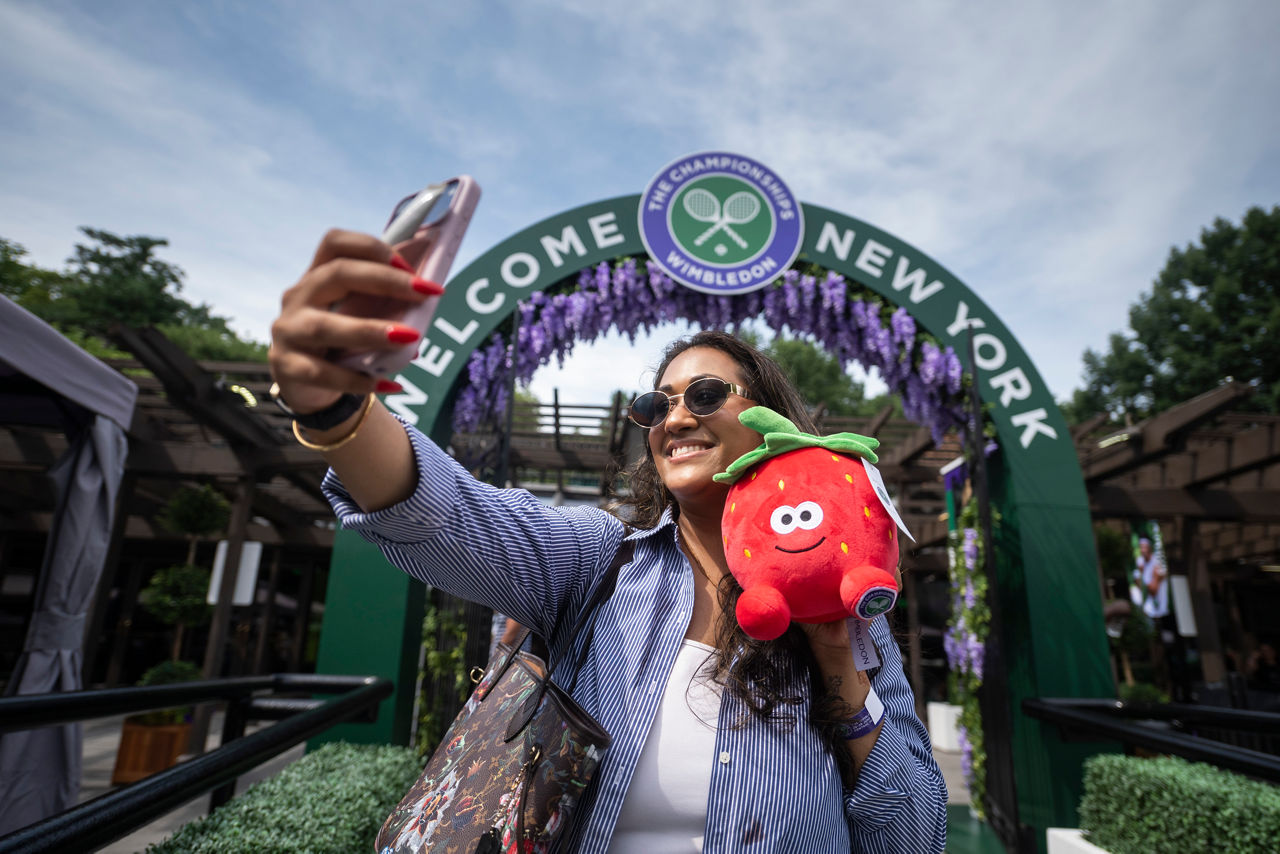
Pimm’s has long been part of the atmosphere of the English summer, while in the stands spectators still enjoy the famous strawberries and cream. Every year during the tournament, tens of thousands of portions of this traditional dessert are sold.
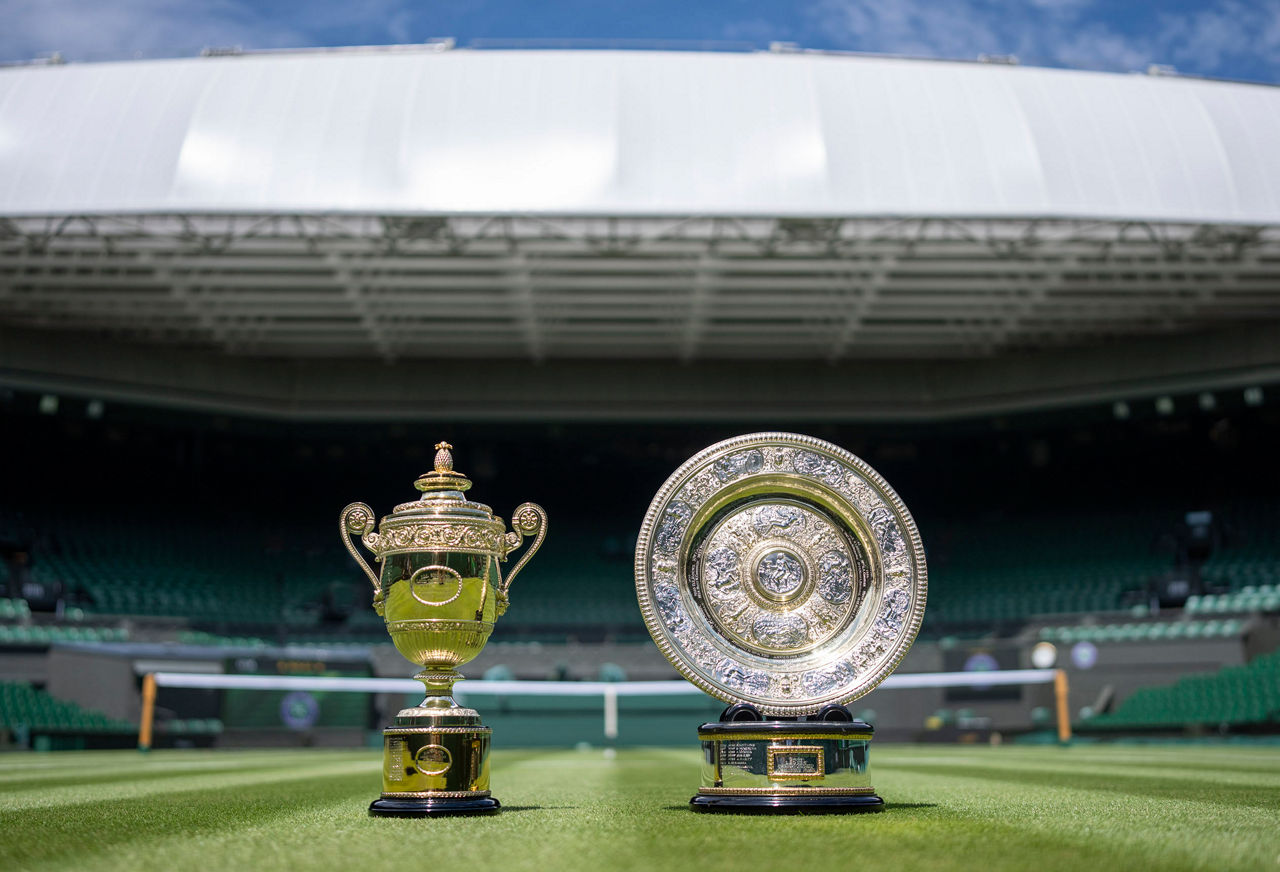
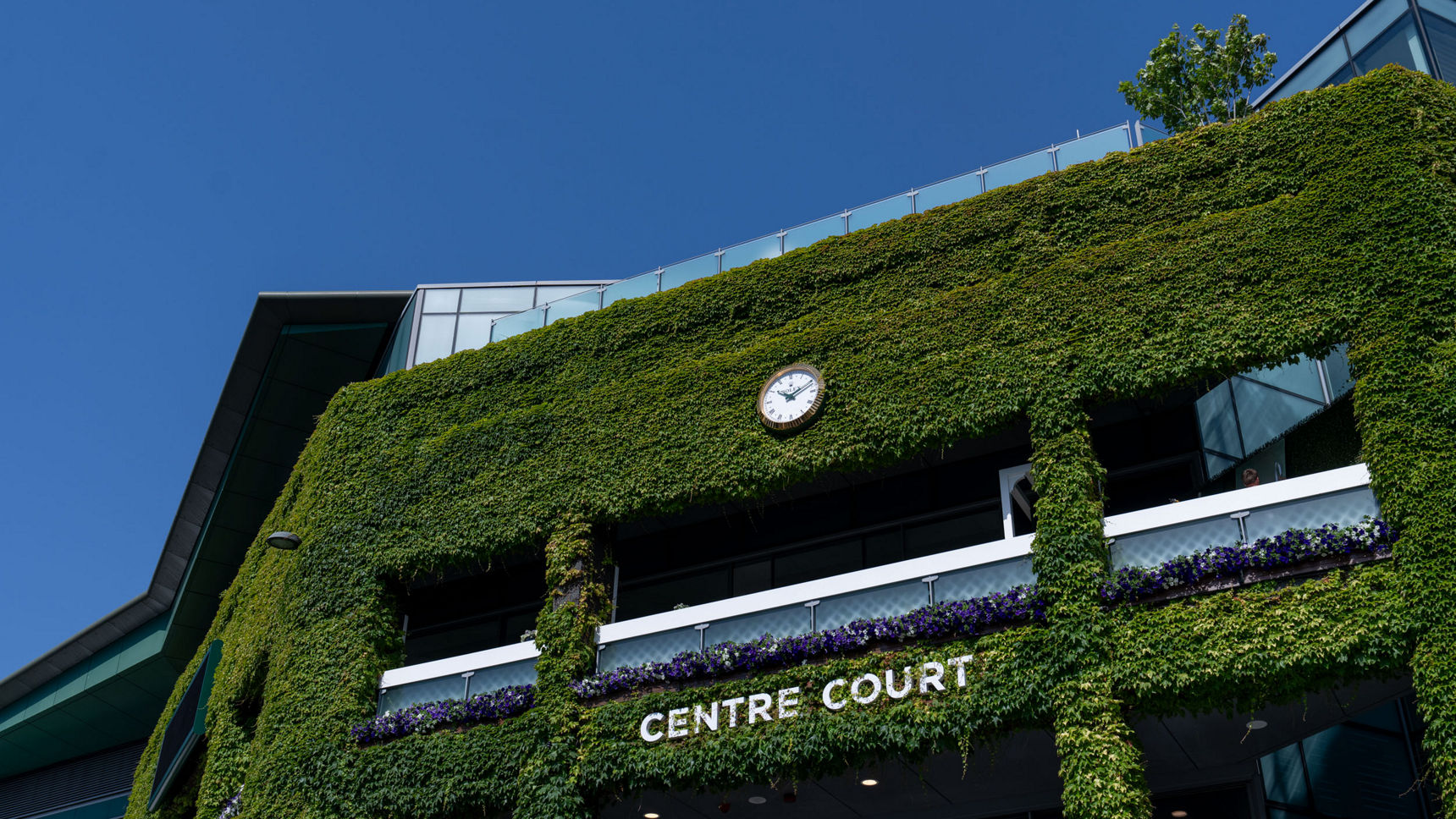
The tournament does not begin with a lavish ceremony on Centre Court. At Wimbledon, the belief is that the main ceremony is tennis itself. Traditionally, the reigning men’s champion opens the tournament, stepping first onto the perfectly prepared Centre Court.
Even the tennis balls have become part of Wimbledon tradition. Around 54,000 Slazenger balls are used during the tournament, and only Slazenger balls have been used since 1902. They are changed every seven to nine games to maintain consistent playing characteristics. When not in use, they are stored in special refrigerated rooms.
A large team of specialists looks after the quality of the grass. Preparation for the two weeks of competition continues almost all year round. Every day during the tournament, staff begin work before dawn, checking the surface literally millimetre by millimetre. After all, this grass is considered the most famous playing surface in world sport.
(C) Wimbledon
Wimbledon also has its own unusual guardian. His name is Rufus: a Harris’s hawk, an intelligent and exceptionally well-trained bird of prey. Since 2007, Rufus has flown several times a day around the grounds of the All England Club, scaring away pigeons and other birds so that nothing interferes with the matches.
Wimbledon is not only about sport. For two weeks, a quiet district of south-west London becomes the world capital of tennis. Members of the royal family, global celebrities, actors, musicians, athletes, politicians and fans from every continent come here.
Wimbledon has long been part of British culture. Tennis, tradition, style, respect for history and a unique atmosphere all matter here equally. It is a feeling that cannot be experienced at any other tournament in the world.
Today, boys and girls train every day at the National Tennis Centre of Moldova, just beginning their journey in big sport. Perhaps some of them will watch Wimbledon for the first time this summer. Perhaps right now, someone will pay attention not only to the score, but to how a champion moves, how they prepare for every point, how they respect the opponent and how they never give up.
Big victories begin with observations like these. And who knows, perhaps very soon a representative of Moldova will step onto the Centre Court of the All England Club.
For now, over the next two weeks, the entire tennis world will truly live and breathe Wimbledon.
(C) Wimbledon