
Part Two looks at what happens after you have found a suitable tournament: how to read entry and acceptance lists, keep track of deadlines, plan travel, understand WTN, and avoid turning your child’s tournament calendar into an endless chase for ranking points. The first part (From Club Tournament to Grand Slam: How the Tennis Ladder Works) is here.
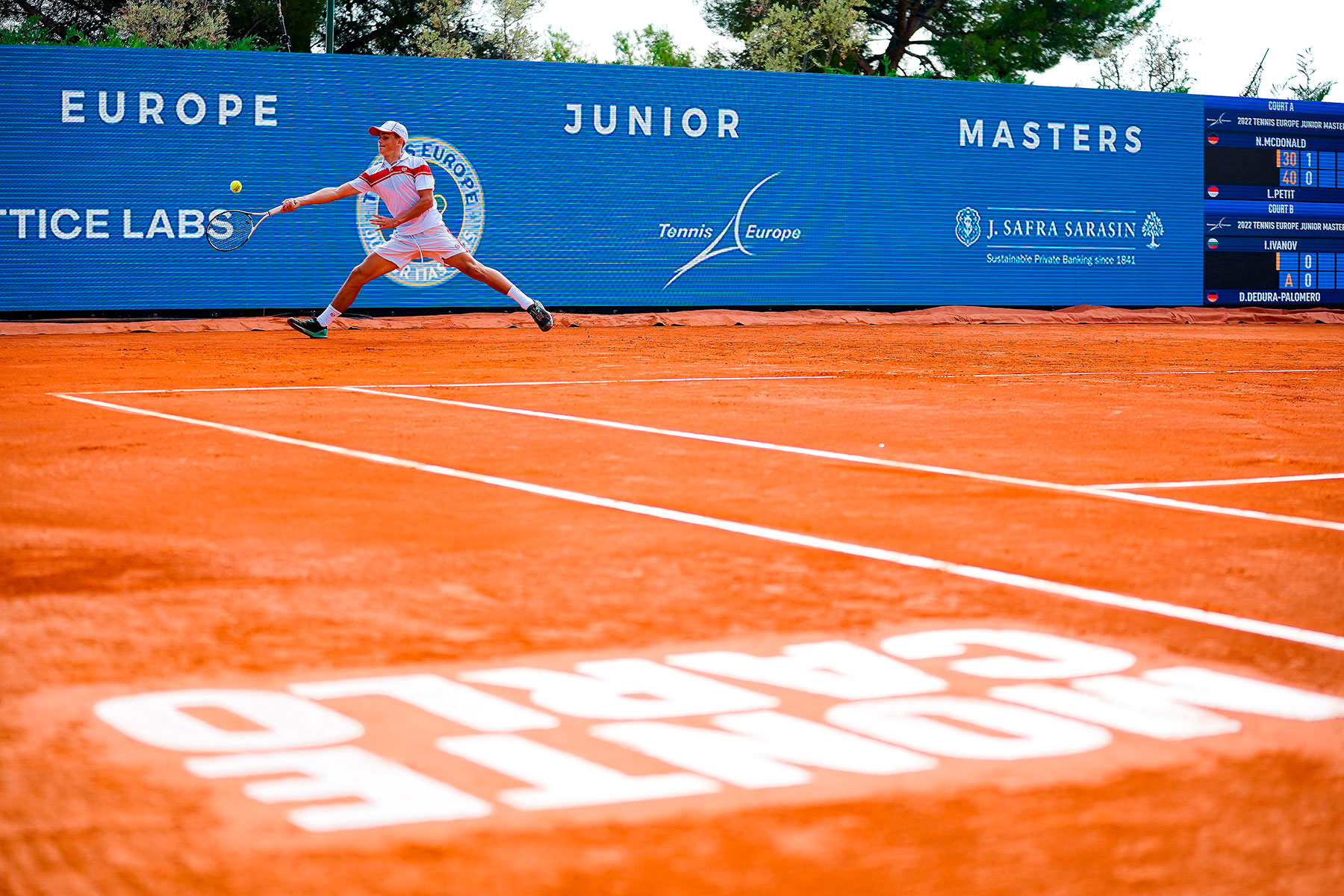
That is exactly why a tournament calendar should be built not around the name of a tournament, but around a specific objective.
If your child currently needs matches, choose tournaments where they are likely to play several competitive matches against opponents of a similar level.
If the goal is to earn their first international ranking points, look for an accessible Tennis Europe or ITF Juniors event rather than the most prestigious tournament you can somehow manage to enter.
If a player is consistently winning at their current level, you can gradually move up to a higher category.
If they have been losing in the first round for months, the solution is usually not to find an even stronger tournament.
There is a useful practical rule followed by many coaches: a tournament calendar should contain three types of events. Some should be tournaments where the player is among the favourites and needs to learn how to win. Some should be at roughly their own level, where every match is competitive. And a smaller number should be above the player’s current level, providing a benchmark for where they need to get to. The exact proportions depend on age and stage of development, but the principle itself makes far more sense than constantly chasing higher-category tournaments.
Look at the Field, Not the Tournament Name
Parents should learn to read the entry list rather than simply looking at the name of the tournament. Before travelling, pay attention not to the tournament logo and other attractive details, but to who has entered, the ranking of the last player currently accepted into the main draw, who is in qualifying, and what the cut-off was in previous years. A Category 2 tournament one week may be considerably stronger than a Category 1 event the next.
Another important term is acceptance. Entering a tournament does not mean that a player has been accepted into it. They may end up in the Main Draw, Qualifying, or on the Alternate List. Buying non-refundable flights and hotel accommodation before the player’s status is clear is therefore one of the most expensive mistakes inexperienced tennis parents can make.
In the international tournament system, it is particularly important to distinguish between several statuses. Main Draw means the player has been accepted directly into the main draw, Qualifying means they have been accepted into the qualifying draw, and Alternate List means they are waiting for a place to become available. A player’s position can change as other entrants withdraw, so the Acceptance List should not simply be checked once — it needs to be monitored until your travel plans become final.
Entering a Tournament Is a Process, Not a Single Click
International tournaments have an Entry Deadline — the final deadline for entering — and a Withdrawal Deadline, the deadline by which a player can withdraw without incurring the penalties applicable to late withdrawals. The exact dates and times should always be checked in the current tournament Fact Sheet and the applicable regulations, as they may change from season to season. After the Withdrawal Deadline, simply deciding “we have changed our minds” may already count as a late withdrawal and result in sanctions.
For a given week, a player may consider several tournaments and, where the system allows it, rank them in order of priority. This is useful when you do not yet know which draw the player will be accepted into. But this is also where acting mechanically becomes particularly risky: parents need to understand where their child stands on each list, which tournament has priority, and by what deadline a final decision must be made.
A practical rule: before buying non-refundable tickets, check four things — the player’s status, the withdrawal deadline, the tournament Fact Sheet, and the hotel’s cancellation policy.
Fact Sheet: The Document to Read Before Booking Your Tickets
Every international tournament has a Fact Sheet — essentially the practical guide to the event. This is where you will find the venue address, court surface, organisers’ contact details, official hotel, registration and practice times, transport arrangements, accommodation conditions, and other information that can easily be overlooked if you rely only on the calendar and tournament name.
At some events, the tournament category and regulations provide for hospitality — for example, accommodation and/or meals for certain participants. This can have a direct impact on the cost of the trip. As a result, two tournaments that look very similar on paper may have significantly different actual costs for a family.
WTN: Another Rating, but with a Different Purpose
Parents may also come across another abbreviation — World Tennis Number, or WTN. This is a global player-level rating system recently developed and introduced by the ITF. It provides separate ratings for singles and doubles, and its scale works in an unusual way: the closer the number is to 1, the higher the player’s assessed level, while beginners are closer to the upper end of the scale, around 40.
WTN should not be confused with the ITF Junior Ranking, a national ranking, or the ATP/WTA rankings. It is not another rung on the tournament ladder and not another system for accumulating ranking points. Its purpose is to assess playing level and help compare players who may compete in different age groups and competitive systems. Results from official competitions can enter the system through national federations and international tours.
The easiest way to remember the difference is this: a tournament ranking answers the question, “What results has this player achieved within this system?”, while WTN attempts to answer, “What is this player’s current playing level?”
Plan Tournament Trips in Series
It is also useful to think of tournaments in “series”. The ITF specifically encourages what are known as tournament swings — several events of a similar level held consecutively in the same country or neighbouring countries. For J30, J60, J100 and J200 events, organisers are encouraged to create two-week swings, while for J300 and J500 events such scheduling is part of the calendar requirements. This approach also makes sense for families: one trip covering two tournaments is often more economical than two separate flights, while the child has time to adapt to the surface, climate and playing conditions.
It is equally important to calculate not ranking points, but the cost of each quality match. You can spend €1,500 on an international trip and play one match. Or you can spend the same amount on several national tournaments and a training block and get ten competitive matches. Particularly between the ages of 10 and 14, the second option may often be more beneficial.
Do Not Overlook Doubles
Another useful tip is not to neglect doubles. At younger ages, doubles develops reactions, net play, serving, returning and tactical awareness. At ITF Juniors level, doubles results also contribute to the Combined Junior Ranking. So the attitude of “we lost in singles, let’s go home” often means voluntarily giving up half of the valuable tournament experience available.
Useful ITF Resources
In addition to its tournament system, the ITF offers the ITF Academy, an educational platform with resources for players, coaches and other tennis professionals. It includes courses, webinars and material covering training, sports science, psychology, nutrition and player development. Requirements regarding mandatory educational modules may change, so players who begin competing regularly at international level should monitor notifications in their official accounts and keep up to date with current ITF regulations.
A Ranking Is a Tool, Not a Diagnosis
And perhaps the most important rule of all: your child’s ranking is a tool, not a diagnosis. At 11, 12 or 13 years old, a position in the rankings guarantees very little about a future professional career. Children mature physically at different rates, train different amounts, and begin playing tennis at different ages. Having the highest ranking today does not necessarily mean having the greatest potential five years from now.
The right question for a parent, therefore, is not, “How can we get to ITF as quickly as possible?” It is: “What is the next level of competition that will help my child become a better player right now?”
Before moving to each new level, ask one question: “What exactly should this tournament give my child at this stage — matches, experience, ranking points, stronger opponents, or a pathway to the next level?” If there is no clear answer, perhaps the trip is not necessary yet.
But once that answer begins to determine the calendar, the tournament system stops looking like a chaotic collection of letters and numbers. It becomes what it is meant to be — a progressively more demanding pathway from a child’s first matches at their local club to international tennis.