
Every parent of a young tennis player dreams of one day seeing their child on the center court at Wimbledon or the US Open . But the path to professional tennis begins not with victories at major tournaments, but with the right player development.
This is where many people make one of the most common mistakes. It seems logical: the more tournaments a child plays, the faster they will become stronger. In practice, things turn out to be much more complicated. Modern experts, coaches, and international tennis organizations increasingly point to the opposite: excessive competition at a young age can hinder a player’s development rather than accelerate it.
A tournament doesn’t replace training—during a tournament, an athlete demonstrates the level of play they’ve already achieved. Training creates that level.
If a child spends almost every weekend at competitions, there’s practically no time left for proper technique work. Correcting their serve, improving their footwork, mastering a new shot, or adjusting their tactical thinking is impossible between matches .
It’s no coincidence that International Tennis Federation ( WT ) experts view the junior tour primarily as a stage in player development, rather than an end in itself. One of the goals of the junior tour reform, which came into effect in 2026, was to improve the quality of playing practice while reducing travel. The Round system was introduced for J30 and J60 tournaments. Robin followed by a playoff to ensure that young tennis players get more matches in a single competition without increasing the overall tournament volume.
Research also shows that successful professional players were not the ones who held the most junior tournaments played.
Australian researchers studying the development of players who subsequently entered the top 100 of the ATP and WTA world rankings came to an interesting conclusion. The most successful athletes moved up to higher-level competitions earlier and gradually reduced their participation in the numerous junior tournaments. The main factor in their development was not the number of matches, but their quality.
In other words, playing ten strong matches against worthy opponents is much more useful than winning twenty matches in which the level of resistance is low.
 Roger Federer © Serghei Visnevschii
It’s hard to imagine today that one of the greatest tennis players of all time wasn’t dominant as a child. Roger Federer himself has repeatedly said that he played a variety of sports in his youth, and that tennis wasn’t the sole focus of his life. He played soccer, devoted a lot of time to general fitness, and didn’t compete in endless tournaments.
Federer later noted that it was this diverse athletic development that helped him acquire excellent coordination, a feel for the ball, and the ability to quickly adapt to different game situations.
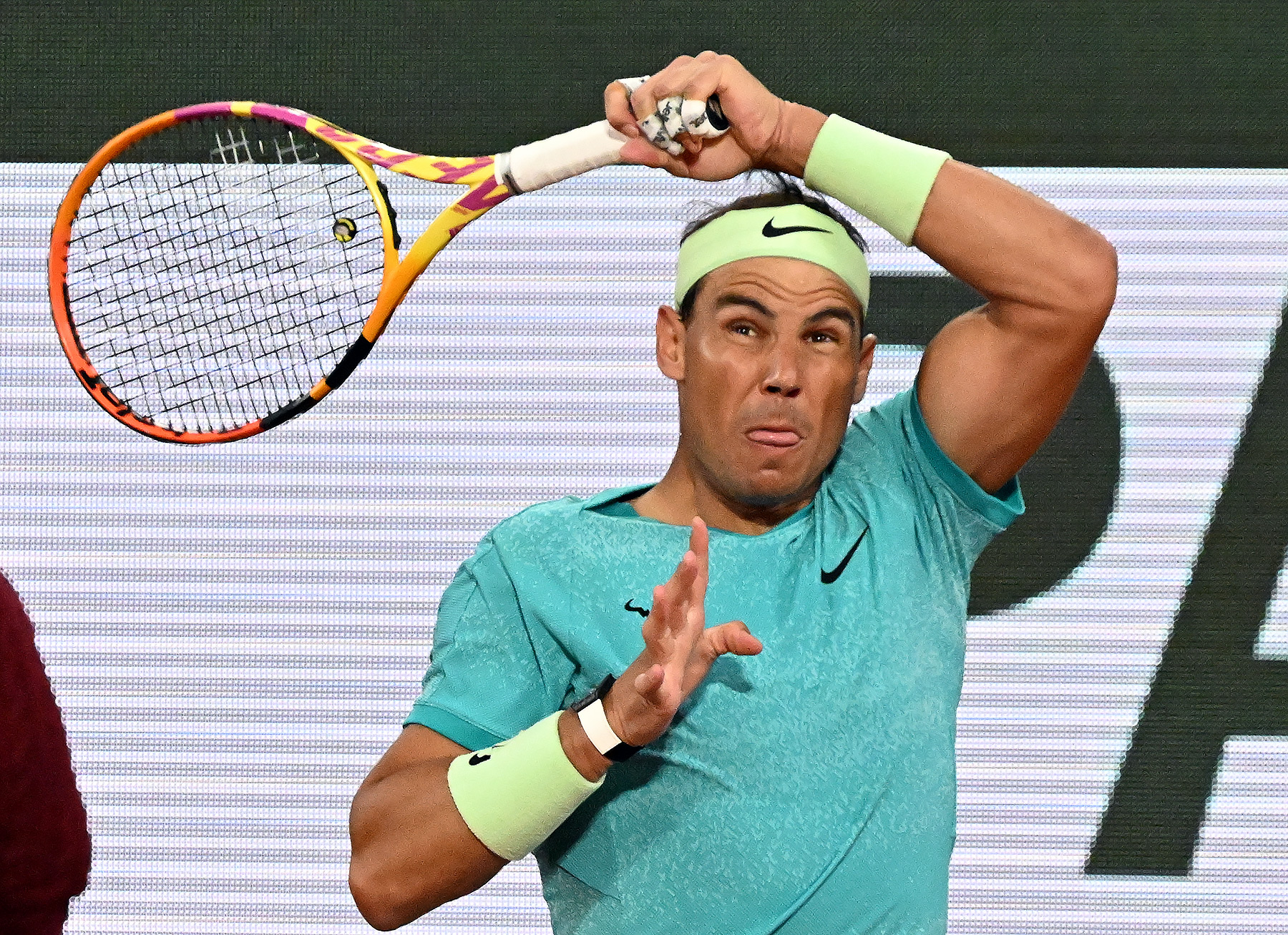 Rafael Nadal © Serghei Visnevschii
Nadal’s uncle and longtime coach, Toni Nadal, has repeatedly said that it is much more important to develop the right attitude towards training in childhood than to chase victories at every tournament.
Rafael also played football and only gradually focused exclusively on tennis. According to Toni Nadal , the player’s development, not the collection of childhood titles, has always been the top priority.
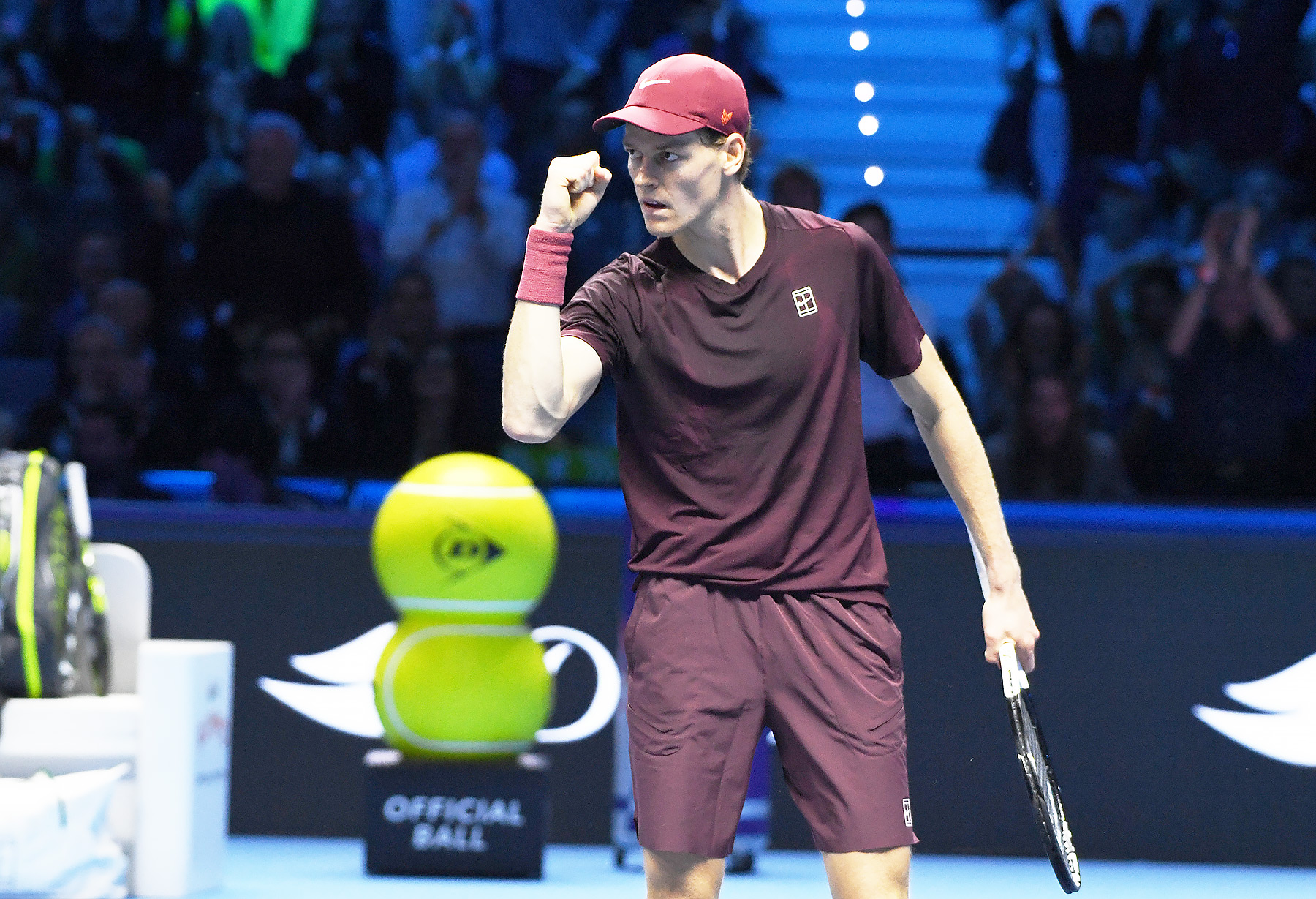 Jannik Sinner © Serghei Visnevschii
The story of today’s world star is particularly revealing. Until the age of 13, Yannick Sinner was a serious alpine skier and was considered one of Italy’s most promising young athletes. Only then did he finally decide to pursue tennis.
Because of this, he played significantly fewer junior tournaments than most of his peers. Moreover, he almost immediately began transitioning to professional competitions, without setting himself the goal of becoming the world’s No. 1 junior player.
Today it is difficult to call this path wrong.
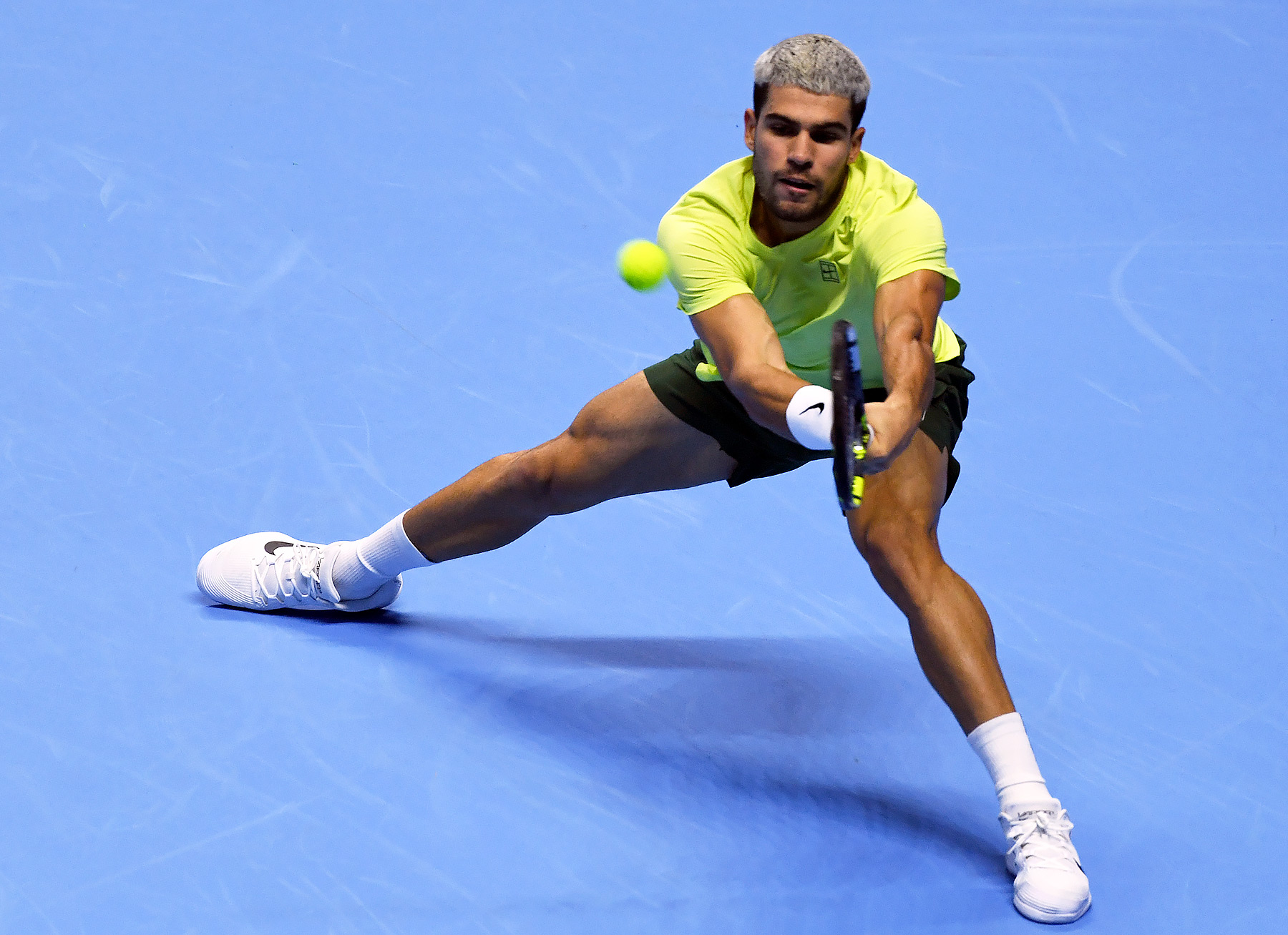 Carlos Alcaraz © Serghei Visnevschii
Carlos Alcaraz also didn’t aim to win every junior tournament – the Spaniard quickly moved on to ITF Men’s and ATP Challenger tournaments , where he gained much more valuable experience playing against adult opponents.
His longtime coach, Juan Carlos Ferrero, repeatedly emphasized that player development was more important than the junior ranking. The primary goal was not achieving impressive junior rankings, but preparing for professional tennis.
The history of tennis is replete with players who won junior Grand Slam tournaments and even finished the season ranked number one in the world among juniors, but then failed to establish themselves in the elite of professional tennis.
At the same time, many future ATP and WTA champions never became the best juniors in the world.
This doesn’t mean that junior tournaments are unnecessary. They are extremely important. However, they are only one tool in an athlete’s preparation.
Constant travel, changing hotels, long trips, losses, and ranking pressure can lead a child to view tennis solely as a source of stress. Psychologists call this emotional burnout.
It is especially dangerous when every competition turns into a test, and every defeat is perceived as a disaster.
The world’s best coaches strive to preserve the joy of the game in children. After all, it’s the love of tennis that allows them to endure the long journey to professional level.
Between the ages of 12 and 16, the body continues to grow rapidly. Bones, ligaments, and muscles develop unevenly. This is why sports doctors constantly warn about the risk of overtraining. A large number of matches without sufficient recovery time increases the risk of chronic injuries to the shoulder, elbow, lower back, and knee joints.
Modern academies place a significant emphasis not only on tennis, but also on strength training, coordination, mobility, injury prevention, and adequate rest.
There’s no single, universal number of tournaments. Everything depends on the athlete’s age, level of training, competition schedule, and individual characteristics.
However, most leading experts agree on several principles:
- training should take significantly more time than competition;
- each tournament should have a specific goal and not be held “for the sake of ranking”;
- Between competitive blocks there must be periods of full-fledged training work;
- the quality of matches is more important than their quantity;
- After each tournament, it is necessary to analyze not only the result, but also the experience gained.
Parents sometimes find it especially difficult to resist the temptation to sign their child up for yet another tournament. It seems like a missed competition means a lost opportunity. In fact, the opposite is often true.
Sometimes a week of quality training is far more beneficial than another trip hundreds of kilometers just to lose two matches in the first round.
It’s better to ask yourself a few simple questions:
- What will the child learn at this tournament?
- Is he prepared enough right now?
- Have you had time to recover from the previous competitions?
- Is there time to correct the mistakes identified in the last tournament?
If the answers are in doubt, it may be wiser to opt for the training process.
Almost every professional tennis player will confirm: no one asks how many junior tournaments you’ve won. But everyone remembers the Grand Slam champions among professionals. Therefore, the task of parents, coaches, and federations is not to ensure their child wins as many junior tournaments as possible as early as possible, but to create the conditions for their gradual, harmonious, and healthy development.
Ultimately, it is this path that most often leads to true success.
Junior tournaments are a crucial part of a tennis player’s development. They teach them how to cope with anxiety, make decisions under pressure, respect their opponents, and cope with defeat. But competitions should complement training, not replace it.
Modern tennis increasingly confirms a simple idea: the winner isn’t the one who played more matches at age 14, but the one who, by age 20, has managed to maintain his health, love for the game, and continued to develop. This is why smart calendar planning is becoming one of the most important tasks for coaches, parents, and the athlete themselves.
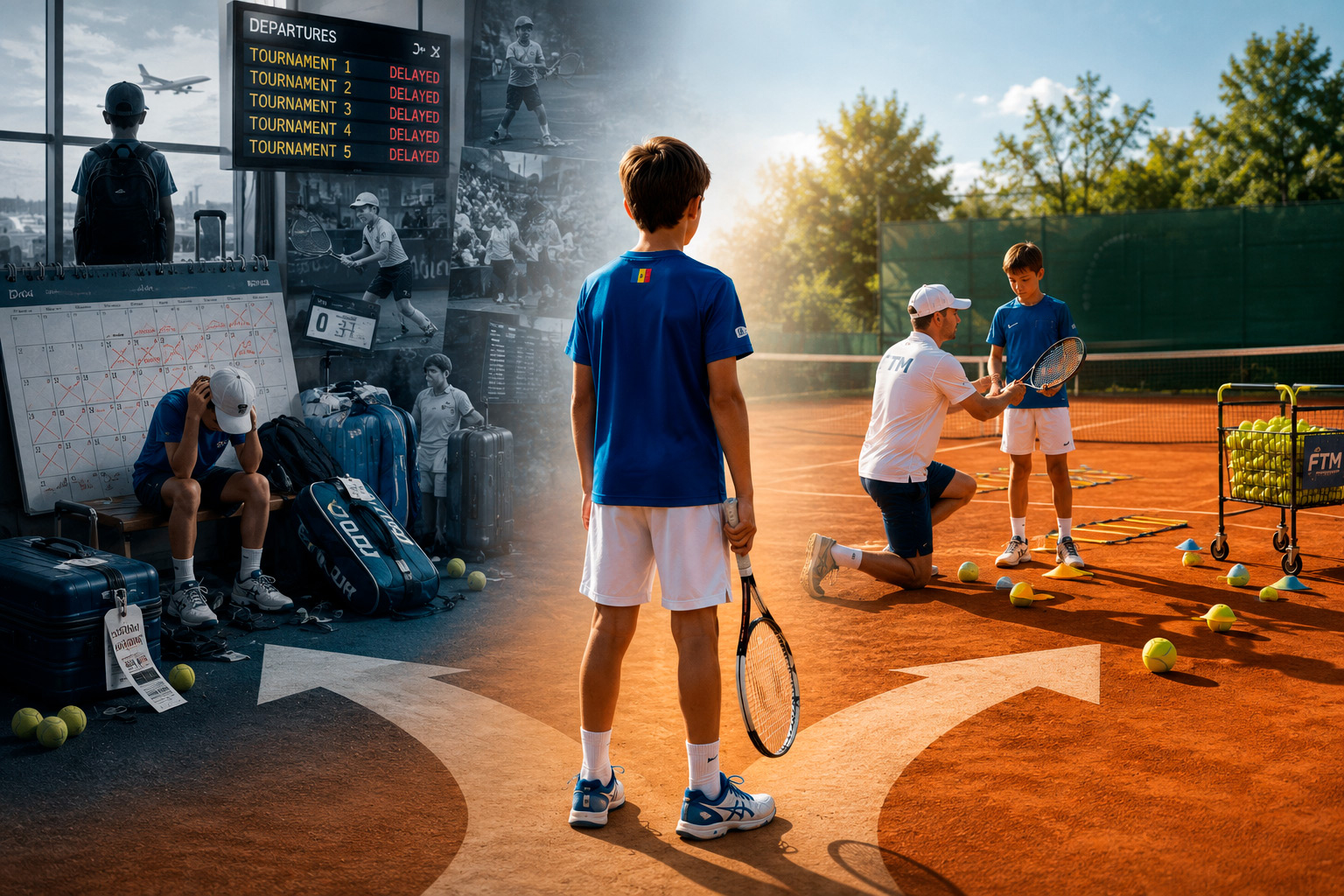 © AI
© AI