
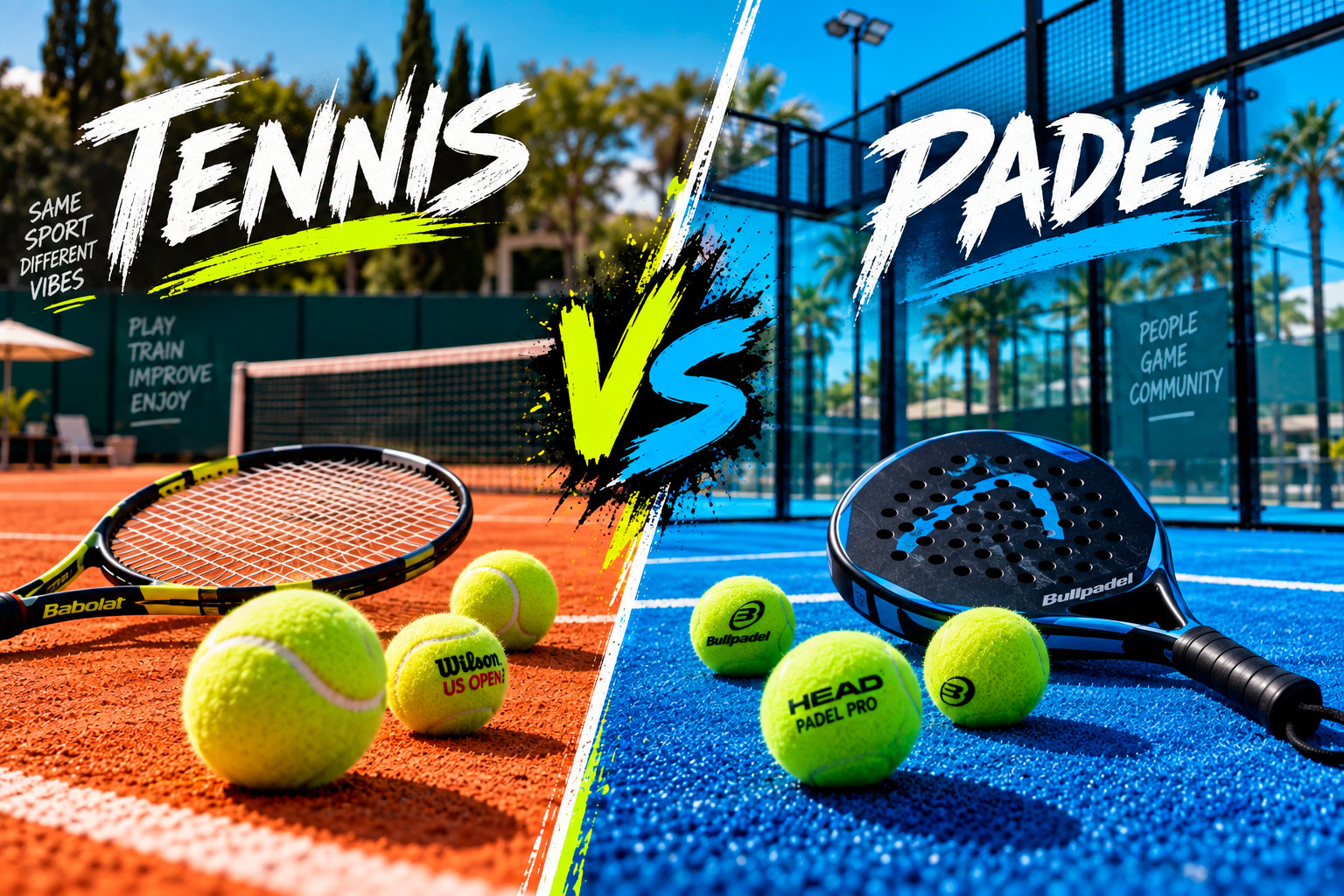
Renowned French coach Patrick Mouratoglou posed a provocative question on social media: “Will tennis die in five years?” He believes tennis is beginning to lose ground to padel and pickleball, while younger audiences are finding it increasingly difficult to watch long matches. For us, this discussion is interesting primarily from a different perspective. What does it mean for children who are just starting to play tennis today, for juniors already competing in tournaments, and for their parents? Does tennis need to become simpler and faster – or is its difficulty precisely one of the sport’s greatest values?
The idea for this article came from a recent post by Patrick Mouratoglou. The French coach immediately clarified that tennis, of course, will not disappear in five years. But in his opinion, it may start losing ground.
On the court, its competitors are padel and pickleball. They are easier for beginners: even in their first session, people can often sustain a rally and enjoy playing. In tennis, reaching that point usually takes much longer.
Off the court, there is another problem. “Younger generations no longer follow full matches the same way,” Mouratoglou wrote. He uses this as one of the reasons for creating his UTS competition, where matches are shorter, there are fewer pauses between points, there is no second serve, and an entire match usually lasts around 40–50 minutes.
But is tennis really losing people?
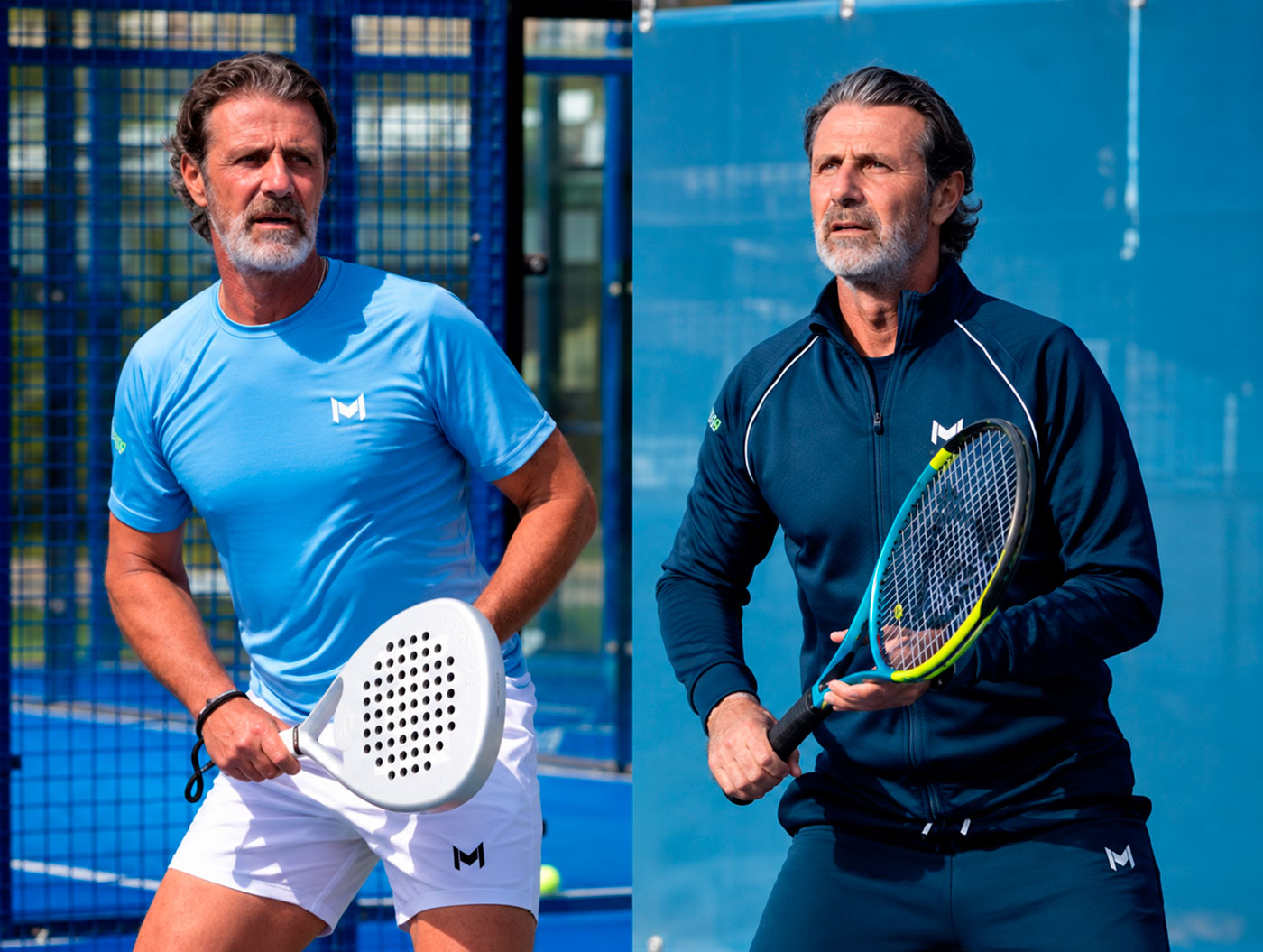
Patrick Mouratoglou
So far, the statistics suggest otherwise. The latest ITF Global Tennis Report counted almost 106 million players across 199 countries. In the previous comparable study in 2019, there were 84.4 million. In France, the number of licensed tennis players has also been increasing every year since 2020.
At the same time, padel is indeed growing rapidly. And this is where a thought expressed by Toni Nadal, Rafael Nadal’s long-time coach, becomes particularly interesting.
In his view, it is not only about the cost of courts or fashion. People themselves have changed. Most people play sport for enjoyment, health and social interaction. Padel allows them to start playing relatively quickly. Tennis first requires them to learn how to feel the ball, move, serve, hit forehands and backhands, and construct a rally.
Toni Nadal recalled that there was a time when someone might practise against a wall for weeks before properly stepping onto a court to play a match. Today, not everyone is prepared to wait that long.
For parents of a child who is just starting tennis, this is perhaps the most interesting part of the discussion. The first months of training can be difficult. Progress comes slowly, and it is very easy to compare your child with someone who started earlier or is developing faster. Modern tennis is already trying to shorten this period: red, orange and green balls, smaller courts and adapted rackets allow children to start actually playing earlier rather than simply learning technique.
But another question arises: how far should simplification go?
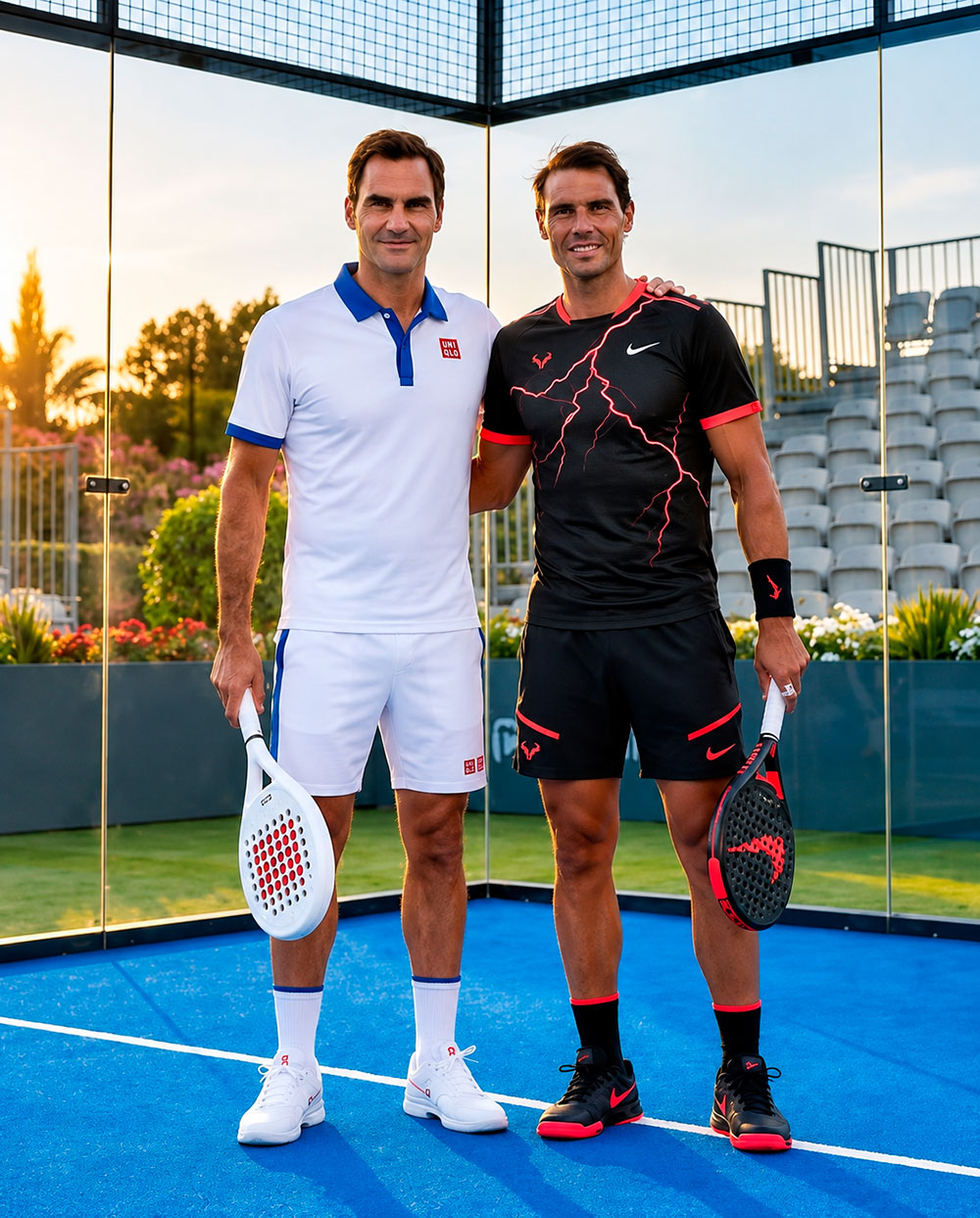
Roger Federer si Rafael Nadal
Rafael Nadal has been cautious about the idea of shortening matches. “I don’t remember one match in my life – my own or any tennis match – that finished in an hour and stayed in people’s memories,” he said. For Nadal, the length of a match is not a flaw but part of the game. Physical fatigue, the need to endure, change tactics and find a way back into a match after a difficult period create the tension for which tennis is loved.
Roger Federer held a similar view. He took part in experiments with shorter formats and considered them interesting, including as a way of introducing children to tennis. But he did not want major changes to the professional game. “The beauty of our game is that you don’t know if you’re going to be on the court for 45 minutes or three hours,” Federer said.
Novak Djokovic sees the issue somewhat differently. He has repeatedly spoken about the need to make tennis more attractive to younger audiences and has been open to shorter formats. At the same time, the Serbian has pointed to a threat at club level: tennis courts are losing out to padel and pickleball in terms of economics and the number of people who can play simultaneously on the same amount of space.
Even the younger generation of professionals does not provide a clear answer. Carlos Alcaraz experienced shorter sets and other experimental rules at the Next Gen ATP Finals. He liked some of the changes and disliked others. In particular, he criticised the excessively short warm-up. Being young does not automatically mean wanting to turn tennis into the shortest possible game.
Jannik Sinner shows another approach. To get closer to younger audiences, it is not necessary to change the match itself. In 2026, he explained that his YouTube content was intended to show fans what an athlete is like away from the court. Sinner himself enjoys watching similar videos about athletes from other sports.
And this is where two different tasks should be separated.
The first is to make children enjoy playing tennis. The second is to make young people enjoy following tennis.
For the first, there are already adapted balls, courts and teaching methods. For the second, there are short videos, social media, highlights, statistics, broadcasts of selected parts of matches and the opportunity to follow a favourite player far beyond the court.
A child does not have to watch an entire five-hour match to love tennis. They can see a few rallies from Alcaraz, watch Sinner practise, check a tournament result, and then go out on court themselves in the evening. The way sport is consumed is changing – that does not necessarily mean that interest in the sport itself is declining.
And the difficulty of tennis has another side.
You cannot learn everything here in just a few sessions. Not every shot works immediately. Sometimes you have to lose a match that you almost won. You have to make decisions on your own, deal with emotions and find another way to play when the original plan stops working.
For a young athlete, this may not be a disadvantage of tennis, but one of the reasons to play it.
So for parents and young players, Mouratoglou’s question, “Will tennis die in five years?” can be put differently.
Should tennis become easier in order to keep up with the times, or do children still need a sport in which not everything works straight away?
It will probably have to do both: make a child’s first steps easier, communicate with young audiences in a more modern way, and use new formats where they genuinely help. But at the same time, it must preserve what cannot be reduced to a few minutes – the time needed to learn how to play, lose, think on court and become better.