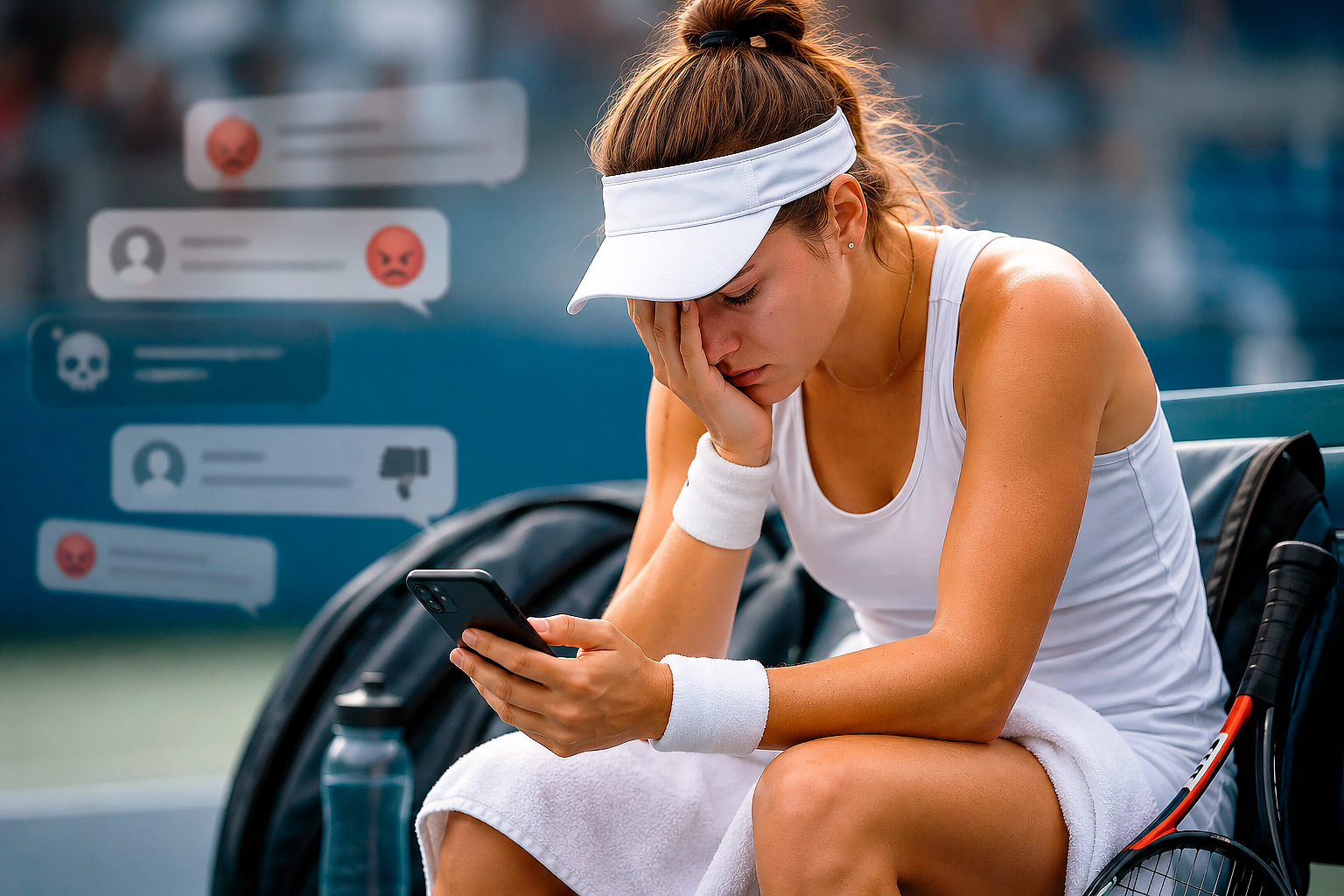
Professional tennis has long extended beyond the court. Today, players have to cope not only with the pressure of competition but also with the wave of insults, threats and harassment that often follows them on social media after matches. A new joint report by World Tennis and the WTA for the 2025 season shows that the problem remains serious, although efforts to combat it are producing tangible results.
During the past season, the Threat Matrix system, combining artificial intelligence with the work of specialist analysts, examined more than 1.2 million posts and comments across X, Instagram, Facebook, YouTube and TikTok. More than 12,000 messages were classified as abusive, while 3,726 contained serious threats, racist abuse, sexual harassment or incitement to violence.
One of the most encouraging findings is that 66% of the most serious abusive content was successfully removed, while 35 accounts were referred to law enforcement agencies for further investigation. Furthermore, 89% of users identified as responsible for serious abuse in 2024 did not reappear in similar investigations during the following season, highlighting the effectiveness of the measures already in place.
Interestingly, the report shows that the main source of abuse remains the same. According to the findings, 42% of all verified online abuse and 59% of the most serious threats came from people who had lost bets on tennis matches. This group is significantly more likely than others to publish threats, insults and accusations directed at players after matches.
Another important conclusion is that a relatively small number of users generate the majority of abusive content. Just 9% of the most active abusive accounts were responsible for 87% of all high-concern abuse, while 26 particularly aggressive accounts, each posting more than 30 abusive messages, were permanently removed from X and Instagram.
World Tennis and the WTA emphasize that player safety and mental wellbeing remain among the highest priorities in professional tennis. However, the organizations also stress that the problem cannot be solved by the sport alone. Meaningful progress requires close cooperation between social media platforms, law enforcement agencies, tournament organizers and the betting industry.
Modern tennis demands not only exceptional athletic ability but also remarkable mental resilience. For today’s players, the battle does not end with the final point. It continues in the digital world, making protection from online abuse just as important as developing the sport, organizing tournaments and supporting the next generation of players.