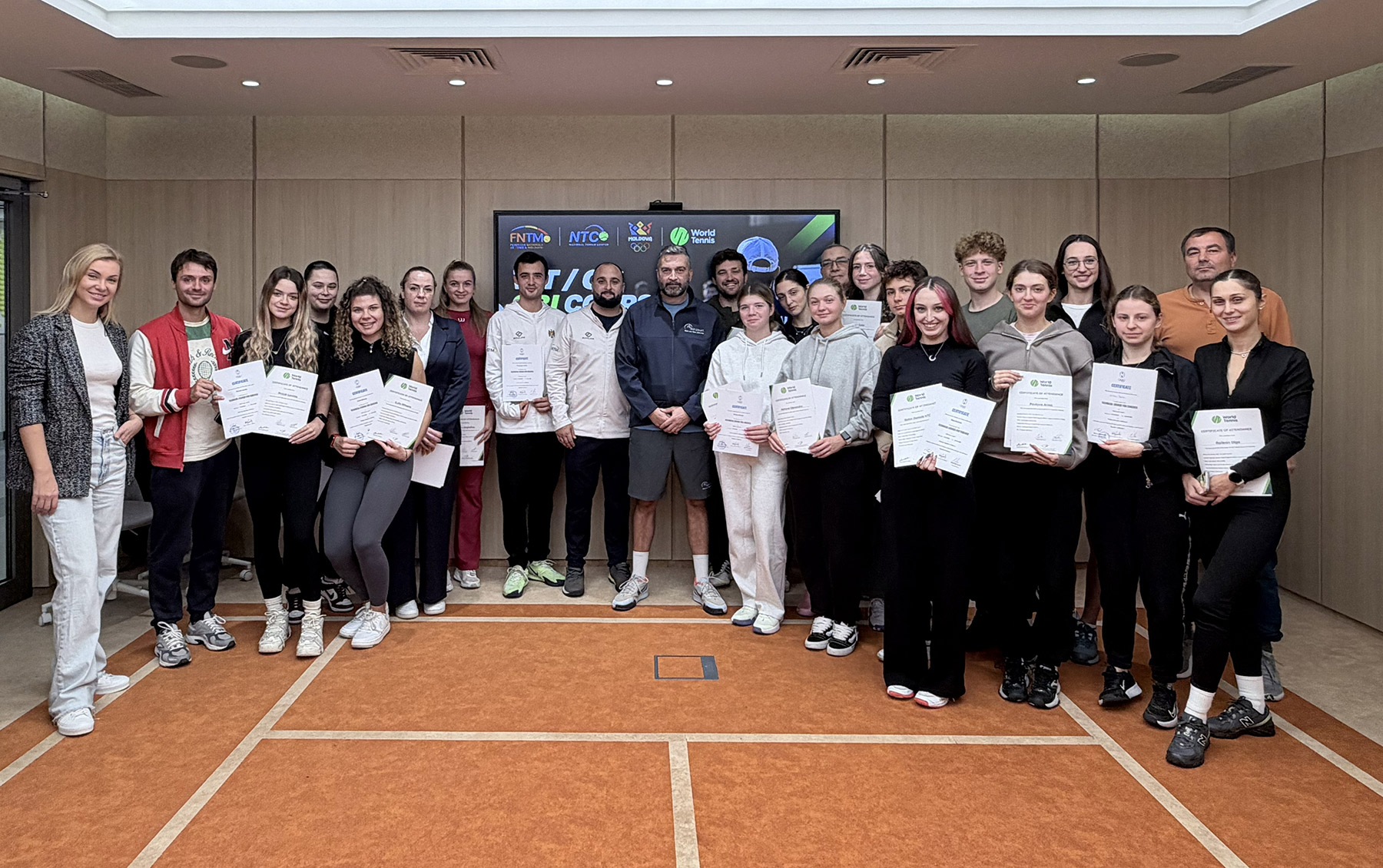
A two-stage international World Tennis coach education programme has concluded at Moldova’s National Tennis Center. Throughout October, specialists with different levels of professional experience studied modern tennis teaching methods and improved their practical skills. The courses’ lead tutor, Kenan Malicbegovic, highly praised the participants’ preparation, the conditions at the National Tennis Center and the prospects for tennis development in the country.
How can a complex technical element be properly explained to a beginner? How should a training session be organized so that every exercise has a specific purpose? And what distinguishes a good coach from a specialist who simply knows how to play tennis well?
These questions formed part of the educational programme held in October at the National Tennis Center in Chișinău.
The introductory Play Tennis course took place here from 1 to 4 October, followed by the WT / OS CBI Course (Coaching Beginner & Intermediate Players) from 12 to 23 October, dedicated to preparing coaches to work with beginners and intermediate-level tennis players.
The courses were organized by the Moldova Tennis Federation under the Olympic Solidarity programme, with the support of the National Olympic and Sports Committee of the Republic of Moldova. Training was conducted by international World Tennis tutor Kenan Malicbegovic from Bosnia and Herzegovina, as well as NTC coaches Evgeny Chelarsky and Andrei Andreev.
When the Coach Becomes a Student
One of the distinctive features of the course was the unusually diverse group of participants. For some, the training was an introduction to the fundamentals of the profession; for others, it was an opportunity to look at their familiar work from a new perspective.
It was precisely this combination of experience and professional interests that particularly impressed Kenan Malicbegovic.
“What made this course particularly interesting was the diversity of the group. We had young coaches just starting their careers, experienced specialists with five to ten years of experience, and participants from recreational tennis backgrounds. Despite their very different backgrounds, everyone demonstrated a strong desire to learn and improve,” he said.
According to the tutor, the atmosphere during the sessions was one of the programme’s main strengths.
“I am very satisfied with how the course went, especially with the motivation, enthusiasm and commitment shown by all participants.”
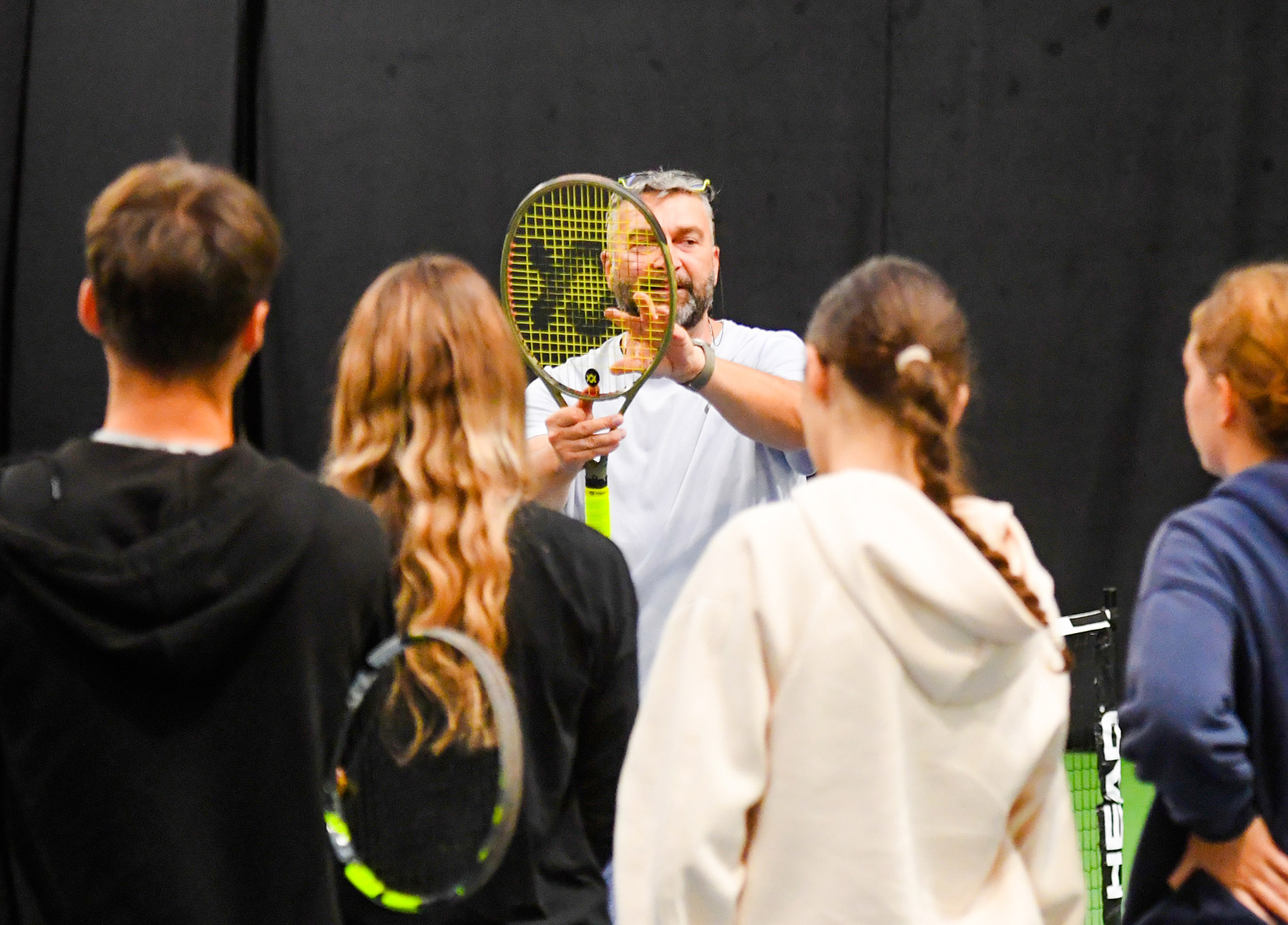
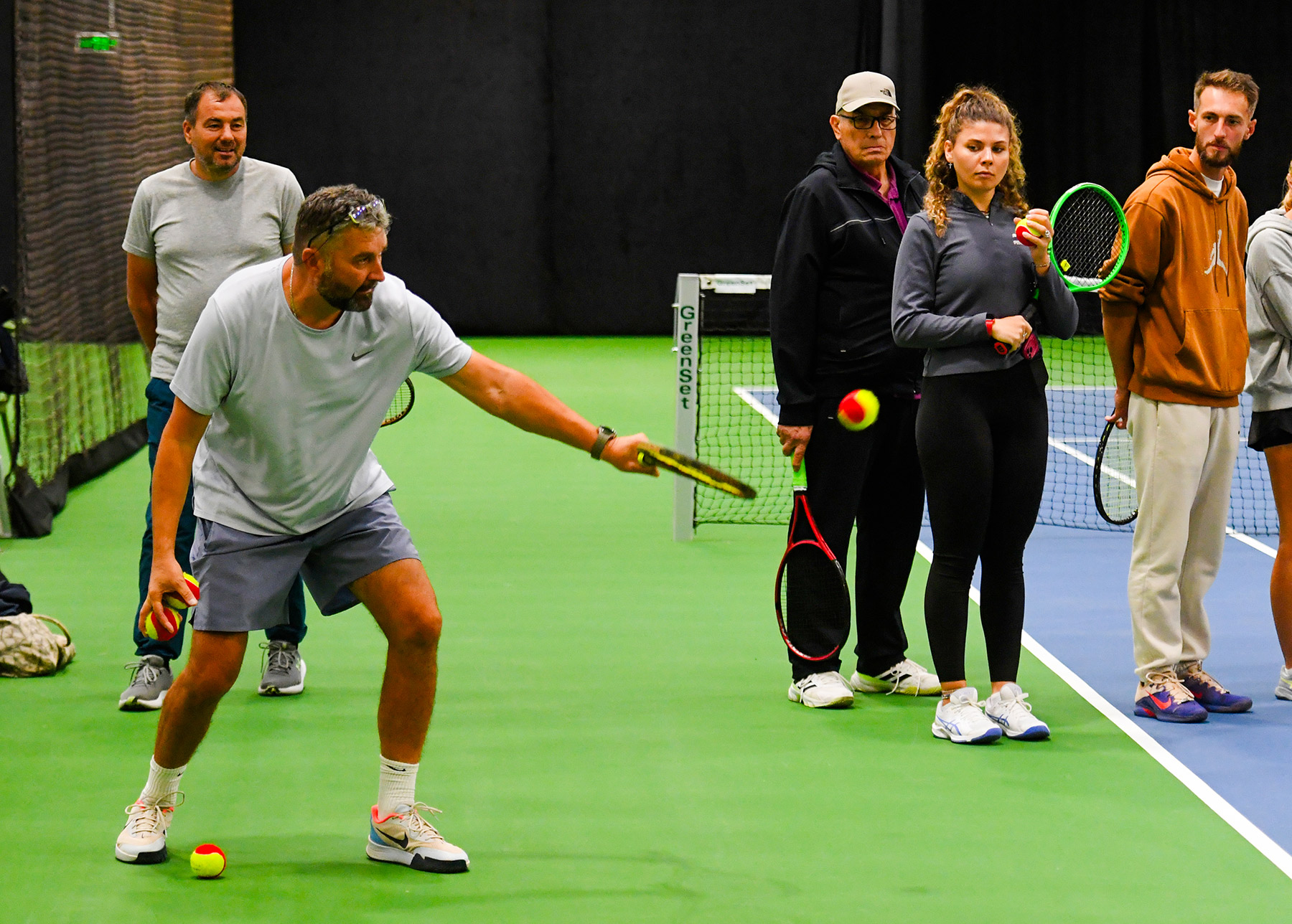
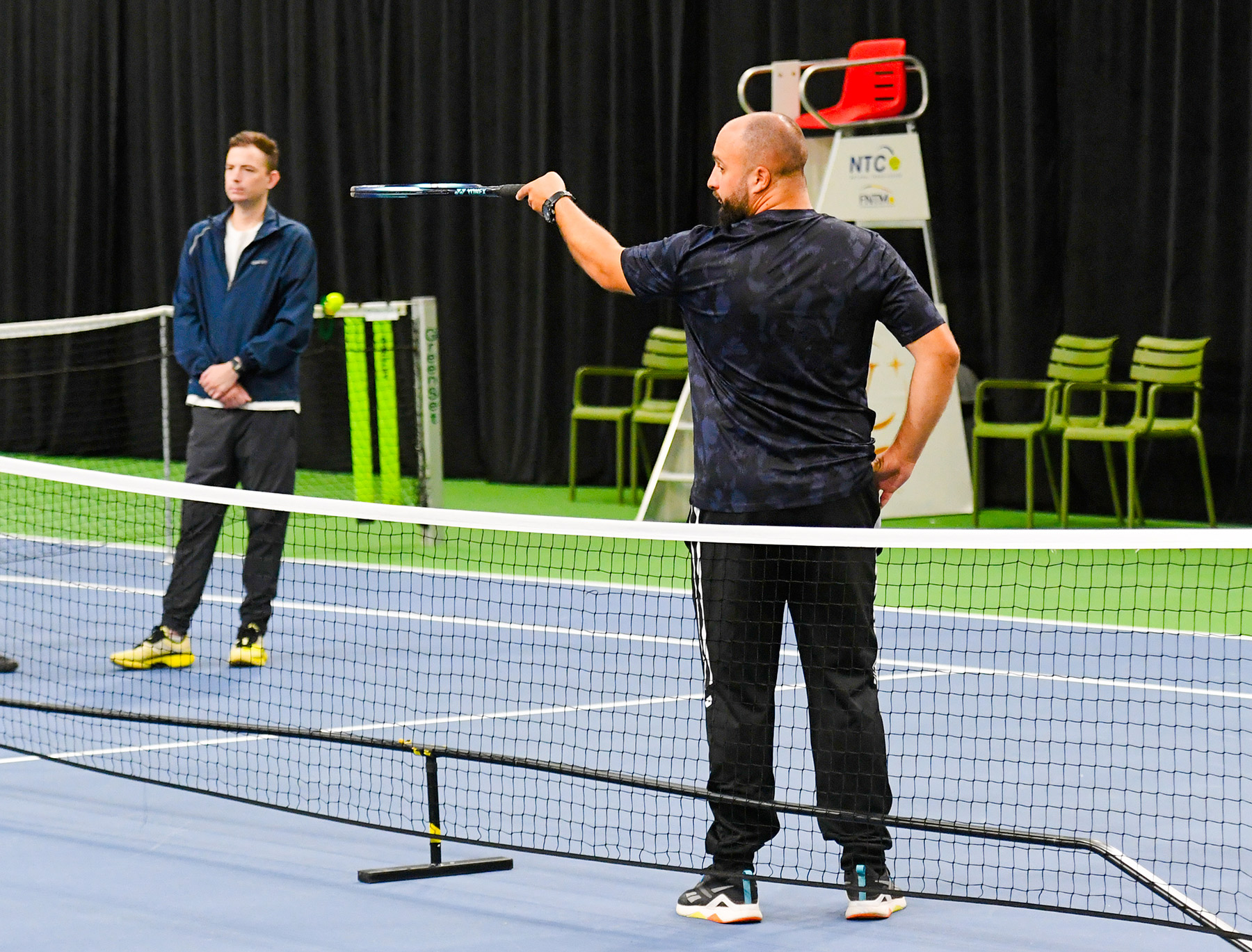
Not Just Demonstrating a Stroke, but Teaching How to Play
The October training programme was structured around the gradual development of coaching competencies.
The first stage, Play Tennis, focuses on the fundamentals of working with beginners, including children. Its aim is to help coaches make their students’ first steps in tennis accessible, engaging and methodologically sound.
The second stage, CBI, involves a deeper immersion in the profession. The organization of the training process, interaction with players, teaching methodology and practical on-court work come to the fore.
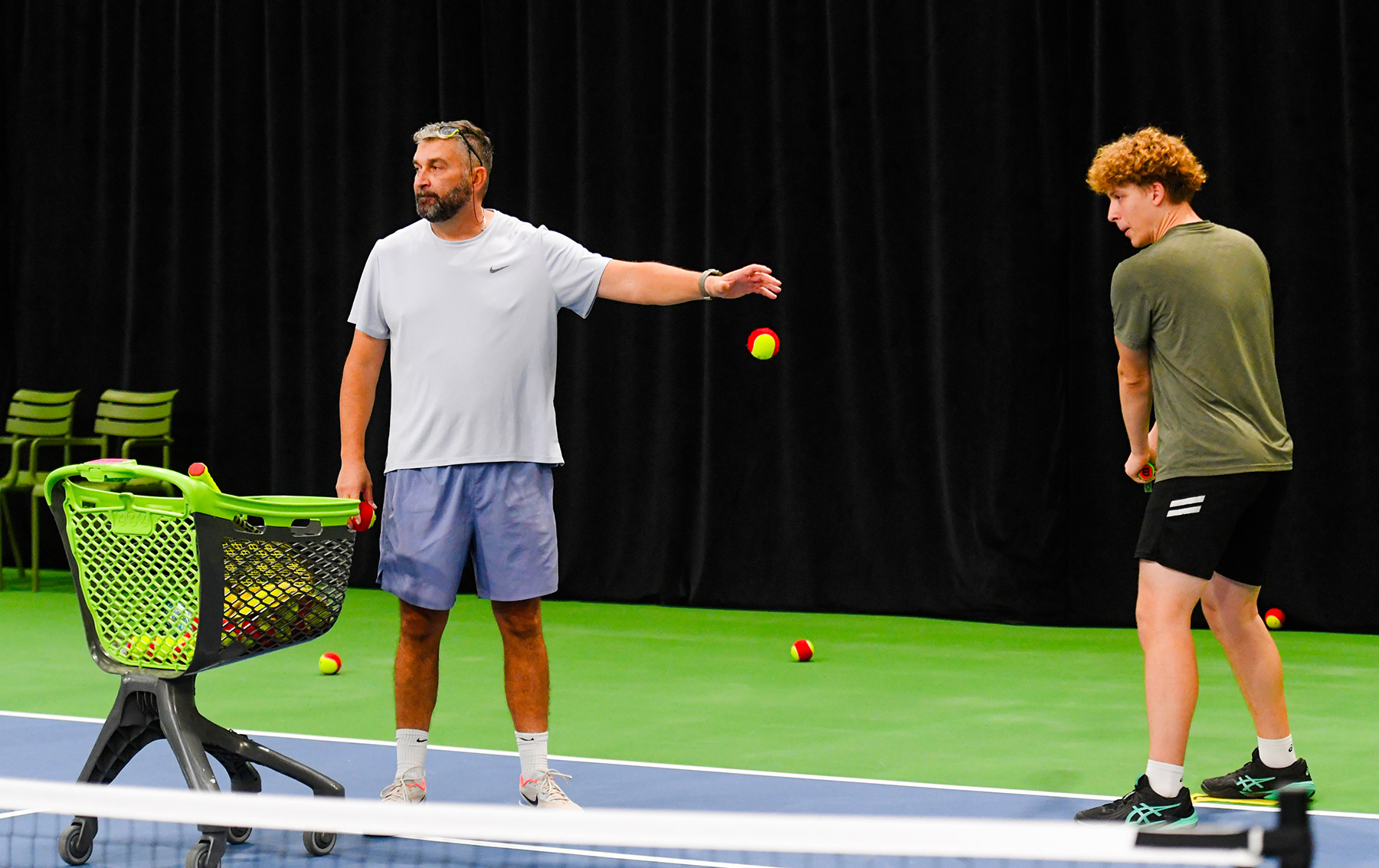
“During the course, we focused on developing practical coaching skills, particularly lesson organization, communication, teaching methodology and on-court coaching,” Malicbegovic explained.
A modern coach must not only possess technical knowledge but also understand how to pass it on to a student. The same exercise may be effective for one player and completely unsuitable for another. It is therefore important to be able to assess a player’s level, formulate the task correctly and adapt the session to the player’s abilities.
At the same time, the key outcome of training is not the number of exercises mastered, but the coach’s ability to independently deliver higher-quality and more effective sessions.
It was precisely this progress that the lead tutor noted among the participants in the Chișinău course.
“It was very encouraging to see the progress of all participants, especially their growing confidence and ability to organize and deliver more effective training sessions.”
This is perhaps one of the most important assessments of the programme: new knowledge had already begun to turn into practical professional skills.
National Tennis Center Receives High Praise
Kenan Malicbegovic devoted particular attention to the National Tennis Center, which hosted both courses.
The international tutor, familiar with tennis infrastructure in different countries, highly praised the conditions created in Chișinău.
“Having visited many tennis facilities around the world, I can say that this center provides excellent conditions for high-quality training, player development and coach education,” he emphasized.
Opened in October 2025, the National Tennis Center has become an important part of Moldova’s tennis infrastructure. The complex has six indoor hard courts and seven outdoor clay courts, as well as facilities for athletes’ physical training and recovery.
The ability to conduct both player training and international educational programmes at one venue makes it possible to use the center’s potential not only for competitions, but also for the systematic professional development of specialists.
However, in Malicbegovic’s view, modern infrastructure alone does not guarantee sporting progress.
“At World Tennis, we firmly believe that modern sports facilities and well-educated coaches are two essential elements of long-term tennis development.”
Investing in Coaches Means Investing in the Future
The results of an educational programme are not measured in matches won or ranking points. Their impact emerges gradually—in coaches’ work with their students, in the quality of training sessions and in how successfully beginners progress through the first stages of development.
Over the years, one well-trained coach can help dozens of young players. That is why the development of coach education matters far beyond an individual training course.
For the Moldova Tennis Federation, holding two consecutive stages of the international programme was another step towards building a modern system for training specialists.
Kenan Malicbegovic believes that the combination of new sporting opportunities and consistent work to improve coaches’ qualifications can significantly change the prospects for tennis in Moldova.
“I believe that the opening of this center, together with continued investment in coach education, marks the beginning of a new era for tennis in Moldova,” the international tutor said.
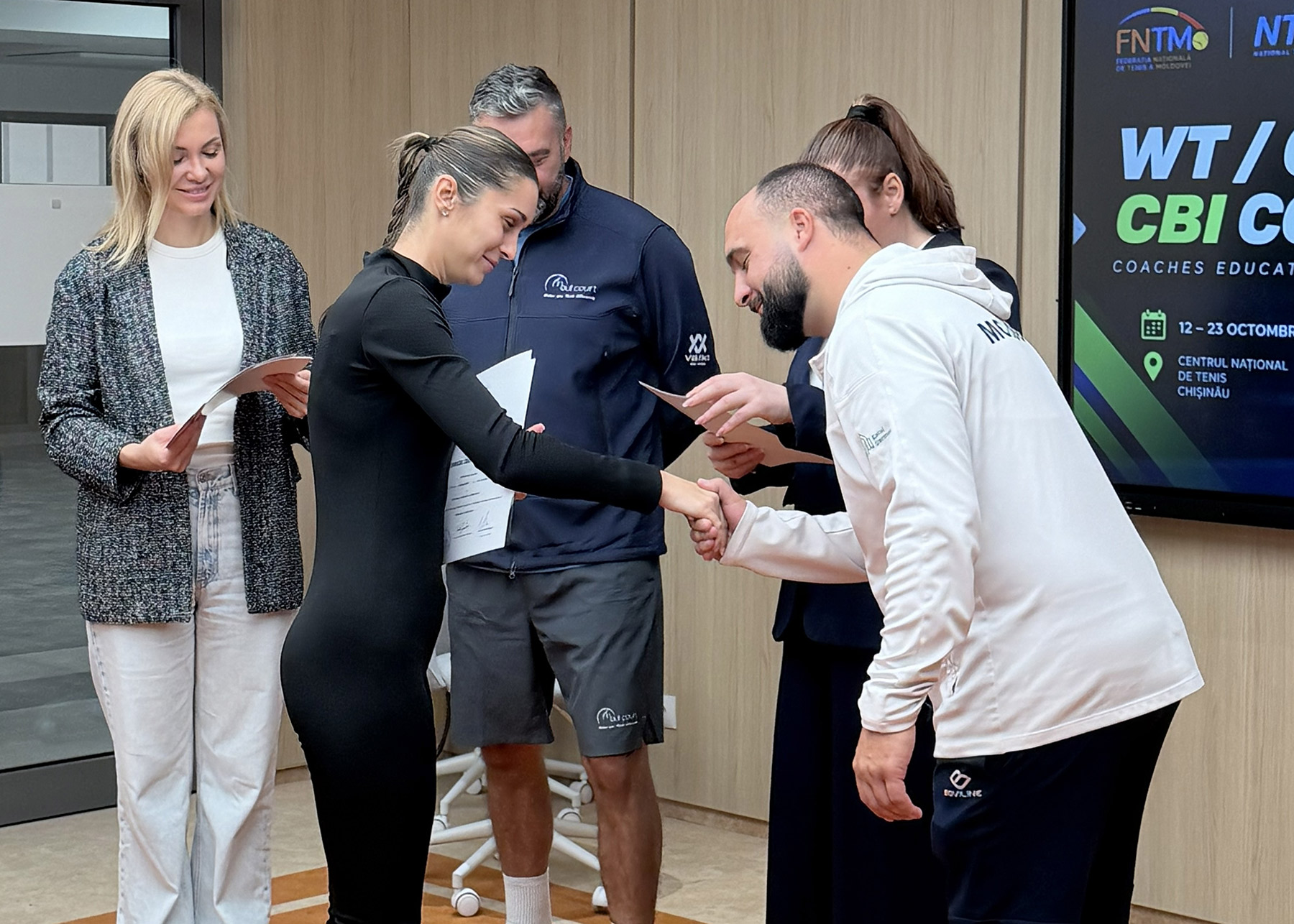
At the end of the training, he congratulated the participants and thanked the Moldova Tennis Federation for the excellent organization of the course.
“I would like to congratulate all participants on their efforts and encourage them to continue learning and applying the knowledge they have gained in their daily coaching practice.”
The courses ended on 23 October, but their main result still lies ahead. It will become apparent on the courts—in better training sessions, more confident work by specialists and new opportunities for Moldova’s children and young tennis players. After all, the road to major victories begins not only with a talented player, but also with a well-trained coach.