
Organizing major international sporting events is never easy. It is demanding, expensive, and often exhausting. It requires hundreds of organizational tasks, dozens of dedicated professionals, strict compliance with international standards, and constant coordination between players, officials, media teams, sponsors, volunteers, and spectators. Even the weather often seems determined to become part of the organizing committee.
Yet after hosting the Moldova Open Challenger 100 and the Davis Cup Europe Group III event in Chișinău, one thing became abundantly clear: tournaments of this level are not simply important for Moldova. They are essential.
The National Tennis Federation of Moldova successfully delivered two major international events back-to-back, earning praise from players, ATP and ITF officials, partners, and colleagues from around the world. The new National Tennis Center passed a significant test of professional sport and demonstrated that Moldova is fully capable of hosting competitions at the highest international level.
Today, the question is no longer, “Why do we need events like these?”
The real question is, “How do we make them a permanent part of Moldova’s sporting landscape?”
Because an international tournament is about far more than what happens on the court.
It is a showcase for an entire country.
When players, coaches, officials, ATP and ITF representatives, journalists, and fans arrive in Chișinău, they do not simply see a point on a map. They experience the airport, the infrastructure, the hotels, the courts, the services, the people, the hospitality, and the overall level of organization. In other words, they discover Moldova through sport.
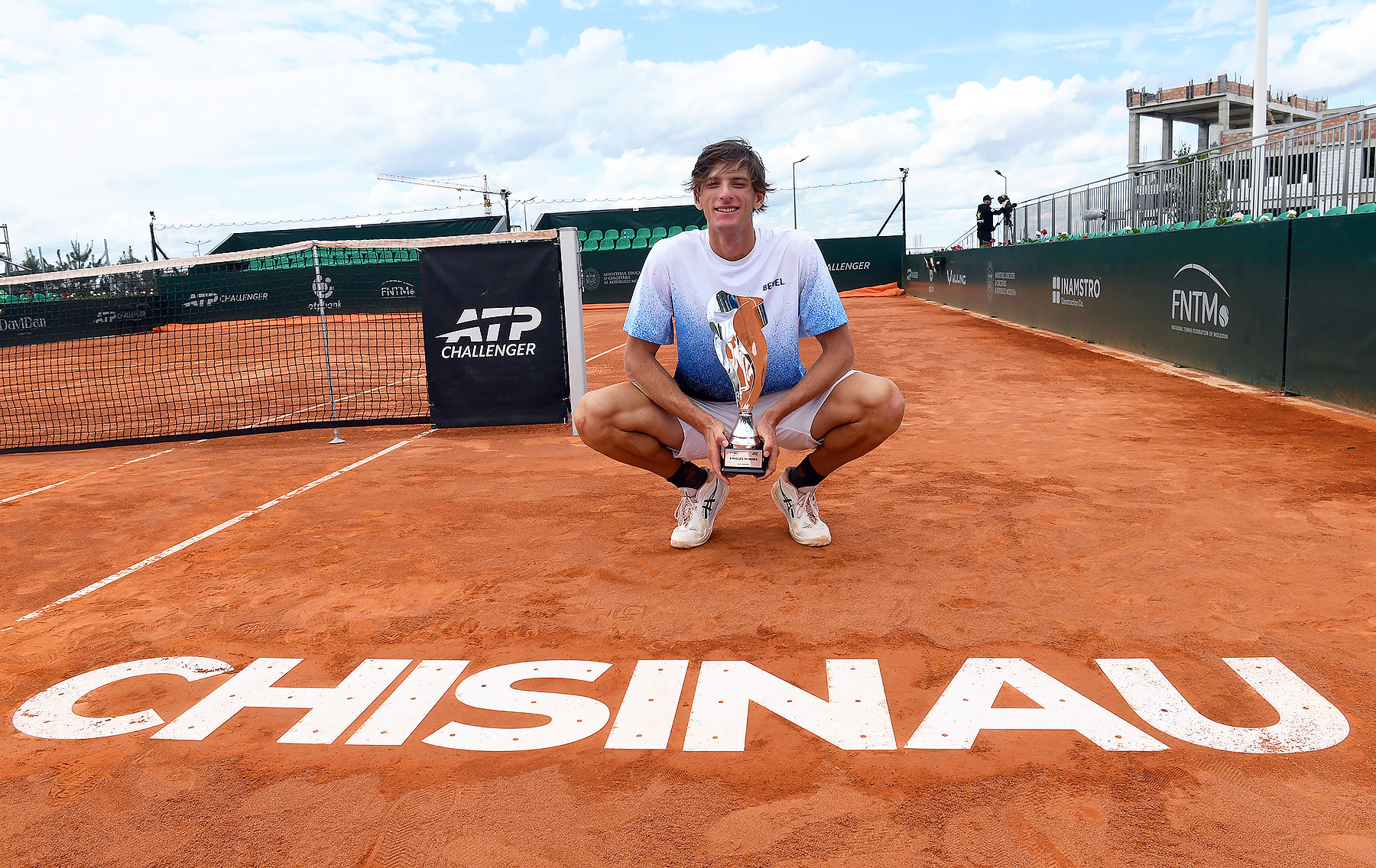
Winner of the Moldova Open challenger 2026 tournament Stefanos Sakellaridis
And when that experience is a positive one, the country leaves a lasting impression.
The Moldova Open Challenger 100 represented a major step forward compared to the previous year. The tournament was upgraded to Challenger 100 status, moved to its new home at the National Tennis Center, and attracted a strong international field. It is no longer merely a local sporting event. It has become part of the global professional tennis calendar.
For players, tournaments like these represent one of the most important stages on the pathway from the ITF circuit to the ATP Tour. This is where ranking points are earned, experience is gained, confidence is built, and future stars take shape.
For the host nation, such events are equally valuable.
They are a masterclass in organization.
Every tournament pushes the system to improve. Courts must be prepared to international standards. Staff must be trained. Officials, ball kids, media teams, and volunteers must work together seamlessly. ATP and ITF requirements must be met. Challenges must be solved quickly. Excellence must be maintained every day, not just during the opening ceremony.
It is not easy.
But that is exactly how a culture of excellence is built.
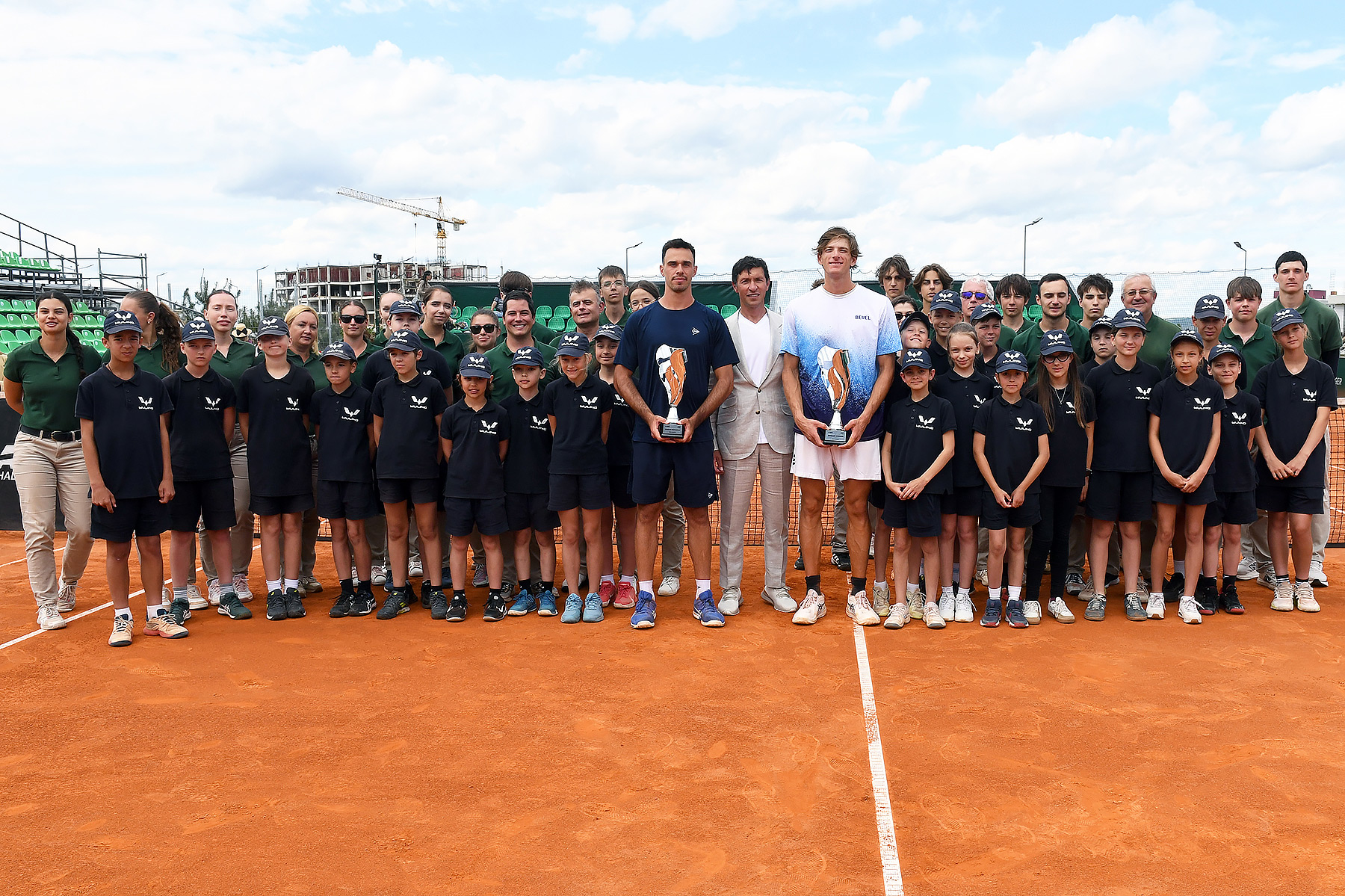
Shortly after the Challenger concluded, the Davis Cup arrived, bringing an entirely different challenge. While the Challenger is an individual professional tournament, Davis Cup is about national teams, flags, emotions, and the responsibility of representing one’s country.
For Moldovan players, the opportunity to compete at home carries special significance. The support of local fans, familiar courts, and the unique atmosphere created by a home crowd are experiences that cannot be replicated anywhere else in the world.
For young Moldovan players, events like these are invaluable.
Watching professional tennis on television is one thing.
Seeing it up close is something entirely different.
Young athletes can observe how professionals train, prepare for matches, handle victories and defeats, and work alongside coaches, officials, photographers, and media teams. Elite sport becomes tangible and accessible.
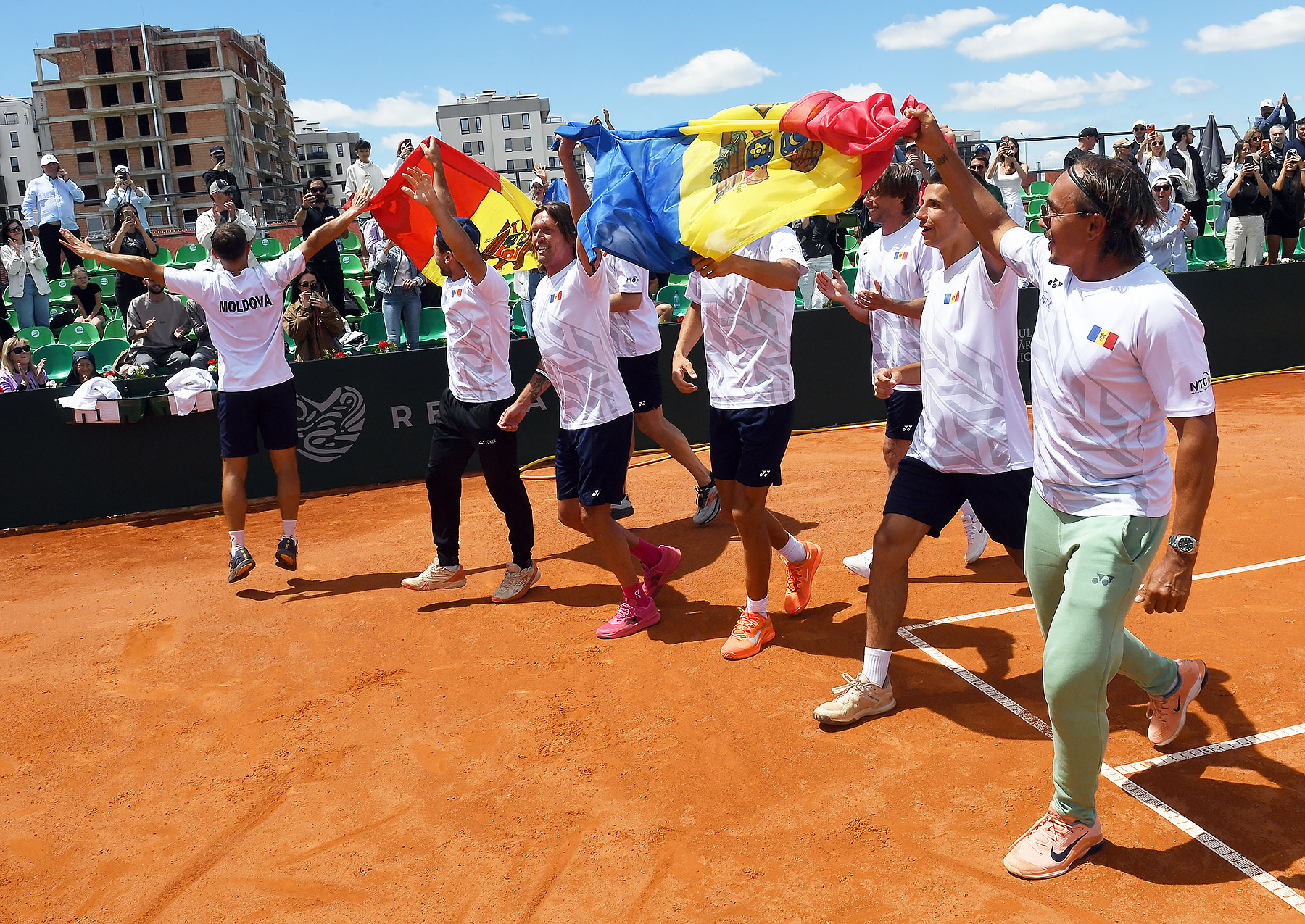
The Moldovan national team won Zone III of the Davis Cup at home
High-performance sport only becomes truly real when it comes home.
That is why hosting international tournaments is not only an investment in image and reputation. It is an investment in future generations.
A child who attends an ATP Challenger or Davis Cup match will never look at tennis the same way again. The sport ceases to be a distant spectacle viewed on television. It becomes something real, something happening here in Chișinău, on courts where that child may one day compete.
There is another equally important effect: the strengthening of the tennis community.
These events bring together players, coaches, parents, fans, partners, journalists, and representatives of international organizations. For a few days, tennis stops being a collection of separate clubs, academies, and projects. It becomes a shared story.
Yes, events of this scale require substantial resources.
Yes, the logistics are complex.
Yes, the pressure on the Federation’s team is significant.
Yes, there are days of extreme heat, strong winds, or rain, and the schedule must continue regardless.
But that is precisely where the value lies.

A world-class tournament does not happen by accident. It can only take place where there is quality infrastructure, a professional team, the trust of international governing bodies, and a genuine commitment to progress.
The Moldova Open Challenger 100 and the Davis Cup demonstrated that Moldova possesses all of these qualities.
In a remarkably short period of time, the National Tennis Center has become far more than a new sports facility. It has become the place where Moldova has begun engaging with international tennis on an entirely new level.
Now the challenge is to keep moving forward.
Hosting international tournaments should become part of a long-term strategy. Not as isolated achievements, but as permanent tools for development: for players, coaches, officials, ball kids, organizers, media professionals, partners, and the entire tennis ecosystem of the country.
International events provide Moldova with assets that cannot simply be purchased: experience, reputation, relationships, trust, and visibility.
They show children that great achievements can begin here.
They show players that they can compete at a high level on home soil.
They show international organizations that Moldova is a reliable and capable partner.
They show sponsors and partners that tennis can be a modern, dynamic, and valuable sporting product.
And they show society that sport is about far more than scores and trophies. It is about culture, infrastructure, inspiration, and development.
The Moldova Open Challenger 100 and the Davis Cup Europe Group III represented an important test for the National Tennis Federation of Moldova.
It was a test that the Federation passed successfully.
Today, Moldovan tennis has not only a new National Tennis Center.
It also has a new benchmark.
Most importantly, it now has proof that events of this level can be organized successfully in Moldova.
And that is exactly why they must continue.