

A National Tennis Center is not just courts, walls, and stands. It is, essentially, the point at which tennis in a country stops being a fragmented set of efforts by individuals and starts functioning as a system.
Until recently, Moldovan tennis existed in a fragmented way. Training was in one place, physical conditioning in another, recovery in a third, and competitions wherever possible. Parents drove their children around the city, coaches worked with limited infrastructure, and young players lost the most valuable things—time and energy. The National Tennis Center fundamentally changes this logic.
As emphasized by the president of the Moldovan Tennis Federation, Ceslav Chukhriy, it is impossible to build anything sustainable without infrastructure. You can have talented children, motivated coaches, and ambition, but without a foundation, all of this eventually leads nowhere. The National Tennis Center was created precisely as a response to this systemic challenge—a place where training, physical preparation, recovery, nutrition, and competitions are concentrated in one location.
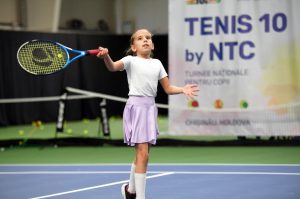
In practice, this means a completely different approach to player development. A child is no longer torn between different locations, doesn’t spend hours commuting, and doesn’t fall out of the training process. They are in an environment where everything is focused on a single goal—their athletic and personal growth. This is especially important in childhood and adolescence, when overload and chaos often lead to burnout or injuries.

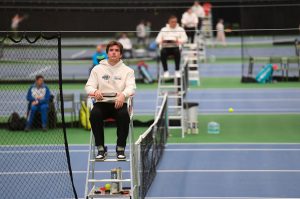
One of the most important functions of the National Tennis Center is hosting competitions. Over the past year, Moldova has made a significant leap by hosting Tennis Europe tournaments, the Billie Jean King Cup, and ATP Challenger events. This is not just about prestige. It provides direct access for Moldovan players to international tennis at home. Juniors see the level they need to strive for, coaches gain benchmarks, and the federation gets an honest picture of where the country stands today.
It is also worth noting the effect such tournaments have on foreign participants. Teams, coaches, and players coming to Chișinău often do not expect to see this level of organization, infrastructure, and service. And when teenagers—who are known for not being overly generous with эмоции—leave positive reviews on the federation’s social media, it is the best indicator that the center is working not just on paper, but in reality.
The National Tennis Center is not only about elite sports. It is also about mass participation. Amateurs who come to play themselves will bring their children tomorrow. Tennis stops being a closed club and becomes part of the city’s and the nation’s sports culture. That is why so much attention in the project has been paid to atmosphere, accessibility, and quality of service—from the courts to the restaurant and athlete accommodation.
In the long term, the National Tennis Center is the foundation of the future of Moldovan tennis. It is where the system of player selection, development, and support is formed. It creates the opportunity to build methodology, coach accountability, and continuity across training stages. And it is here that the federation gains a tool that allows it not to wait for случайный talent, but to systematically find and develop it.
You can build a beautiful building, great courts—and stop there. Or you can fill it with meaning, people, and an idea. Judging by how the National Tennis Center is developing today, the second path has been chosen. What happens next will depend on one simple factor: how consistently this system works year after year.