
In recent years, Moldovan tennis has been undergoing perhaps the most extensive transformation in its history – from infrastructure and international tournaments to a systematic approach to developing players and coaches. We spoke with Ceslav Ciuhrii, President of the Moldovan Tennis Federation, about the decisions behind these changes, why the country needs a National Tennis Center, and his vision for the future of Moldovan tennis. This is an honest and detailed conversation about the long journey, responsibility, and the attempt to build a functioning system where none existed before. The interview was conducted by Serghei Visnevschii, the Federation’s employee responsible for media and communications.
(The translation was made using artificial intelligence)
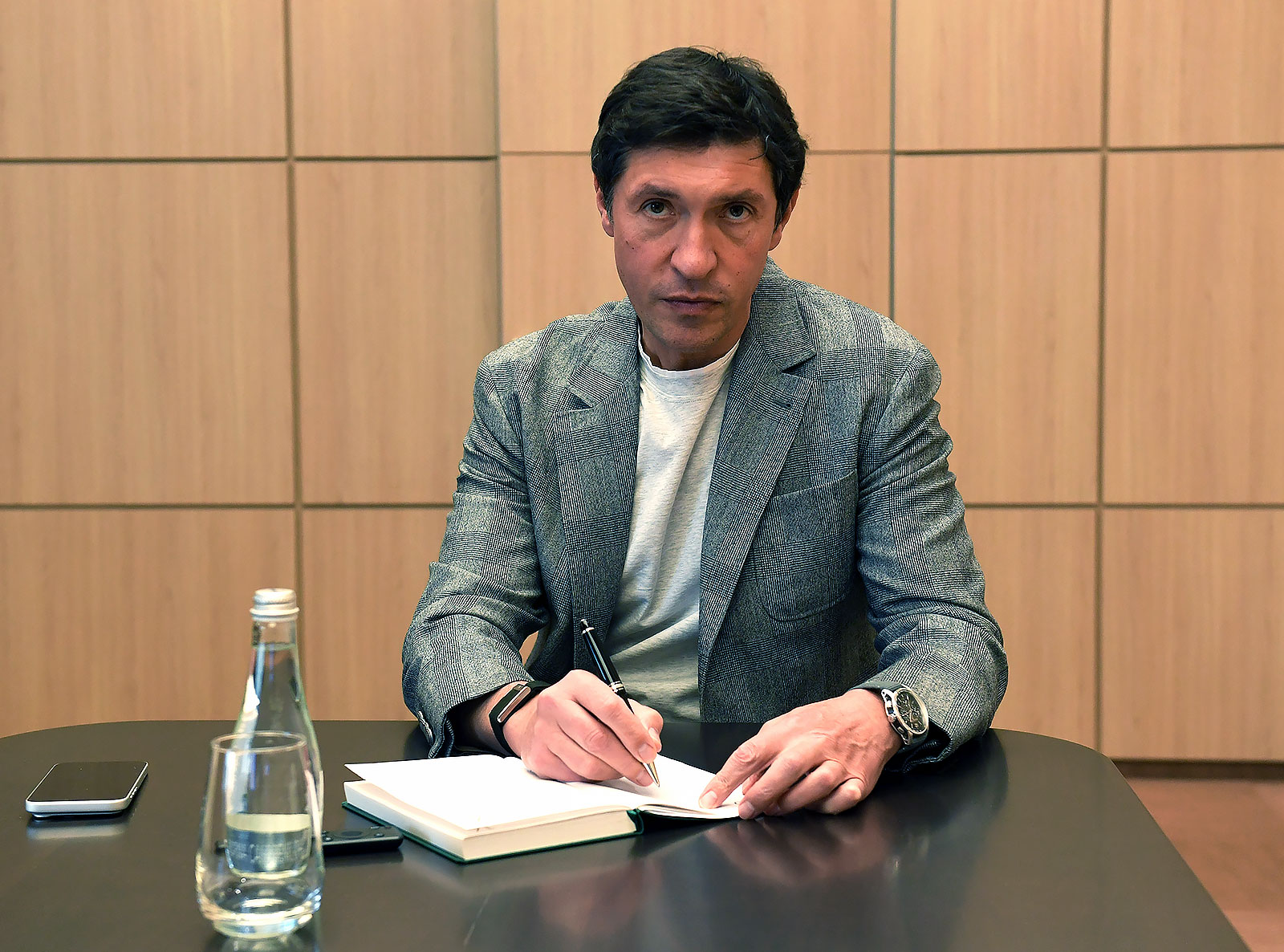
S.V.: Was your last interview about tennis two years ago?
C.C.: Yes, it was for a specialized sports magazine.
S.V.: What has changed in the country since that last interview?
C.C.: In terms of tennis, we see some changes every year. In short, last year we held our first ATP Challenger tournament. This would have been impossible for us just a few years ago. I’m very grateful to my colleagues for their persistence and the courage they showed. The tournament was a great success, everyone was happy! The participants, the organizers, the judges, and the referees were surprised by the organization and our country as a whole, as they knew nothing about Moldova before.
S.V.: You didn’t expect such success?
C.C.: We were hoping for a good result, and reality lived up to those expectations. Last year, we held our first Challenger Tour tournament and also hosted the Billie Jean King Cup zonal tournament—though this wasn’t our first time hosting it.
Both events drew large crowds, and I was especially pleased. I’d like to add a quick remark: the audience—several thousand people—was very well prepared and cultured. People knew perfectly well when to applaud, when to remain quiet, and how to properly support the players. To be honest, even at tournaments in developed countries where I’ve been, I haven’t always seen such order in the stands. This was a very pleasant surprise for me.
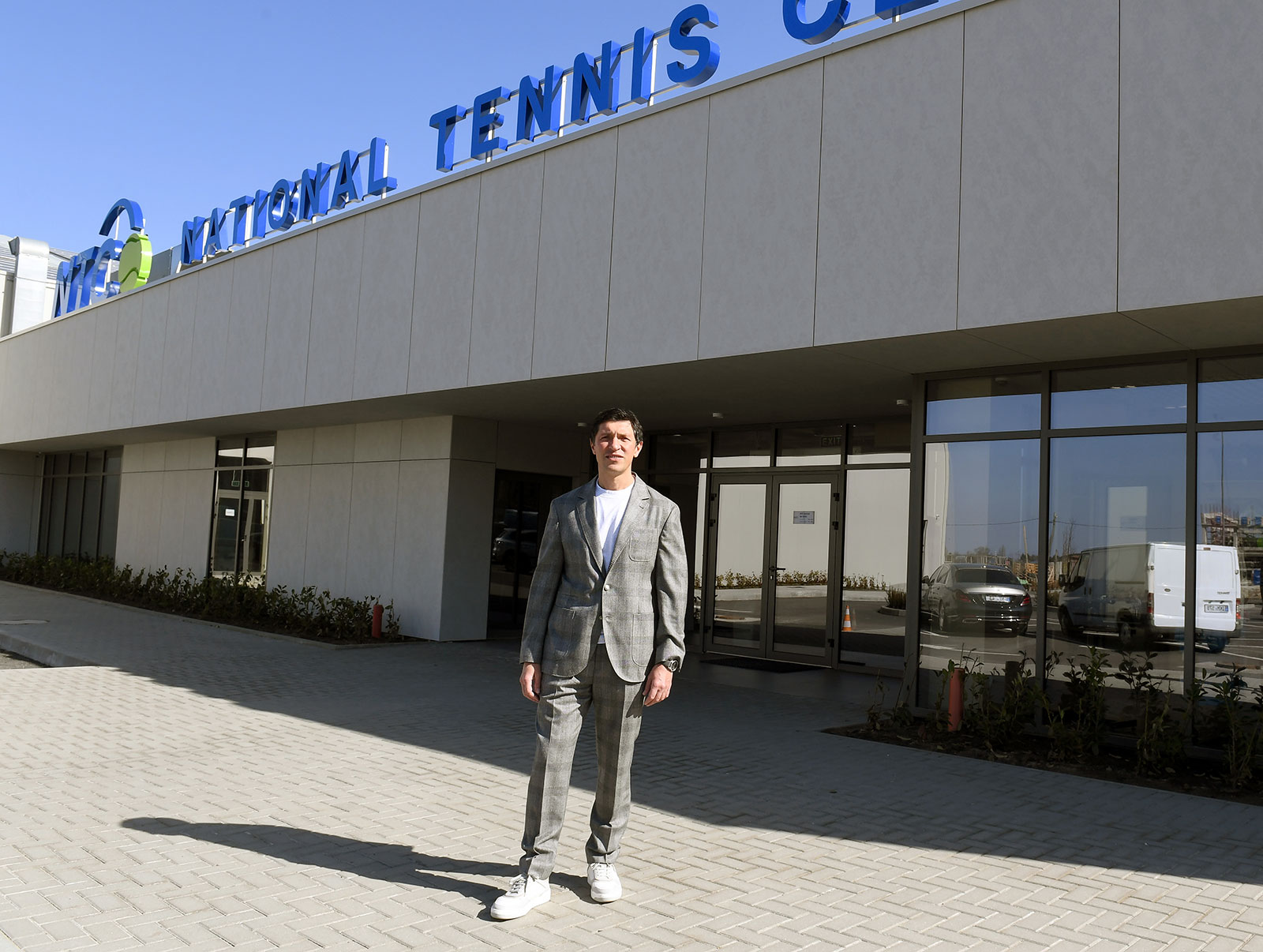
We’ve also held many tournaments, including for very young tennis players, and we’re adding more and more Tennis Europe and ITF tournaments. We’re constantly having something going on. It’s also worth noting that in October 2025, we opened the doors of our National Tennis Center. This is a major breakthrough in attracting as many children as possible to tennis. Reaching more fans is also very important; these fans will then bring their children to us. The main thing is to love this sport; it will definitely pay off in the future.
S.V.: Were there any decisions during your leadership that you consider important, perhaps unnoticed from the outside, but that had an impact?
C.C.: Speaking specifically about this period of time, I can’t say there were any specific decisions. But when we decided to build a national tennis center, and to locate it in this very location, it turned out to be a very good decision. And we decided to host the Challenger in Chisinau, which is very expensive. When you look at the numbers, it’s so discouraging… But we did it! And although we broke even, meaning we ultimately didn’t make any money, we gained a tremendous amount of experience. And, I think, well-deserved recognition from the ATP, too. That’s important.
We also opened a hotel located next to the NTC. Incidentally, the hotel is decorated in a tennis style and theme. Anyone who walks in is immediately immersed in the atmosphere of our sport. Everything there is branded with tennis, which also promotes this sport, which I love very much. Incidentally, I haven’t seen a hotel like this anywhere in the world, even though I visit many very often. Ours is so tasteful, everything is done very well.
S.V.: Looking at a broader period, let’s say, when you took over the leadership of Moldovan tennis, what state was it in when you took over, and what is its state now?
C.C.: It’s completely different, you can’t even compare. I don’t want to blame anyone; I understand that people may not have had the opportunity to develop the sport or support the federation at a decent level. For a federation to be successful, money is needed. And we don’t have those opportunities in our country, just like in other countries, where the federation is almost entirely funded by the state. Therefore, the money the tennis federation receives from the state doesn’t even cover the salaries of its staff, let alone participate in tournaments or host them.
That’s why I’m very proud of my colleagues – we’ve assembled a very good team, a close-knit team. They’re not afraid of anything, any challenge that comes their way. For them, it’s a challenge, and they always take it on with great enthusiasm. This motivates me greatly.
It is probably the people who feel it, the people who knew it, who should talk about how everything has changed.
It was before and it is now. It’s clear that we still have many shortcomings, areas where we can improve. But we’re moving towards this, striving to become the best, better every year.
Regarding the problems, they seemed simple at first, but turned out to be quite complex. When I wasn’t involved in the federation’s work, I didn’t know all its problems. So, when I first became president of the federation, I was basically an amateur. A person who simply loved tennis. But I didn’t even know what “green” was, what “red” was, or what “orange” was. So, when we took on the development of this sport, we knew very little about tournaments and how they should be developed. Of course, we quickly got up to speed. But I still thought everything was very simple back then, that we could reach an agreement with coaches, parents, and children. But it turned out that relationships with parents are one of the most difficult areas. I’ll give you an example. Two tennis players from two families come to us, they’re in conflict, and you have to resolve it. Regardless of which side you take, the one who was at fault will usually end up against you. And then they might think you acted unfairly. Therefore, we try to be very diplomatic, but principled. And we’re often disappointed because people don’t always appreciate the work of our staff.
S.V.: What’s more important to you right now: achieving quick results or building a system of training and nurturing tennis players for years to come?
C.C.: To achieve any results, you need a solid, solid foundation. That is, you can’t just get a finished product easily, unless you come across a young Nadal or Federer who turns out to be super talented, and we help develop that talent a little. But in life, it’s always like that: achieving results requires a lot of work, a lot of dedication. I don’t believe in results that are achieved quickly but don’t last long.
S.V.: Perhaps that’s why the Federation is now focusing on selection and nurturing children, starting at a very young age, 5-6 years old?
C.C.: Yes, that’s true. We are confident that this is the right path to take. If we attract as many children as possible from the start, there will be a strong selection process. This will give us the opportunity to recruit those who have talent, who have a feel for the ball, who know how to move—it’s very important to find them.
S.V.: Are there any plans to create special support programs for talented children in the foreseeable future?
C.C.: Of course. Our goal is to ensure that talented children can develop and continue playing tennis regardless of the circumstances. If we see potential in a child and the desire to work hard, the Federation must find ways to support them along the way.
We will strive for a system in which promising players receive additional opportunities for training and participation in competitions. This will allow more children to realize their potential and feel that they have a real chance to grow and progress in tennis. It’s important to understand that even if a child doesn’t ultimately become a professional tennis player, years spent in the sport still provide tremendous life experience. Tennis develops character, discipline, the ability to work hard and overcome challenges. And these are qualities that stay with a person for life.
S.V.: Were there any mistakes made in the past in raising children as tennis players that the federation shouldn’t repeat now?
C.C.: I see mistakes not only in tennis, but in education in general. We must strive to teach children gratitude. And after they’ve achieved something, we must ensure they remain human and treat others as kindly as they treated them. If they become a great tennis player and earn fame for Moldova and a lot of money, they will remember this and return to their country to donate money for the development of tennis. Only then will a system emerge where everyone supports each other, shares experiences—this is important, and not be selfish.
S.V.: In mid-February, the National Tennis Center hosted a zonal tournament for 14-year-old juniors, the Winter Cup from Tennis Europe, and it was a great success. I spoke with the coaches and the players, and they were amazed at the fantastic facilities they were offered, from the hotel to the umpires. One guy even wrote a thank-you note on Instagram, although such self-expression and gratitude are not typical for teenagers. I appreciate this very much, as a compliment to the way everything was organized. And the question is: what does Moldova gain from hosting team competitions for juniors like the Winter Cup or for adults like the Billie Jean King Cup?
C.C.: It’s very gratifying to hear that people liked it, and that’s why we worked so hard to have a top-class base. As for team tournaments, they give us an opportunity to see what level we’re at. And here I’m very disappointed, because we participate in the Summer Cup, the Winter Cup, and so far…
We play, we lose, and we go home empty-handed. We’re learning this lesson; we need to take our training more seriously. If we want to achieve something, not just participate but win, we have to change something. If we see something isn’t working out, we go to one tournament, lose, and then lose at a second tournament, we need to change something. I think we’ll hold off on team competitions for a while until we raise the level of our tennis players. We haven’t yet reached the level where we can participate and compete for victory. For now, we’ll train hard and only go there when we’re ready, and if we lose, we’ll lose with dignity, not shame.
S.V.: Regarding top-level ATP and WTA competitions, how important is it not only to participate in these tournaments but also to be an organizer? For the second year in a row, we’ll be hosting an ATP Challenger, this time at a higher level, and perhaps WTA tournaments will be added in the future. How important is this for the country as a whole?
C.C.: It’s especially important for our players, especially for juniors and players who aren’t yet ranked enough to qualify for international tournaments. Hosting such competitions at home gives them a real chance to play at a high level without additional costs or logistical complications. This is a powerful motivator—not only for the tournament participants, but also for those who are just aspiring to reach the international tennis level.
I believe it’s crucial that everything we do not only enhances the country’s image and promotes tennis. Yes, such tournaments attract a large number of participants and guests, foster tennis tourism, and generate additional interest in Moldova. But most importantly, they provide a significant boost to the development of our own players. Young players see the true level of play, understand the demands of modern tennis, and have the opportunity to compete against strong opponents.
And, of course, hosting tournaments of this caliber only makes sense when a country has its own players, for whom all this is being created. That’s why the development of national tennis players and the organization of international tournaments should go hand in hand and complement each other.
S.V.: În ceea ce privește competițiile de cel mai înalt nivel ATP și WTA, cât de important este nu doar să participi la aceste turnee, ci și să fii organizator? Al doilea an consecutiv vom organiza ATP Challenger, deja cu o categorie mai înaltă, și posibil în viitor vor apărea și turnee WTA. Cât de important este acest lucru pentru țară noastră în ansamblu?
C.C.: Este deosebit de important pentru jucătorii noștri. În primul rând, pentru juniorii și tenismenii care, după ranking, încă nu reușesc să ajungă la turnee internaționale. Organizarea unor astfel de competiții acasă le oferă o șansă reală de a juca la un nivel înalt fără costuri suplimentare și fără dificultăți logistice.
Este un factor motivațional puternic, nu doar pentru participanții turneului, ci și pentru copiii care aspiră să ajungă la nivel internațional.
Mi se pare esențial că tot ceea ce facem nu funcționează doar pentru imaginea țării și promovarea tenisului. Da, astfel de turnee atrag mulți participanți și oaspeți, dezvoltă turismul sportiv și sporesc interesul pentru Moldova. Dar, în primul rând, ele dau un impuls serios dezvoltării propriilor noștri jucători. Tinerii tenismeni văd nivelul real al jocului, înțeleg cerințele tenisului modern și au ocazia să concureze cu adversari puternici.
Și, desigur, organizarea turneelor de acest nivel are sens doar atunci când țara are propriii jucători pentru care toate acestea sunt create. De aceea, dezvoltarea sportivilor naționali și organizarea turneelor internaționale trebuie să meargă în paralel și să se completeze reciproc.
S.V.: Despre apariția propriilor jucători. Cât de realist considerați că este ca în Moldova să apară jucători de nivel mondial, care să ajungă în tablourile principale ATP/WTA în următorii 5–10 ani? Care este orizontul de planificare?
C.C.: Consider că principalul potențial îl au cei care abia își încep drumul în tenis, de exemplu copiii de șase ani de acum. De la această generație, în perspectivă, putem aștepta apariția unor jucători cu adevărat puternici. Totuși, nu i-aș exclude nici pe actualii juniori, printre ei sunt copii foarte talentați și în tenis oricând sunt posibile surprize.
Totuși, fiecare sportiv are un parcurs individual. La fete, dificultățile apar adesea în perioada de tranziție, la băieți în alte etape. În plus, nimeni nu este protejat de accidentări. De exemplu, m-a întristat situația tenismanului nostru Daniel Țurcanu, un jucător foarte promițător, care a suferit o accidentare și este nevoit să facă pauză. La această vârstă, astfel de întreruperi pot influența serios cariera.
De aceea este extrem de importantă o abordare echilibrată și profesionistă în pregătirea sportivilor tineri. Nu trebuie urmărit rezultatul rapid, ci dezvoltarea pe termen lung. Părinții și antrenorii trebuie să evite graba, să evalueze realist pregătirea copilului și să-l lase să participe doar la competițiile pentru care este cu adevărat pregătit, fizic, tehnic și psihologic.
S.V.: Ce este necesar pentru ca în Moldova să apară un jucător de nivel mondial?
C.C.: În primul rând, un sistem eficient de selecție. Este important nu doar să identifici un copil talentat, ci și să nu-l pierzi la începutul drumului. Mai departe, totul depinde de procesul de antrenament și de oamenii care lucrează cu acel sportiv. Întrebarea-cheie este: cine își asumă responsabilitatea pentru dezvoltarea lui?
Avem într-adevăr mulți copii promițători în programul Tennis10. Dar apoi ei trec în grupele de „adulți”, se schimbă antrenorii, fiecare specialist aduce propria viziune. Apar schimbări de dragul schimbării și aici apare problema. Copilul deja își formează anumite instincte de joc, deprinderi, senzații. Și nu întotdeauna trebuie să le modifici sau să le „reconstruiești”.
Dacă un copil este stângaci, nu trebuie să-l forțezi să joace cu mâna dreaptă. Dacă are un stil de joc care funcționează, nu trebuie schimbat doar pentru că un antrenor are altă opinie. Istoria tenisului oferă multe exemple. Dacă la începutul carierei lui Rafael Nadal i s-ar fi modificat stilul, poate nu l-am fi văzut niciodată pe Nadal pe care îl cunoaștem astăzi.
Aici văd o problemă sistemică de responsabilitate. Când un copil lucrează pe rând cu zece antrenori, fiecare cu metoda sa, rezultatul devine haos. De aceea este esențial să fie identificat cât mai devreme un antrenor principal, acel specialist care își asumă responsabilitatea și îl conduce consecvent spre performanță.
S.V.: În acest context, o întrebare despre metodologie. În tenisul rusesc există un grup științific complex care se ocupă de cercetări teoretice și practice. Se planifică crearea unei baze metodologice similare în tenisul din Moldova?
C.C.: Da, fără îndoială, este o chestiune de timp și de muncă sistematică. Înțelegem necesitatea dezvoltării metodologiei de pregătire și vom merge în această direcție. În special, planificăm să atragem specialiști străini, deoarece nu avem încă suficientă experiență sistemică în acest domeniu.
Văd aici o oportunitate importantă, de a invita experți care să împărtășească experiența lor practică și științifică. În același timp, vreau să subliniez că antrenorii din Moldova sunt specialiști talentați, cu rezultate bune, și nu sunt inferiori colegilor din alte țări.
Totuși, ne lipsește încă o bază științifică sistematizată și suport metodologic. În multe țări astfel de cercetări există de ani de zile și sunt integrate în procesul de antrenament. Ne dorim să construim și în Moldova o astfel de bază, combinând experiența internațională cu realitățile noastre.
S.V.: Regarding the emergence of Moldovan players. How realistic do you think it is for Moldova to produce players who are already playing at a world-class level and qualify for the main draw of ATP/WTA tournaments in the foreseeable future? Say, in the next 5-10 years. What’s the planning horizon?
C.C.: I believe the greatest potential lies with those just beginning their tennis careers now, say, at the age of six. It’s from this generation that we can expect to see the emergence of truly strong players. At the same time, I wouldn’t write off the current juniors – there are very talented boys and girls among them, and breakthroughs in tennis are always possible.
However, everyone’s development path is individual. Girls often experience difficulties during adolescence, while boys experience them at other times. Furthermore, no one is immune to injury. For example, I was very upset by the situation with our tennis player Daniel Tsurkan – a successful and extremely promising player who suffered an injury and was forced to take a break. At his age, such interruptions can seriously impact a player’s future career.
This is precisely why a balanced and professional approach to training young athletes is so important. It’s not about chasing quick results, but about long-term development. Parents and coaches should avoid pushing, realistically assess a child’s readiness, and only allow them to compete in competitions for which they are truly ready – physically, technically, and psychologically.
S.V.: What must come together for Moldova to produce a world-class player?
C.C.: First and foremost, an effective selection system. It’s important not only to identify a talented child but also to not miss them early on. From there, everything depends on the training process and the people the player is assigned to. The key question is who is responsible for their development.
We truly have many promising children in the Tennis 10s program. However, they then move on to “adult” groups, the coaches change, and each specialist brings their own vision of training. Changes for the sake of change begin—and this is where the problem arises. By this point, the child has already developed certain playing instincts, skills, and sensations. And these don’t always need to be broken or rebuilt.
If a child is left-handed, there’s no point in trying to retrain them to play right-handed. If a certain grip works for them, there’s no need to change it simply because the coach has a different idea. Tennis history offers numerous examples. Imagine if Rafael Nadal’s grip had been changed and retrained early in his career—we might never have seen the Nadal we know today.
I see a systemic problem of accountability here. When ten coaches work with one child, each with their own methodology, the result is…
The result is chaos. That’s why it’s so important to find a key coach for a young tennis player as early as possible—one who will take personal responsibility for their development and consistently guide them to the desired level.
S.V.: In this regard, a question about methodology. I know Russian tennis well: there’s a Comprehensive Scientific Group that conducts theoretical and practical research. Specialists study children during training, conduct measurements, develop a scientific base, and analyze international experience. Are there plans to create a similar methodological framework in Moldovan tennis?
C.C.: Yes, of course, it’s a matter of time and consistent work. We understand the need to develop and improve training methodology, and we will definitely move in this direction. In particular, we plan to attract foreign specialists, since we don’t yet have such systematic experience.
I see this as a great opportunity—inviting experts who could share their accumulated practical and scientific experience. I would like to emphasize that the coaches working in Moldova today are talented professionals with excellent results, and they are in no way inferior to their colleagues from other countries in terms of professionalism.
However, it must be acknowledged that we still lack systematized information and scientific support for the training process. In a number of countries, similar sports research has been conducted for many years, and their results are becoming available to the entire coaching community. We strive to develop our own methodological framework in Moldova, drawing on both international experience and our own realities, and to find effective ways to achieve high results.
S.V.: Is it possible to talk about attracting already-qualified athletes? Following the model of the Kazakh or Uzbek federations, for example? Which invite practically qualified athletes under certain conditions. Prominent examples include Kazakhstan: Rybakina, Bublik, Shevchenko. Three young women from Russia – Rakhimova, Kudermetova, and Timofeeva – recently joined Uzbekistan. Is such a development scenario possible, attracting ready-made athletes from other countries to compete under the Moldovan flag?
C.C.: I think all countries agree when someone comes with a finished product—a player who has already demonstrated some results. They skip the difficult and extremely challenging period of time that should have been spent developing such a player. And you already have something ready. This is a great advantage. There are various situations when people want to change their sporting citizenship. Such opportunities exist, good. I don’t see anything wrong with that.
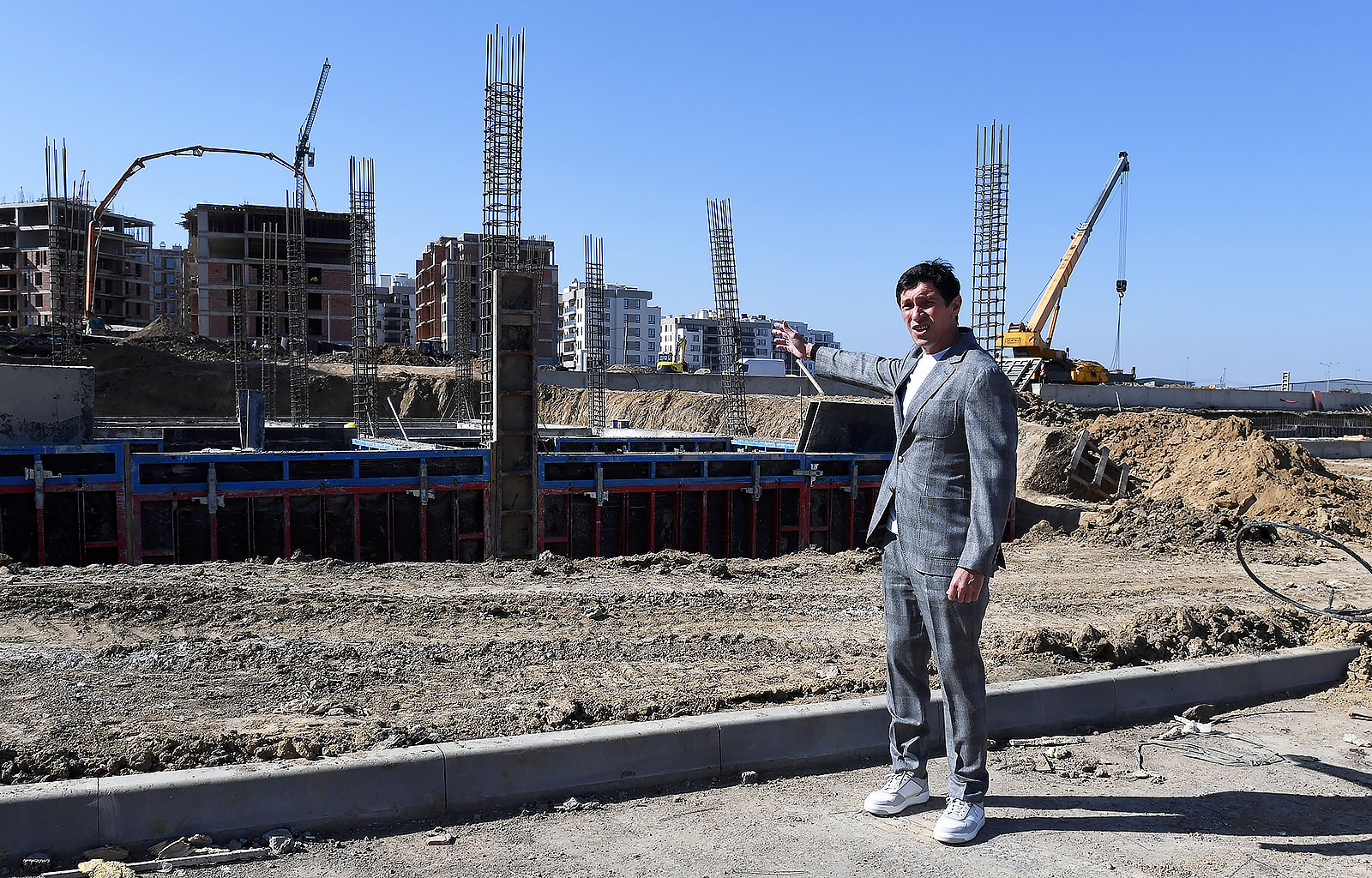
S.V.: Let’s talk about the national tennis center, which is already becoming a key hub for tennis development in Moldova. What have we managed to accomplish recently, in the last year, to date?
C.C.: I wouldn’t brag now. Because only time will tell whether we’ve done and are doing everything correctly. But what we’ve accomplished is creating a very good team. This is what I’m proud of, first and foremost, even more than the conditions we’ve created. The team we’ve assembled. I see great enthusiasm among the coaches, the children, and the parents. And that makes me happy. I think by summer, when we’ll have seven more outdoor courts, we’ll have even more tennis players. There will be those who come to Chisinau to participate in tournaments. If they like our facilities, they can return to us for training or stay longer. After all, it’s crucial that we provide them with excellent conditions—to train, eat, recover, and relax all in one place.
S.V.: It was probably crucial to ensure that the National Tennis Center met the international standards required of facilities of this caliber?
C.C.: Yes, this is crucial for attracting professional athletes and hosting various major events. That’s what we were aiming for. It’s absolutely right to work according to the standards outlined in the ITF and ATP/WTA Tour regulations. We’re not reinventing the wheel. We’ve traveled the world, visiting various tennis centers. And we built our tennis center, similar to the USTA facility in Orlando.
S.V.: What role, in your opinion, should the National Tennis Center play? Is it primarily a training base for Moldovan players, a venue for grassroots tennis, or a center for international competitions? What is key?
C.C.: The National Tennis Center combines all of these functions because they are directly interconnected. Development is impossible if they are considered separately.
Attracting strong foreign players and hosting international competitions creates an environment in which our tennis players can grow and develop at a higher level. Tournaments, in this sense, are a kind of exam: a player steps onto the court and immediately understands where they stand today compared to their competitors. And then comes the “homework”—analysis, correcting mistakes, and further development.
Therefore, grassroots tennis, the training of national players, and the organization of international competitions are equally important. All these elements complement each other and form a unified, sustainable system for tennis development in the country.
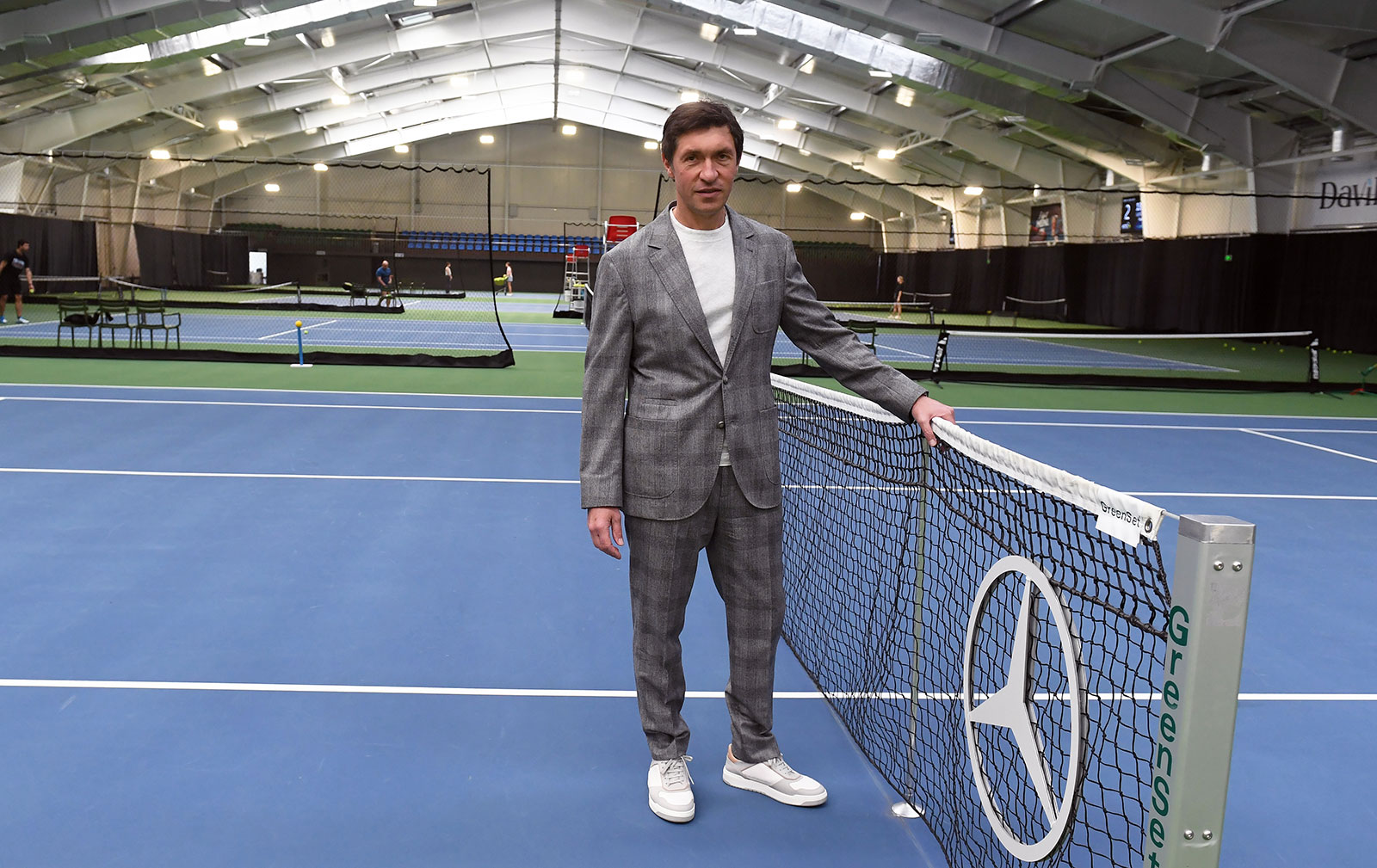
S.V.: The winter section of the national tennis center is now complete and fully operational. That is, the courts themselves, six hard courts, and the accompanying infrastructure—locker rooms, a fitness center, and a restaurant. What’s next? What will be built, opened, and operational?
C.C.: When I first saw the courts in Orlando, I even posted photos on my social media. I was so impressed by this tennis center that I rushed to promise our tennis players that we would have a similar center. I posted a selfie with these six indoor courts in the background. And then I was inundated with messages like, “Don’t tell us fairy tales,” “Who will believe him,” “Something might happen, but in 150 years.” There were many similar comments. Some of them were later deleted by people because they were embarrassed when they saw what we built in Chisinau. But it really motivated me back then. Even now, if I talk about our plans, some might think I’m talking about some unrealistic dreams and fantasies of mine. But in fact, we have very big plans. And not just for infrastructure, and we don’t just plan to develop great tennis players, but to educate our community!
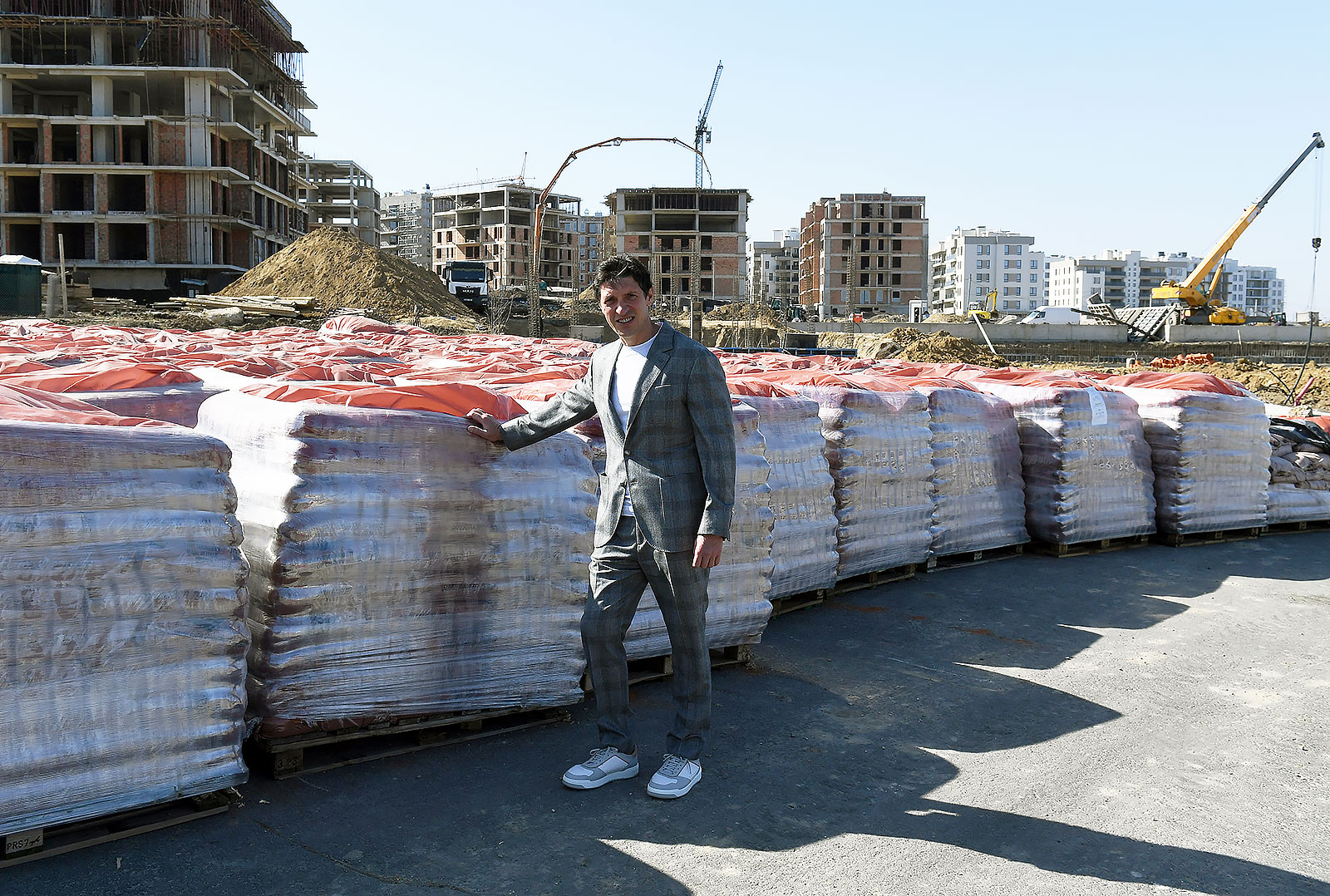
Let me tell you a little bit. In addition to the six winter courts already in operation, there will be six summer courts, plus a central court with stands. In winter, they will be covered with special cylinders, meaning it will be possible to train on clay in winter! These clay courts will be Roland Garros-quality. That is, the same material used in Paris will be used in their construction and operation. In addition to the tennis infrastructure, we plan to open a comprehensive school at the center, but with a sports focus. We’ll decide this a little later, once all the organizational issues are resolved. But the building is already under construction. This will be a school where children truly learn, not just formally enrolled because of training and competitions.
Young athletes need a different approach to education: a flexible schedule, the opportunity to study online, study in the afternoon, or combine studies with traveling to tournaments. Therefore, the curriculum needs to be adapted to the realities of sporting life, and this is an issue that must be addressed at the state level. We have already begun this dialogue and will work to open such a school. The goal is simple and clear: to enable talented athletes to develop in tennis without sacrificing their education or being forced to choose between studies and sport.
We have already organized and will continue to organize as many events as possible, attracting as many foreign players as possible to raise the level of our own. And last but not least, this is selection. We need to develop tennis instruction at the level of regular schools and lyceums. And bring young people from schools to our national tennis center. And then we try to develop them into great tennis players.
S.V.: So, can we say that the development of the National Tennis Center is laying the foundation for the future of Moldovan tennis?
C.C.: Yes, I see it that way, because you can’t build something successful without infrastructure. We’ve thought about this, and it’s no coincidence that we linked the development of Moldovan tennis specifically to the National Tennis Center. Without it, development is impossible. You yourself told me that in your time, you encountered difficulties when you had to transport your child to different parts of the city – training at one end, physical training at another, medical procedures at a third. Firstly, the child gets very tired from this. Secondly, a lot of time is wasted. And I think it’s a big advantage for our children that they have all the opportunities to get everything in one place, at the National Tennis Center. They gain a wealth of experience and knowledge so they can become successful.
S.V.: It’s clear that the changes you plan to further promote require support and a response from the state. At the current stage—in dialogue with the government and ministers—are you finding understanding for your initiatives? Has there been any response or positive decisions regarding both the National Tennis Center and tennis in Moldova in general?
C.C.: Our experience of interaction shows that the Moldovan government is very understanding of our initiatives. We hosted the first ATP Challenger Tour tournament, and the state provided us with significant support in organizing it. National television broadcast the matches live—this was a great success for us.
Firstly, having a television broadcast makes it possible to attract sponsors. Secondly, the Ministry of Education acted as the Federation’s main partner. They understood that such tournaments bring prestige and that they will be talked about beyond the country’s borders. The high-quality organization of the first tournament was precisely what made it possible.
The tournament has opened up opportunities for us to further develop this area and host more international competitions.
This year, we will host our second Challenger tournament. Moreover, we’ve upgraded its category to Challenger 100. The tournament will be held on our courts, at the National Tennis Center. This is a serious challenge for our project and, at the same time, the first tournament of this level in the country’s history. And the government has once again supported us in this matter.
Furthermore, during discussions regarding changes to the athletes’ curriculum, I also saw understanding from the Ministry. We have undertaken significant work to amend the regulatory framework. Previously, the official Moldovan sports regulations did not include the concept of “World Championship”-level tournaments in tennis. As a result, athletes competing in Grand Slam tournaments, for example, were ineligible for state payments.
This year, we succeeded in including all four Grand Slam tournaments in the Ministry’s standards as competitions equivalent to World Championships. They now officially have this status. As tennis players, we understand the caliber of these athletes very well, but within the country’s overall sports system, this level needed to be clearly defined. We made these changes, and now it’s clear and transparent. I’m truly pleased with this result.
I’d also like to note the significant support for the initiative to introduce tennis into the school system—as a sport that can be taught as part of physical education classes. This is an important step for the widespread development of tennis.
At the same time, we are completely realistic in our assessment of the state’s capabilities. Comparing Moldova’s financial resources with those of other countries would be inaccurate. To speak of the need for greater funding without taking reality into account would be selfish. We have a specific budget, and we understand perfectly well that the state doesn’t have the capacity to spend more on sports than it currently does. Therefore, we will continue to work within these conditions.
S.V.: I know that the official opening of the National Tennis Center is planned for the Challenger tournament, right at its start. If possible, could you provide some details: what kind of event will this be?
C.C.: We want this to be an event that will draw attention not only to the National Tennis Center but also to tennis in the Republic of Moldova as a whole – not only within the country but also abroad. Our goal is to create a truly grand celebration, because for us, this truly is a celebration. I believe this is a significant success for our sport, not just for tennis, but for the sports industry as a whole.
More broadly, in recent years, there has been little investment in sports. And today, we shouldn’t look solely to the state for support. We must also reach out to those who have the opportunity and desire to participate in the development of sports. I am convinced that every successful businessman should have certain ambitions and social responsibility. If you like chess, invest in it and develop it. If you like volleyball, develop volleyball. This is how sustainable sports development in the country begins.
As for the opening of the National Tennis Center itself, it will take place on May 23rd. We will be supported by two renowned tennis stars: Juan Martin del Potro from Argentina and Simona Halep from Romania, who will play an exhibition mixed match alongside our Moldovan players Radu Albot and Lia Belibova. Juan Martin won the US Open, 22 ATP tournaments, and was also a bronze medalist at the London Olympics and a silver medalist at the Rio Olympics. Simona was the world’s number one tennis player, a winner of two Grand Slam singles titles (Wimbledon and Roland Garros), and holds 25 WTA titles.
We will also hold a master class for children featuring these stars, organize an autograph session, and set up a tennis park with a themed exhibition, interactive zones, and a food court. Overall, our goal is to do everything possible to make this tennis festival a vibrant and memorable event that will long be remembered by everyone who comes.
S.V.: For you personally, what was the most challenging part of being the President of the Tennis Federation?
C.C.: The hardest part is finding the right path to achieving the desired, expected success. That’s the hardest part.
S.V.: What motivates you to continue when there aren’t quick results?
C.C.: Ambition. I have this kind of character—I have to achieve what I set out to do. I can’t leave something at a level that doesn’t satisfy me. That’s why I’m confident that we’ll achieve the result we’ve set for ourselves.
S.V.: So, could we say you’re a perfectionist?
C.C.: Yes, I am, and I say it openly.
S.V.: To leave something behind, some people build churches, for example. Could the project of creating a national tennis center and a system for training tennis players in Moldova be considered your personal project?
C.C.: I hope so, that it will be my long-term project. And that children will be raised here, whose lives we will change. That’s what motivates me, knowing you’re doing something that will change people’s lives for the better. That, I think, is the main motivation. And the meaning of life. You see how a person could have become, to put it mildly, ordinary. And then they became famous. That’s so cool. Knowing that you had a hand in it!