
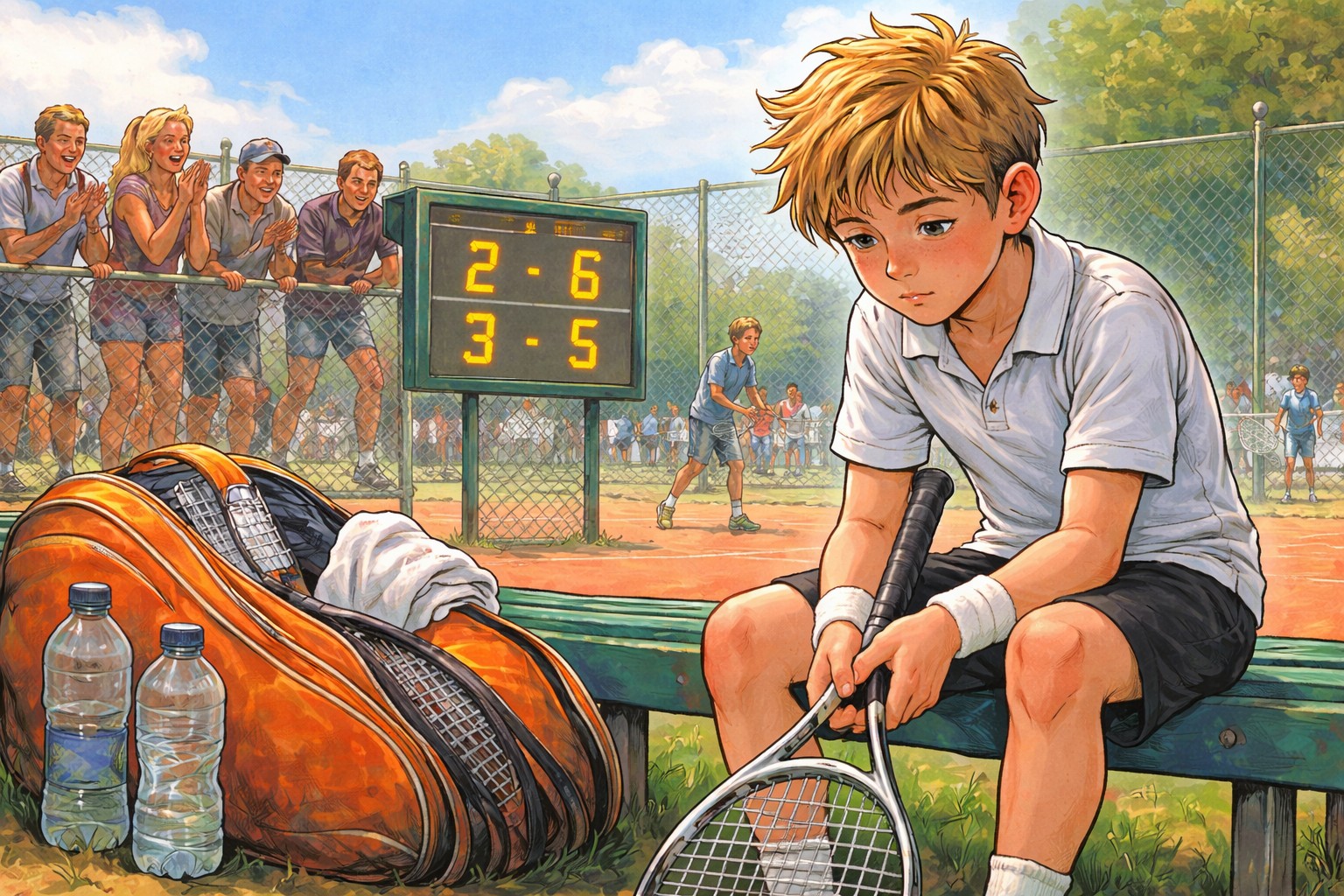
The development of a young tennis player is not a linear process. And, as the practice of leading academies and the experience of world-class players show, mistakes most often arise not from a lack of talent, but from poor decisions made early on.
Sometimes one right or wrong choice in childhood can determine an entire career.
- Trying to “do like everyone else” instead of developing strengths
A very common mistake is to force a child to fit the “correct” model.
But tennis is a sport of individuals.
A classic example is Rafael Nadal .
right-handed in real life : he writes, eats, and does most things with his right hand. But he plays tennis with his left.
Why did this happen?
As a child, he played with both hands on both sides, and his uncle and coach, Toni Nadal, noticed that his left side worked more naturally . He gradually began to develop it
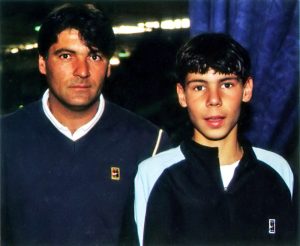
Young Rafa Nadal with your coach and uncle Toni
Additionally, this provided a strategic advantage: left-handers are less common, and their rotation and angles create inconvenience for opponents.
Conclusion:
it wasn’t “reworked” – they strengthened what already worked better .
- Chasing results too early
Many people want to see victories already at 10–12 years old.
But if you look at the career of Nadal or, for example, Roger Federer , then in their youth they:
- experimented a lot
- lost
- developed the game, not just the result
Early wins are not an indicator of future level.
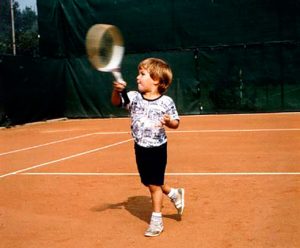
Young Roger Federer
- Attempts to “fix” technology that already works
A very common mistake:
- change grip
- rebuild the blows
- “do it like in the textbook”
Tennis history shows that being unconventional is an advantage:
- Nadal – Extreme Topspin
- Medvedev – unconventional technique
- Djokovic – unique plasticity
If something works, don’t break it.
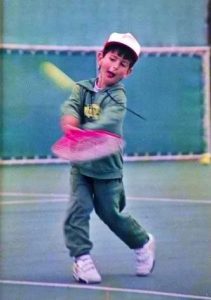
Young Novak Dokovic
- Tournament overload
Parents often think: the more tournaments, the faster the progress.
In practice, the opposite happens:
- the child is tired
- doesn’t train
- does not have time to develop
Even at the Tennis level Europe and the ITF clearly distinguish: the tournament is a test, not a basis for development.
- Pressure from parents
This is one of the most critical factors.
Many great players have spoken about this.
For example, Andre Agassi, in his autobiography, directly described how pressure in his childhood influenced his attitude towards tennis.
A child should play because he likes it, and not because he “has to win.”
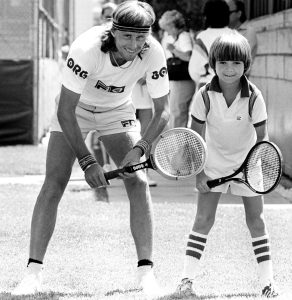
Young Andre Agassi with Björn Borg
- Frequent change of coaches
Each trainer:
- sees the game in his own way
- changes equipment
- rebuilds the system
The result is chaos.
Even top players have one important characteristic: in childhood, they almost always had one key coach who laid the foundation.
For Nadal , it was Toni Nadal .
And this is not an accident.

Young Daniil Medvedev
- Lack of long-term thinking
The biggest mistake is trying to speed up the process.
But the reality is simple: a player is built over 10–12 years , not in a season.
And this is confirmed by the entire world of tennis.
If you look at all the great players, they have one thing in common:
- they weren’t broken
- they were not accelerated
- they were developed systematically
And sometimes it was the “imperfect” decisions that became the key to success.
As in the case of Nadal : a right-hander who became left-handed – and changed the history of tennis.
To simplify everything to one thought:
The main mistake is trying to make a player comfortable instead of making him strong.