
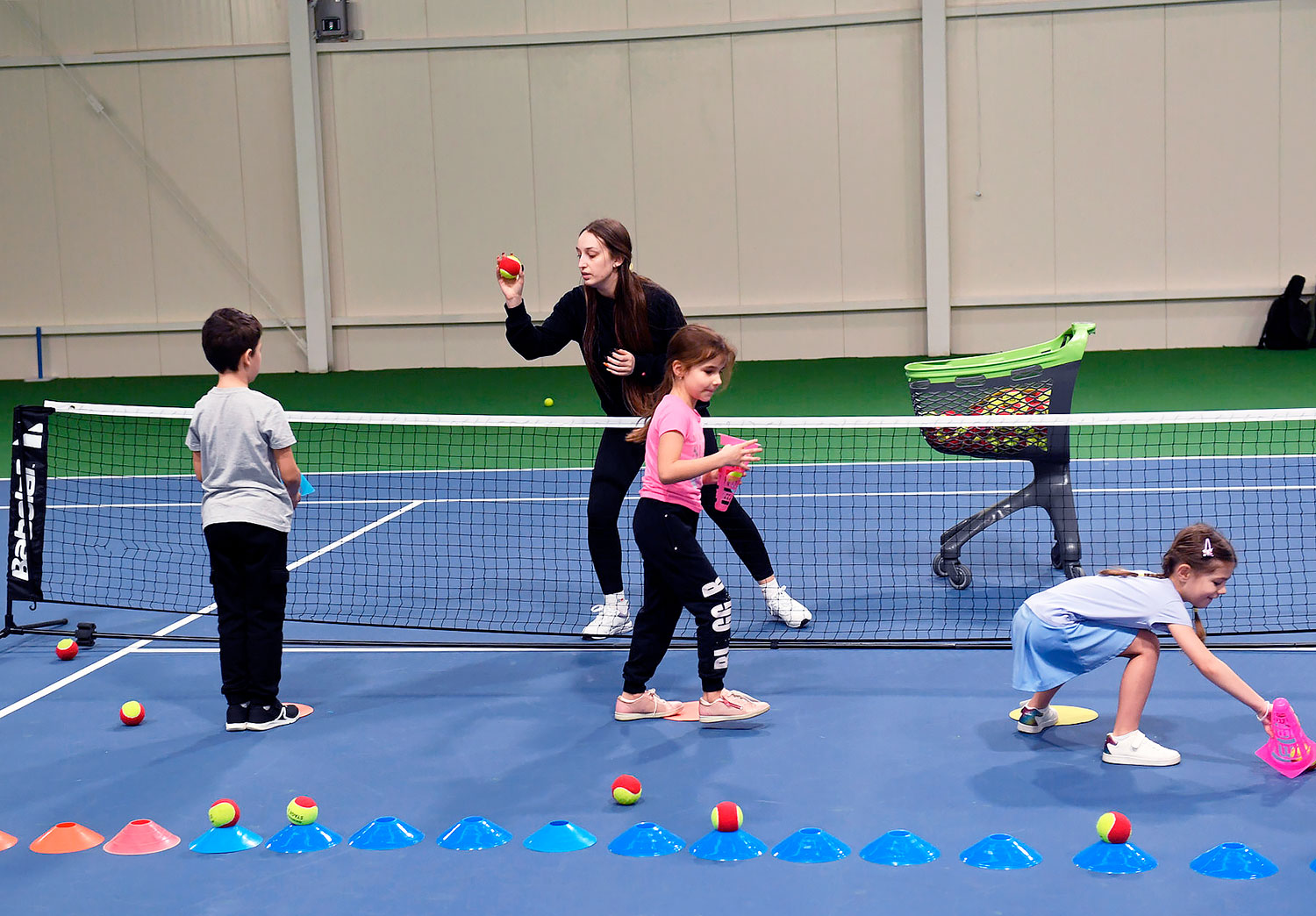
In modern tennis, it’s long been clear that infrastructure alone doesn’t create players. You can build perfect courts, equip a center with the latest technology, and create comfortable training and living conditions—but without qualified coaches, all this remains just a pretty shell. That’s why one of the key areas of work for the Moldovan Tennis Federation today is the systematic training and development of its own coaching staff.
A coach isn’t just someone who “sets the right shot.” They’re a specialist who shapes a player’s mindset, their approach to training, their ability to work under pressure, recover, make decisions, and take responsibility. It’s the coach who determines whether a child will simply become a good junior or have the chance to develop into a WTA and ATP-level player.
The Moldovan Tennis Federation operates from a simple yet fundamental understanding: sustainable development is only possible when the country relies on its own, educated, and modern specialists. Inviting foreign coaches can be helpful in targeted ways, but the foundation must always be built within the system. A Moldovan coach who has undergone high-quality training and understands the specifics of local conditions, children, parents, and the calendar is a strategic advantage.
Work in this area involves several levels. First and foremost, it involves upgrading the skills of existing coaches, familiarizing them with modern training methods, principles of long-term athlete development, working with children aged 6-8 and adolescents, and understanding the physiology, injury prevention, and psychological aspects of sport. A modern coach must observe the player not only on the court but also off it: how they eat, recover, respond to stress, and conduct themselves during competitions.
Particular emphasis is placed on training standards. Having unified guidelines and principles allows us to build a system in which players, as they move from one age group to another, don’t encounter chaos and conflicting demands. This is especially important for the National Tennis Center of Moldova, which is designed not just as a training facility, but as a center of attraction for the best Moldovan players and tennis players from other countries.
The new National Tennis Center, with its infrastructure and facilities, creates a real opportunity to attract international athletes and teams to training camps and training sessions. But the decisive factor here is once again the coaches. Players come not just for the courts, but for the quality of the training process, the professional approach, and the competent specialists with whom they can work and improve.
In this context, an important step was the invitation of Vadim Shuster , a specialist of Moldovan origin, to the position of head coach of the National Tennis Center. Shuster has worked in Kazakhstan for many years and was directly involved in the formation and development of an entire generation of Kazakhstani tennis players. The approach implemented there has proven its viability: the federation’s systematic work, reliance on its own coaches, and consistent development have yielded results.
The system implemented in Kazakhstan, including with his direct participation, has proven its effectiveness and can be successfully adapted to the training of Moldovan athletes. Today, Kazakhstan already has a strong junior generation – Zangar. Nurlanuly , Damir Zhalgasbai and Arir Amarkhanov . These are players developed within their own national system, the result of years of systematic work by the tennis federation. They are considered the future of Kazakhstani tennis and the potential core of the Davis Cup team in the coming years.
At the same time, the development of the coaching sector in Moldova is not a matter of isolated initiatives, but a conscious strategy that is receiving close attention at the Federation’s leadership level. Moldovan Tennis Federation President Cheslav Chukhriy consistently emphasizes that without strong coaches, it’s impossible to achieve international results or the long-term development of tennis in the country. That’s why issues of coach education, standards, and professional development are among the Federation’s key priorities.
It’s also important that the Federation has already developed an internal expertise system. For many years, the Federation has employed experienced head coach Evgheni Chelarschi , who is well-versed in the specifics of Moldovan tennis, the stages of player development, and its internal processes. His involvement ensures continuity, methodological stability, and a link between children’s, junior, and higher levels of training.
This combination of international experience and deep internal expertise allows us to build a balanced development model where new approaches are not divorced from reality but adapted to specific conditions and challenges.
The Federation understands perfectly well that you can build a world-class center, but without coaches, it will be “dead.” That’s why investing in coach training is an investment in the life of the center, its reputation, and the future of Moldovan tennis as a whole. Coaches are the ones who imbue the infrastructure with meaning, process, and results on a daily basis.
Coach training is a long process with no immediate results. But it is precisely this process that determines whether Moldova will eventually develop players capable of competing on the international stage and whether the country will become an attractive spot on the European tennis map. The Federation is consciously focusing on this path—because without strong coaches, there can be no strong tennis.