
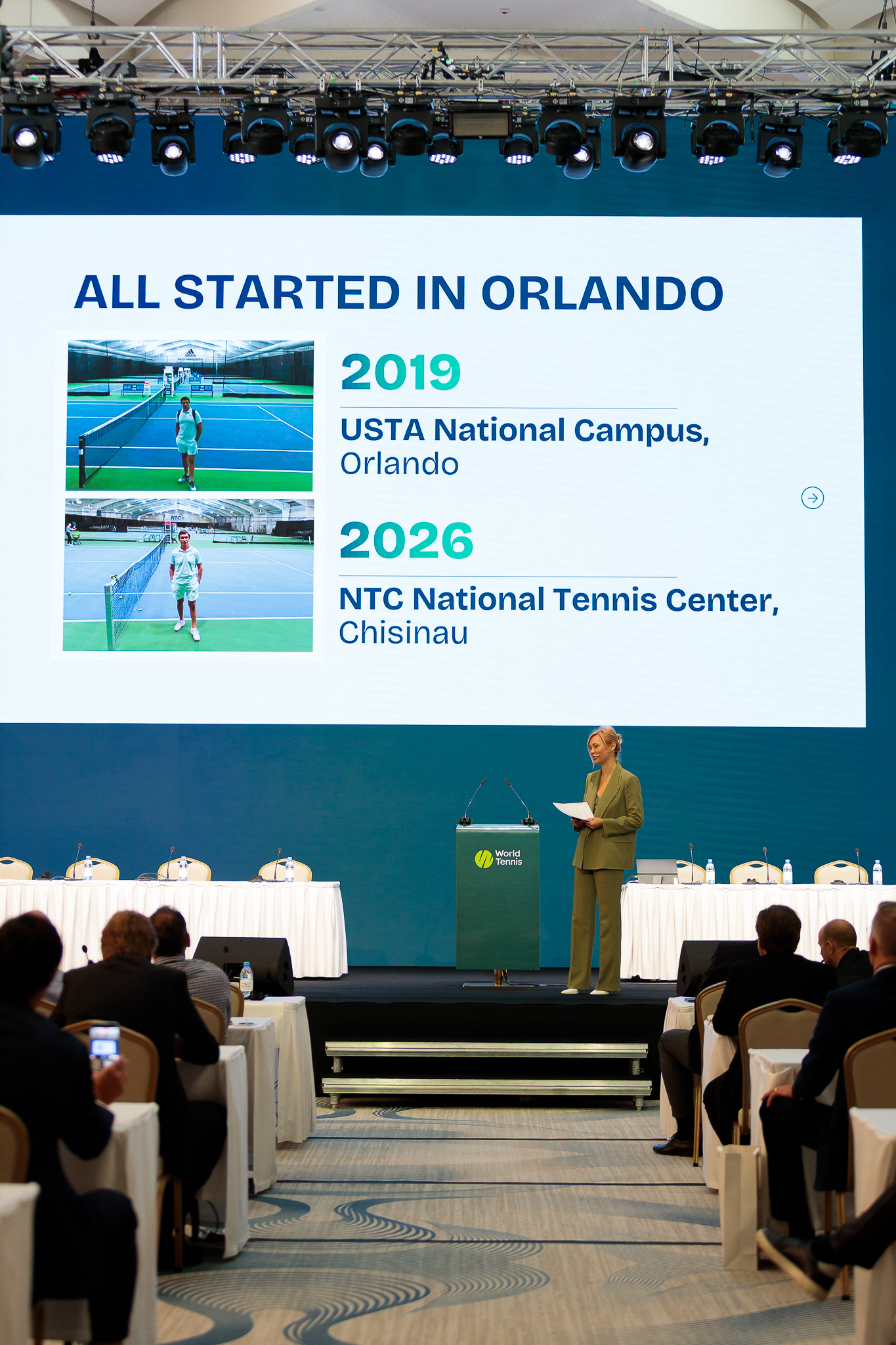
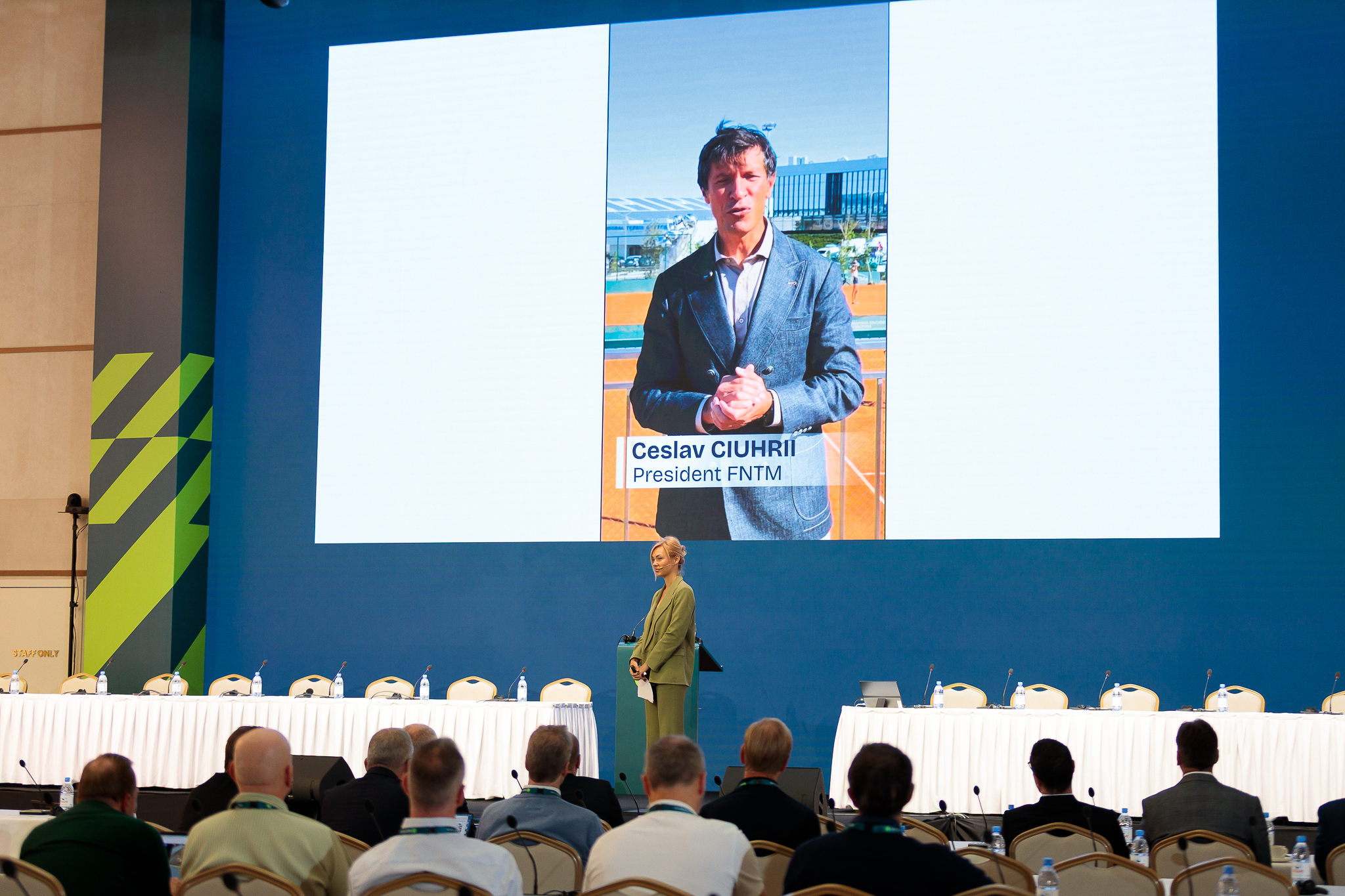
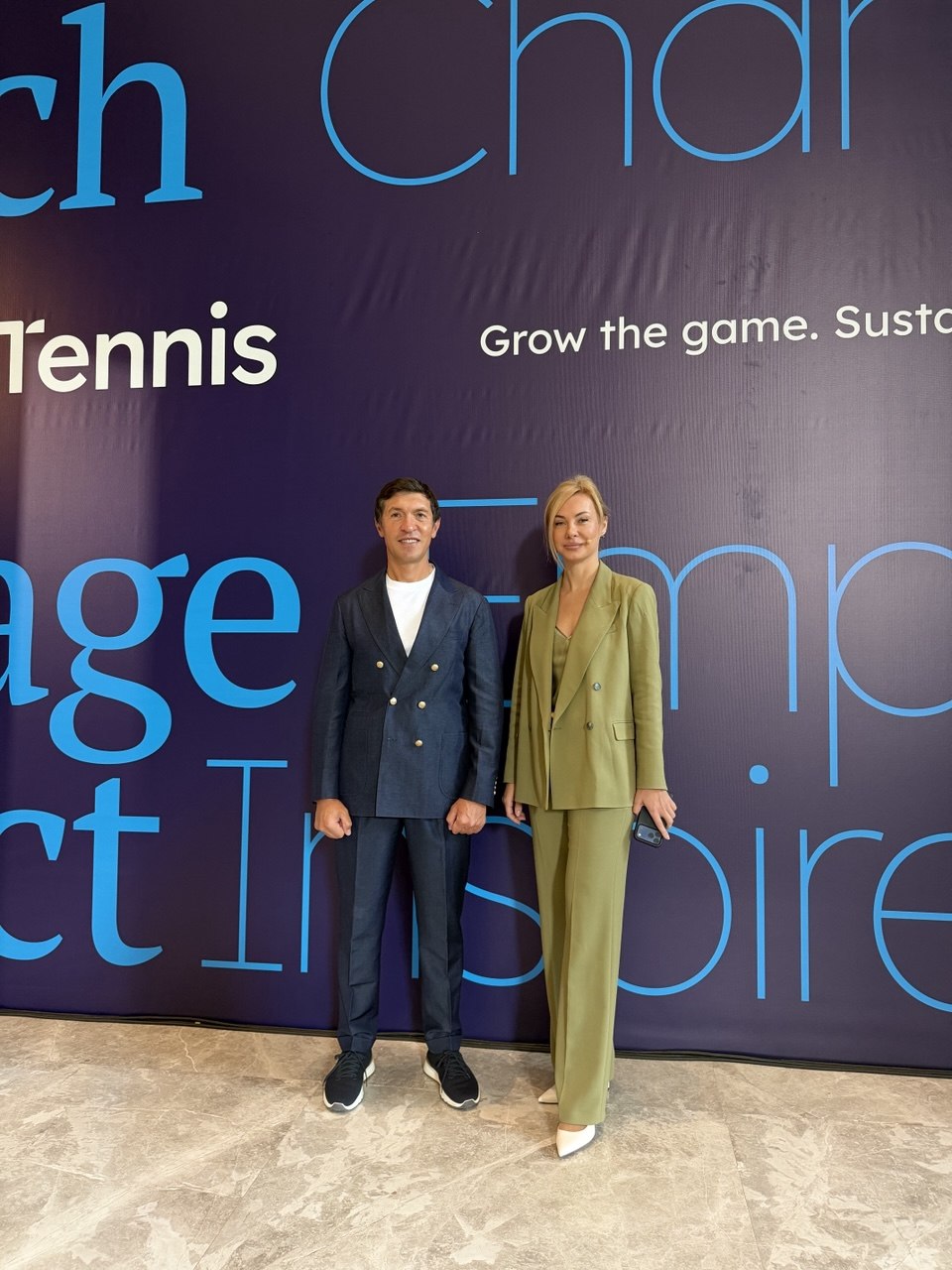
President of the Tennis Federation of Moldova Ceslav Ciuhrii and Secretary General Natalia Belibova attended the annual World Tennis Conference and General Assembly, held on October 12–13 in Almaty, Kazakhstan. The Moldovan delegation presented to the international tennis community the results of extensive work to develop tennis in the country, the main achievement of which was the construction and opening of the National Tennis Center in Chisinau. The presentation generated great interest among forum participants and received positive feedback.
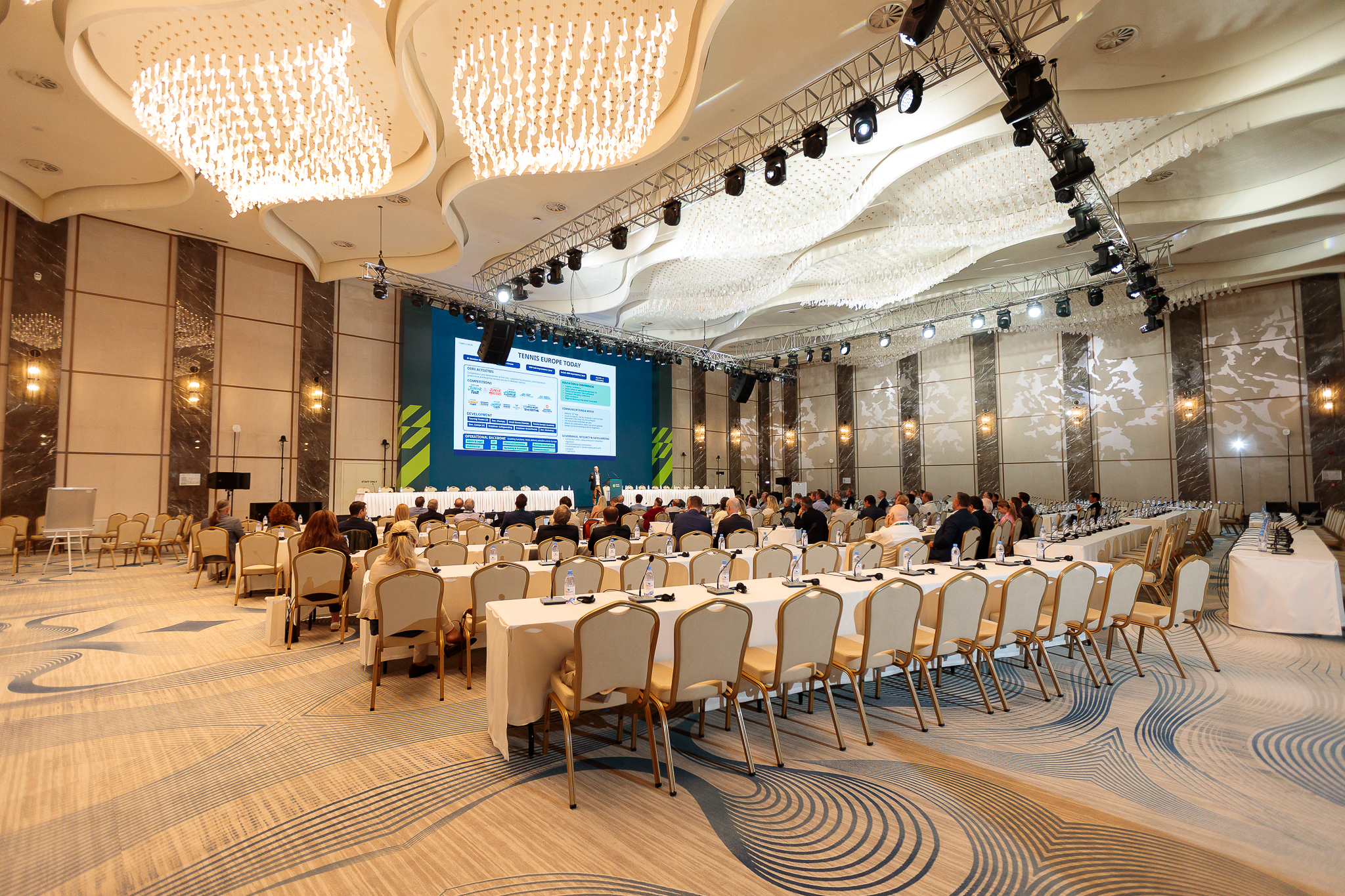
For several days, Almaty became the center of world tennis. For the first time, the annual General Assembly of the international organization formerly known as the ITF was held in Central Asia. According to official World Tennis figures, representatives from 128 countries attended the conference and assembly.
The event brought together leaders of national tennis federations, representatives of international and regional organizations, specialists, and experts. Participants discussed the strategy for developing world tennis, expanding its accessibility, training young players, improving sports infrastructure, and strengthening cooperation between national federations.
Moldova Presented the Results of a Year of Major Changes
One of the important events of the conference for Moldovan tennis was the presentation prepared by the delegation of the Tennis Federation of Moldova.
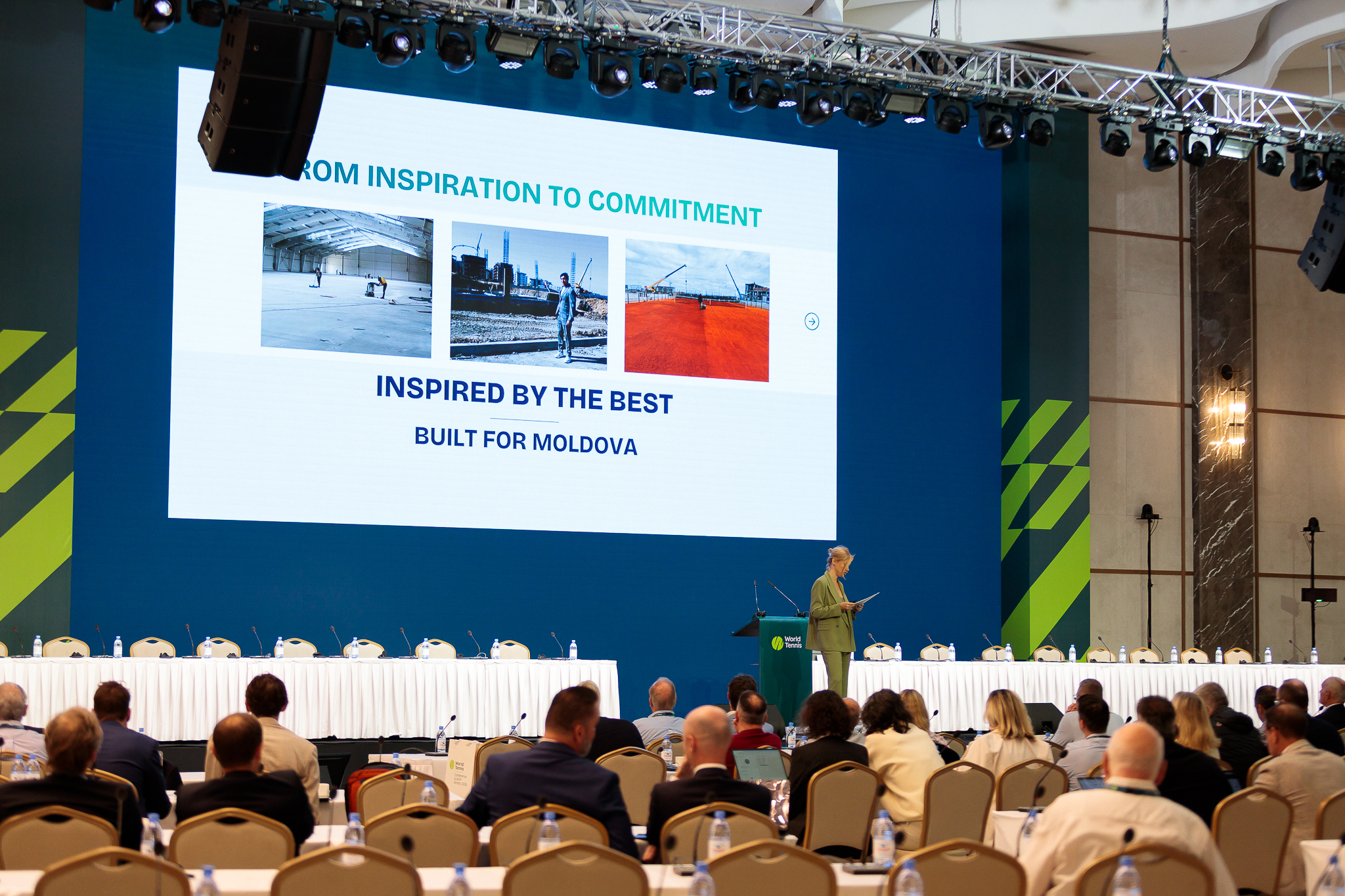
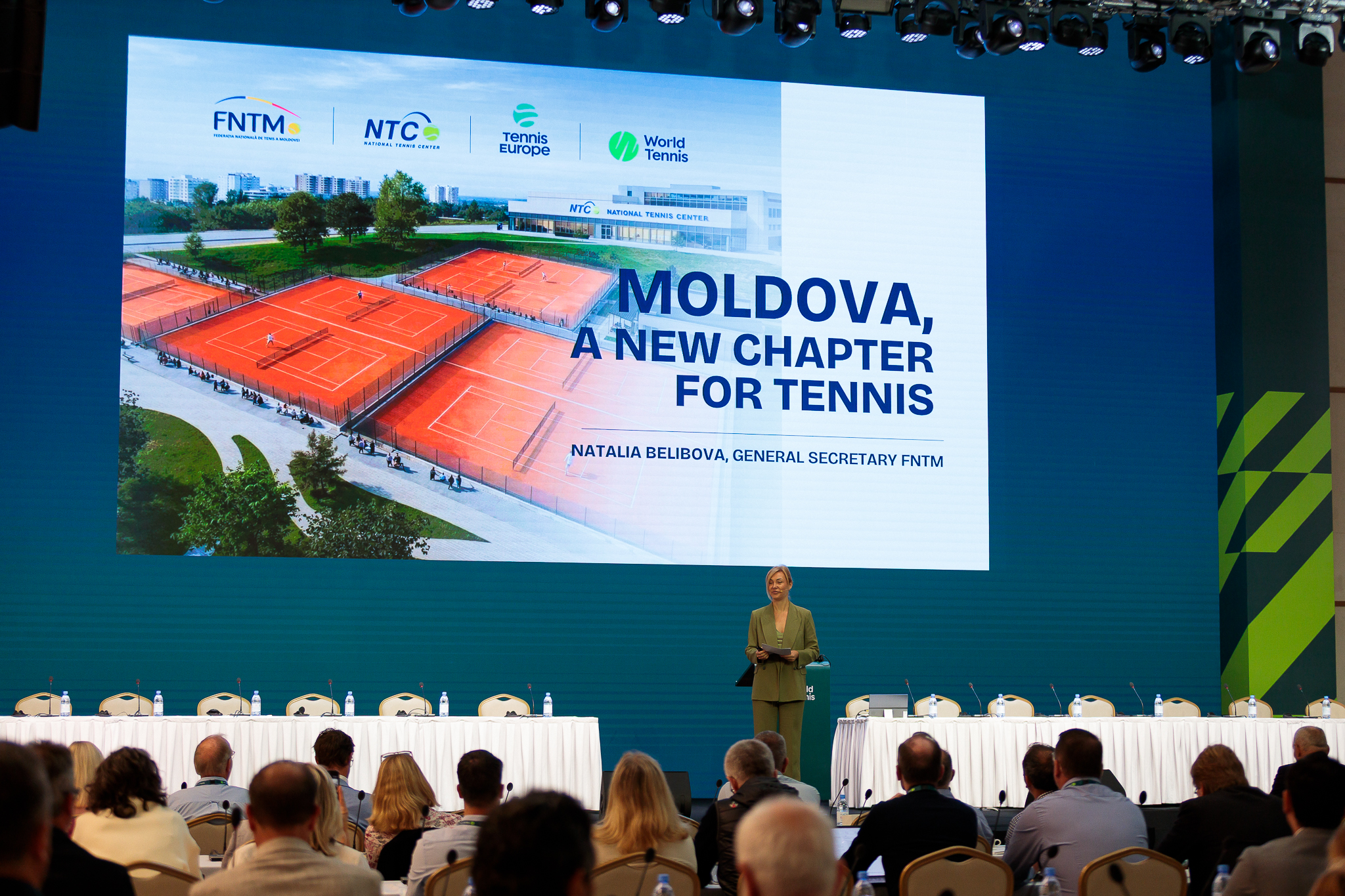
FNTM President Ceslav Ciuhrii and Secretary General Natalia Belibova told their international colleagues about the transformations that had taken place in the country over the past year and presented the results of implementing one of the most significant projects in the history of Moldovan tennis — the National Tennis Center in Chisinau.
Opened on October 1, 2025, the National Tennis Center marked a qualitatively new stage in the development of the country’s sports infrastructure. The complex features six indoor hard courts with modern lighting and climate-control systems, as well as seven outdoor clay courts. Particular attention is paid here to environmental sustainability: the center actively utilizes renewable energy generated by solar panels and consistently implements solutions aimed at increasing energy efficiency and reducing its environmental impact.
The creation of this infrastructure has significantly expanded opportunities for year-round athlete training, the development of children’s and junior tennis, the organization of national competitions, and the hosting of international tournaments.
During its first year of operation, the Center has already hosted major sporting events, including international competitions under the auspices of the ITF and Tennis Europe. Of particular importance was the hosting of Davis Cup matches in Chisinau, following which the Moldovan national team earned promotion to World Group II.
Other important areas of the Federation’s work include coach education, professional development for specialists, and creating conditions for the growth of a new generation of Moldovan tennis players.
It was precisely the comprehensive nature of these transformations — from the construction of a modern facility to the expansion of competitive and educational activities — that became the central theme of the Moldovan presentation.
The presentation by Moldova’s representatives generated great interest among conference participants and was positively received by international colleagues. The Federation’s experience demonstrated how consistent work and investment in infrastructure can significantly expand opportunities for tennis development in a country within a relatively short period.
Main Theme of the Conference — New Opportunities for Tennis
The 2026 conference was held under the motto A World of Opportunity.
World Tennis President David Haggerty emphasized that the development of world tennis begins at the national and local levels. It is the work of federations, sports schools, coaches, and clubs that creates the foundation for the emergence of new players and the expansion of the sport’s audience.
The conference discussions covered the development of recreational and junior tennis, attracting new participants, supporting national federations, organizing team competitions, and creating opportunities for players of different ages and skill levels.
Particular attention was paid to the exchange of practical experience between countries. For national federations, the forum provided an opportunity to present their own projects, learn about successful initiatives by colleagues, and discuss prospects for international cooperation.
In this context, Moldova’s presentation was particularly relevant: the creation of the National Tennis Center served as a practical example of infrastructure development aimed simultaneously at recreational, junior, and professional tennis.
Decisions of the General Assembly
On October 13, the official meeting of the World Tennis General Assembly took place, during which delegates reviewed matters relating to the organization’s activities and adopted a number of decisions.
In particular, changes to the names of several international competitions were approved. The Wheelchair Tennis Masters tournament was renamed Wheelchair Finals. The World Tennis Masters team competitions in the men’s and women’s 30+ age categories will be named after outstanding tennis players Leander Paes and Marie Pinterova, respectively.
The General Assembly also voted to maintain the suspension of the membership of the Russian and Belarusian tennis federations in World Tennis.
The forum was organized by the Kazakhstan Tennis Federation, headed by Bulat Utemuratov, who also serves as Vice President of World Tennis.
International Recognition of the Tennis Federation of Moldova’s Work
Participation in the conference provided the Tennis Federation of Moldova with an important opportunity not only to learn about current directions in the development of world tennis but also to present its own achievements at the international level.
The positive reception of the Moldovan presentation confirmed the international tennis community’s interest in the transformations taking place in our country.
Within a relatively short period, Moldova has made a significant step forward in creating modern tennis infrastructure and expanding opportunities for athletes, coaches, and competition organizers.
The successful participation of Ceslav Ciuhrii and Natalia Belibova in the work of the World Tennis General Assembly marked another important event in the Federation’s international activities and provided additional motivation to continue the work already begun.
The Tennis Federation of Moldova will continue to develop the National Tennis Center, expand the program of international competitions, and create new opportunities for young athletes, strengthening the position of Moldovan tennis on the international stage.