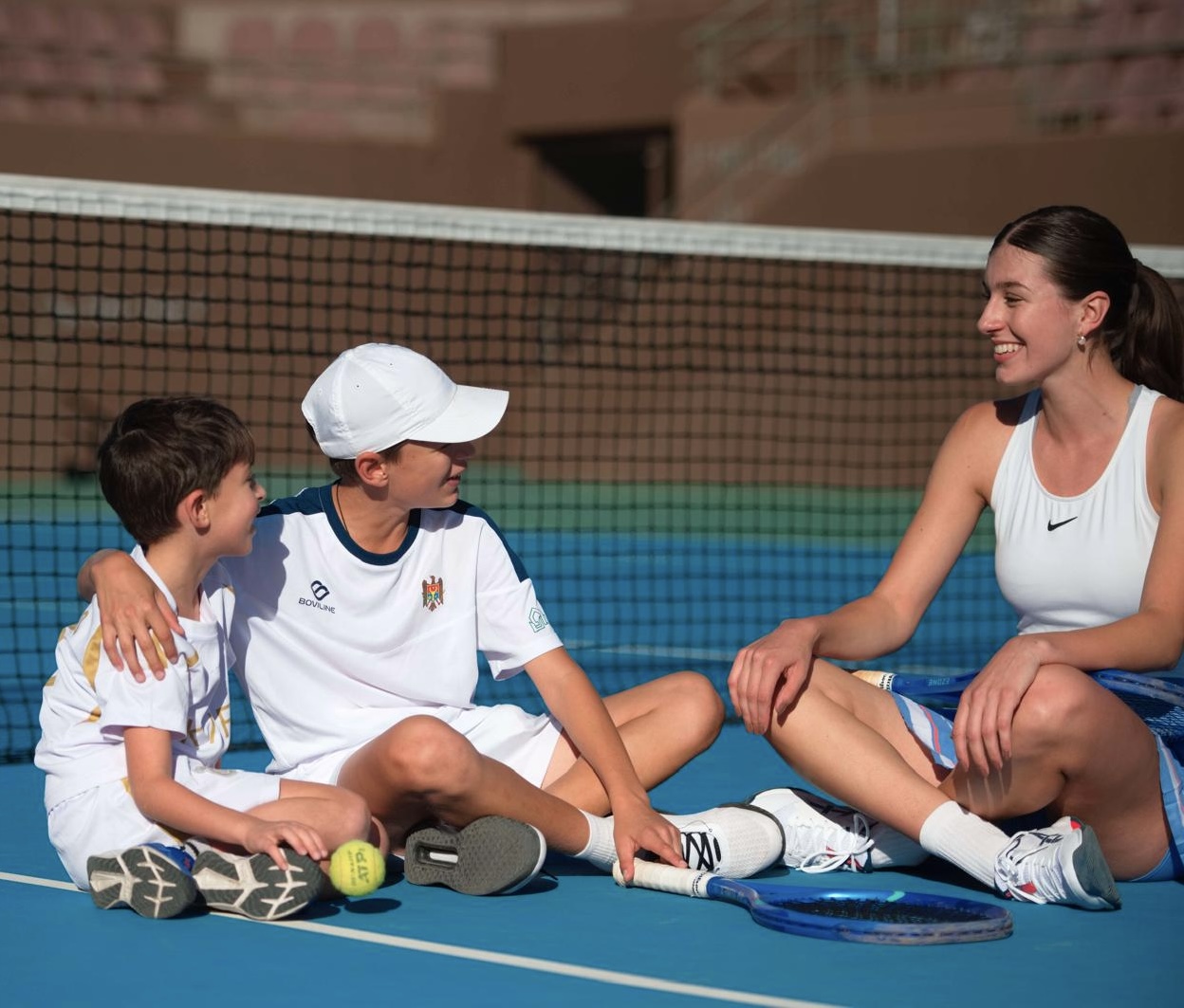
Not every child who takes tennis seriously will become a professional player. Not everyone will win a major tournament or reach No. 1 in the world rankings. But that does not mean that years of training and tremendous hard work have been wasted. Sometimes the results of that work show up somewhere completely different from where they were originally expected. Sport builds character, discipline, mental resilience, the ability to work hard and to keep going after setbacks. And one day, those very qualities can help you succeed far beyond the tennis court.
Bianca Caraus’s story is exactly about that.

Today she is 18. Bianca has been admitted to the University of Amsterdam, where she will study economics, and she finished school with an outstanding result: she earned a perfect 10 in all four Baccalaureate exams — Romanian language and literature, English, mathematics and history.
But before achieving this result, Bianca devoted a significant part of her childhood to something entirely different — tennis. In fact, she was the first in the Caraus family to pick up a racket. Her younger brother Bogdan came to tennis later and today is one of the strongest Moldovan juniors of his generation. His journey continues on the court, while at a certain point his older sister’s path took a different direction.
Bianca discovered tennis at the age of ten. Before that, she had studied music and practised ballroom dancing and swimming, and knew practically nothing about the sport. Everything changed during a summer holiday at her aunt’s home in Bucharest, when she watched a Simona Halep match at Roland Garros on television with her relatives.
“I instantly fell in love with the sport and came home thinking that I wanted to try it too,” Bianca recalls.
Her first training session was with Moldovan tennis player Daniela Ciobanu. Very soon, tennis went from being a hobby to a serious part of her life. By around the age of 14, Bianca was already training twice a day. Up at six in the morning, training at seven, then school, back to the court afterwards, and homework in the evening. She competed in national and international tournaments and, after travelling, caught up on everything she had missed at school. In her own words, it was an extremely demanding period — mentally, physically and emotionally. But at the time she had a big dream: to improve, to win and to become one of the best.
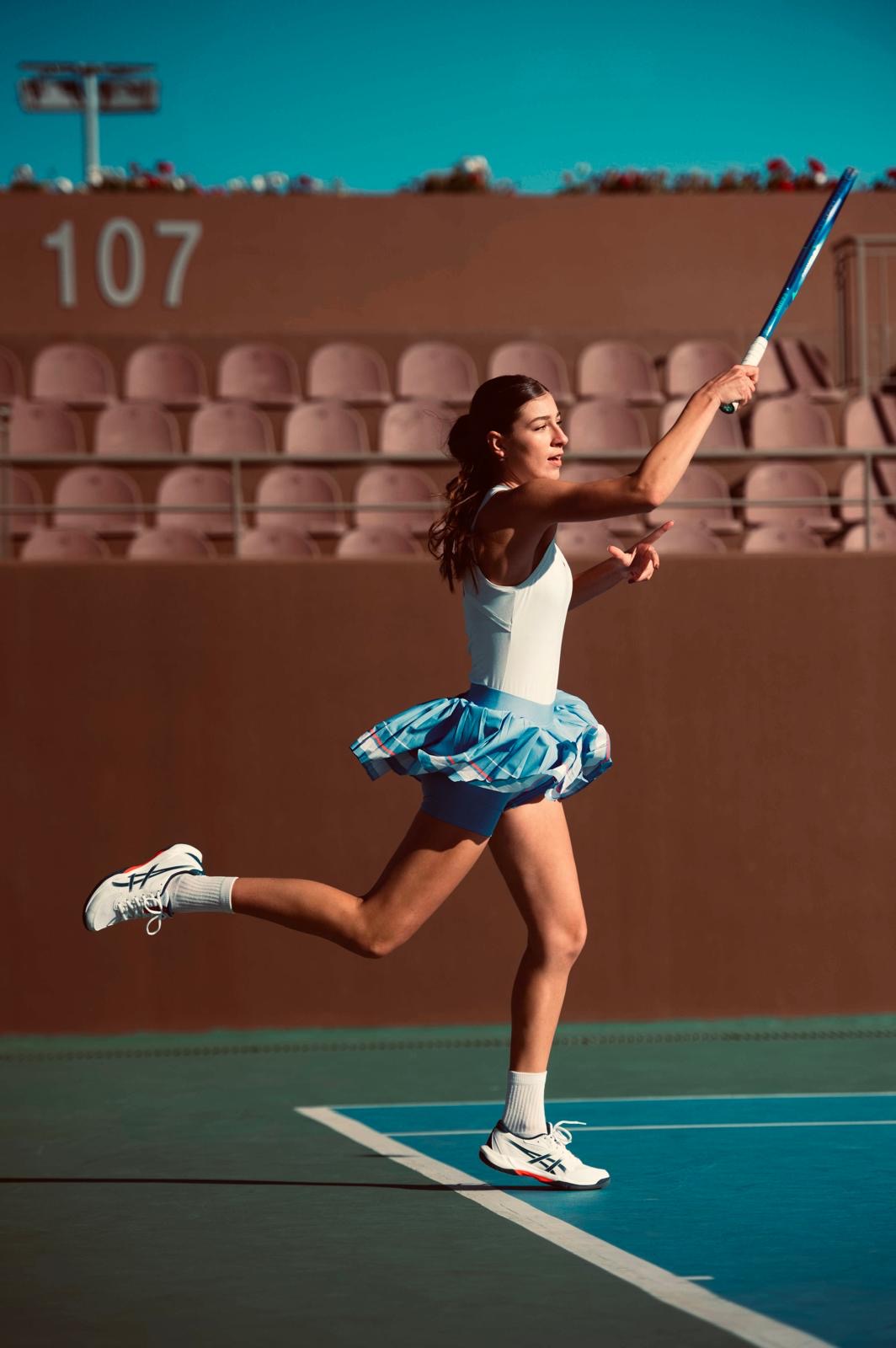
At around 16, Bianca began to realize that professional tennis would most likely not become the main focus of her life.
“Honestly, it was painful to accept and understand that, and I think that is completely normal. For any child who has big dreams, who works hard towards their goals, goes through setbacks and finds the strength to get back up and keep going, realizing that the road may look different is a real challenge.”
Gradually, tennis stopped being the main focus of her life. And today Bianca expresses the most important lesson she had to accept at that time very clearly:
“A dream can change, and that does not necessarily mean that you have failed.”
A professional career did not become the next chapter of her journey, but everything she had gained during her years on court remained with her. Bianca believes tennis played a major role in shaping her character. It taught her discipline and consistent hard work, and helped her understand that results rarely come immediately and that real progress is built from the small things you do every day — including on the days when you really do not feel like doing them.
Tennis also taught her to see defeats differently. Losing a match is not the end of the story, but a reason to understand what you can do better. And because tennis is an individual sport, on court you have to take responsibility for your own decisions and mistakes and find the inner resources to keep fighting. That is how she developed mental resilience, responsibility and patience — including the ability to keep working for a long time even when the results are not yet visible.
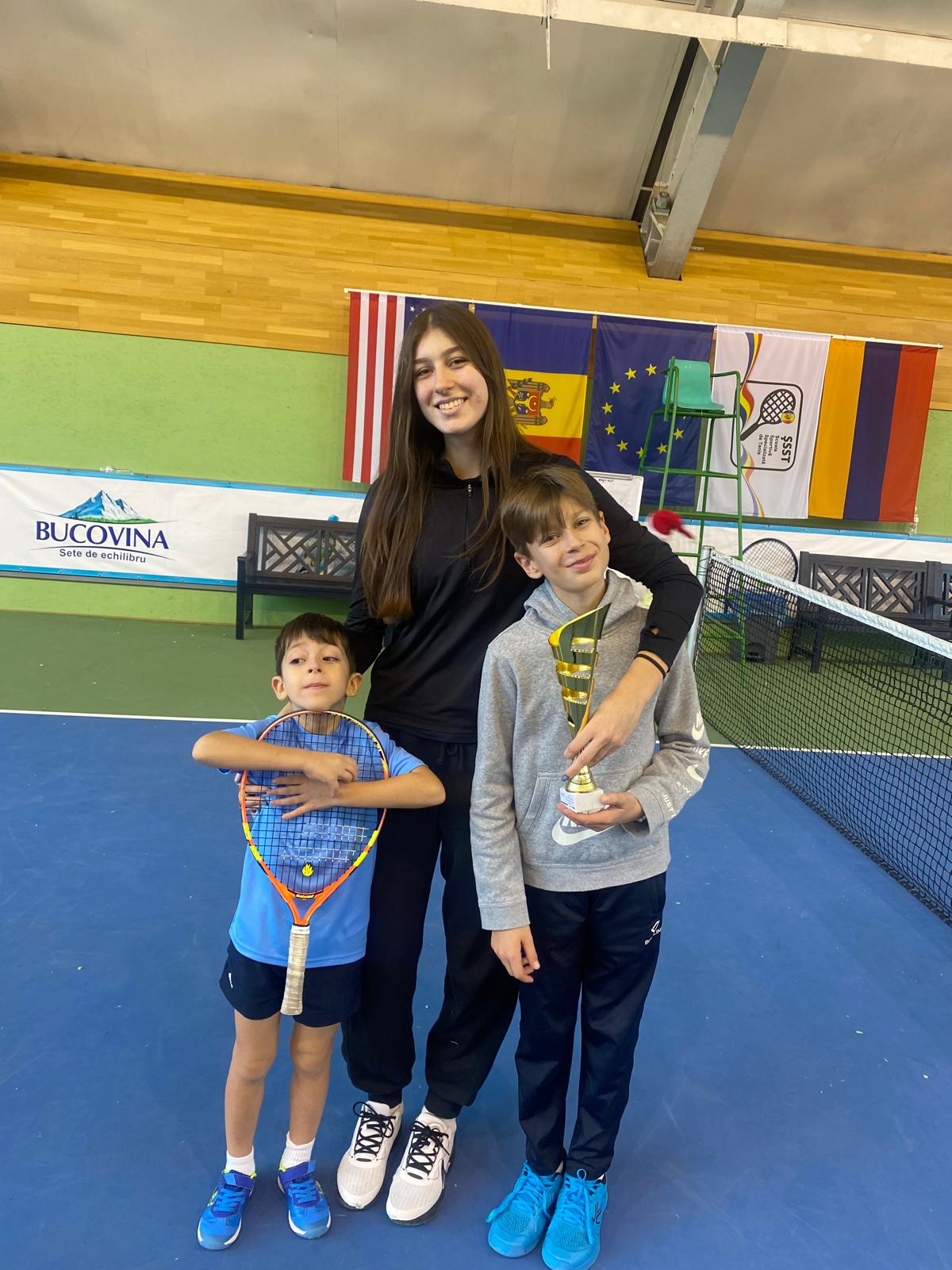
Those very qualities later proved invaluable to Bianca in an entirely different field
In 2026, she was preparing simultaneously for her Baccalaureate exams and university admission. The result — four exams and four perfect 10s. Bianca herself draws a direct connection with tennis: sport had already taught her to work systematically, manage her time properly, set goals and keep going when things became difficult.
Of course, it would be wrong to explain her academic success through sport alone. Bianca speaks about the strong foundation she received in primary school, remembers her first teacher with gratitude, and especially highlights «Spiru Haret» Theoretical Lyceum — its teachers and academically demanding environment, which motivated her to aim higher. And, of course, her parents, who supported their daughter both in sport and in her studies.
Over time, her understanding of success has changed as well. As a child, it was simple: win a match, win a tournament, move up the rankings. Today Bianca sees it differently.
“For me, success means becoming achieving my goals while at the same time remaining a balanced person, doing things that are meaningful to me and having the opportunity to make a positive impact on the people around me.”
And perhaps something else matters even more: success is not only about where you eventually arrive, but also about who you become along the way.
There is also a beautiful family continuation to this story. Bianca was the one who first brought tennis into the Caraus family, and a few years later Bogdan followed her onto the court. Today she proudly watches her younger brother’s success, but makes no attempt to take any credit for it.
“His success belongs entirely to him. He has built his own path — with his own ambitions, sacrifices, victories and difficult moments. Perhaps I was the person who first opened the door to tennis for our family, but Bogdan himself chose how far he wanted to go down that road.”
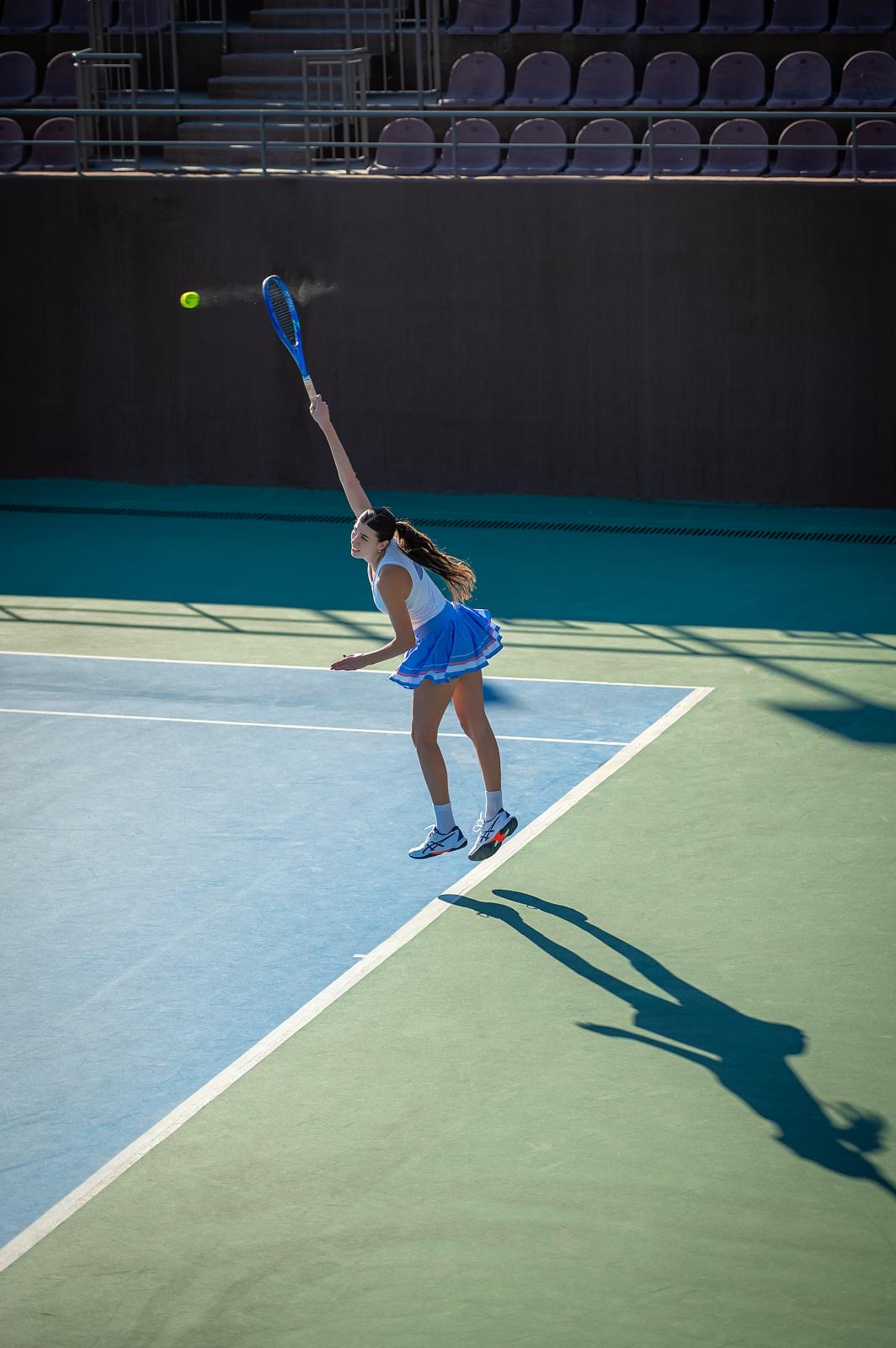
Bianca sometimes gives her brother advice — about tennis, the mental side of sport or simply life. She tries to tell him the things she herself would have liked to hear at his age, while also understanding how important it is to let Bogdan experience his own victories and mistakes. The main thing is that he knows that whatever the result of his next match, his older sister is always there. And Bianca calls their shared connection with tennis, even though it now means something different to each of them, one of the most beautiful stories in their family.
Now Amsterdam lies ahead. Bianca has chosen economics, but she is also interested in communications, the entertainment industry, and organizing projects and events. Perhaps one day she will be able to combine economics and entrepreneurship with creativity and working with people. At the same time, she is perfectly comfortable admitting that at 18 she does not have to know exactly what the rest of her life will look like.
“Tennis taught me not to be afraid of change. Sometimes the road you imagine for yourself at ten looks nothing like the one you are travelling at eighteen. And that is not necessarily a bad thing.”
And tennis remains. In Amsterdam, Bianca is already looking for opportunities to continue training and perhaps compete from time to time. Only now, without the pressure of rankings or the need to turn sport into a profession. Tennis has become something she enjoys, a way to maintain balance and simply a part of her life.
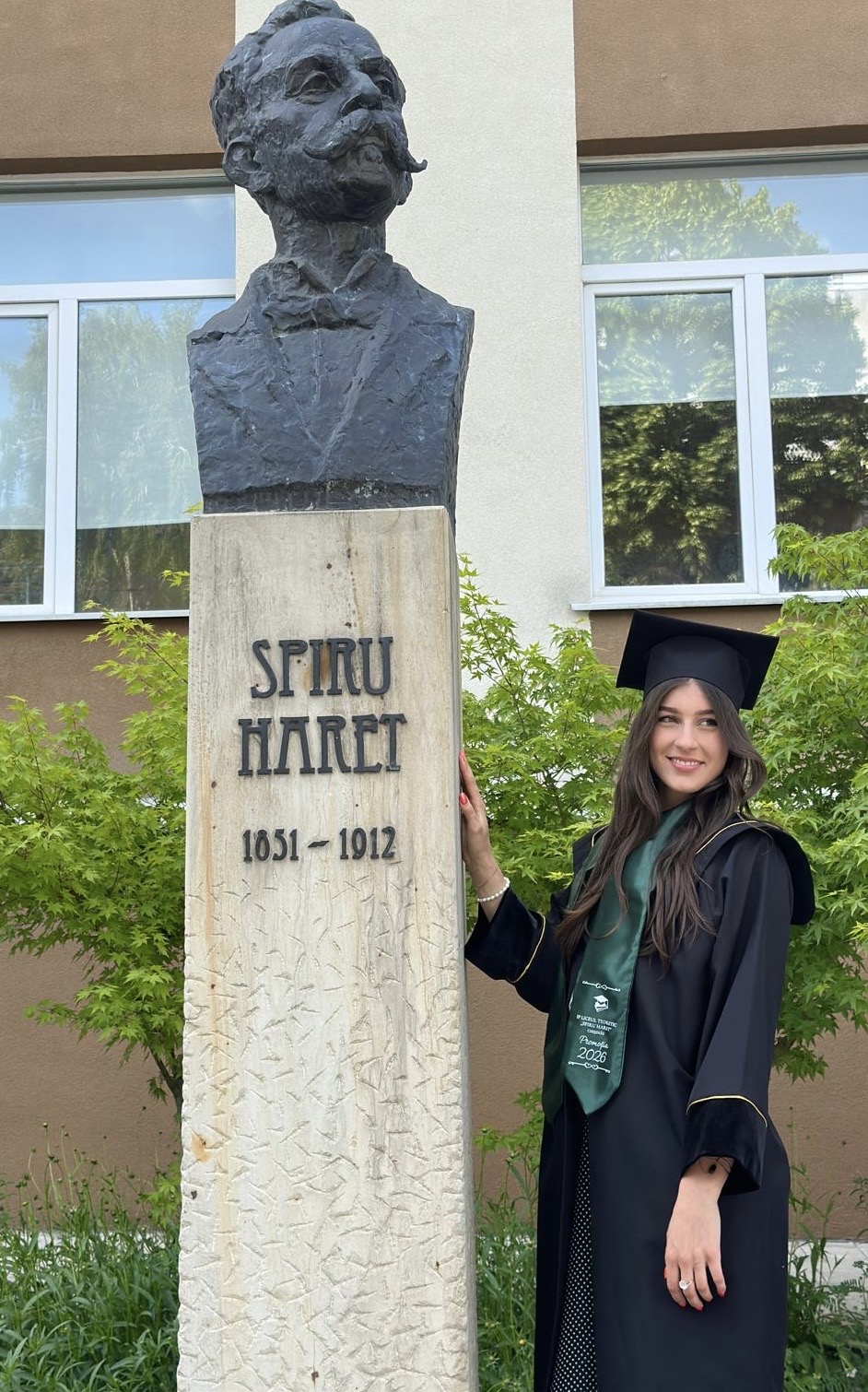
That is why Bianca’s story matters to children who step onto the court today with big dreams, and to their parents. To a child who, after years of training, begins to realize that they may not become a professional player, the first thing she would say is: “I understand you.”
And then she would explain: this does not mean defeat. The years of training do not disappear. Discipline, mental resilience, the ability to work towards a goal, to lose, get back up and keep going — all of that stays with you. Sometimes you do not have to give up on a dream. You can change it.
Bianca has a separate message for parents: do not turn sporting results into a measure of your child’s worth. A child needs to know that they are loved and valued regardless of whether they won or lost today’s match. You can support their dream, their determination and their desire to work hard, while at the same time giving them the freedom to discover who they want to be beyond the tennis court.
At ten, Bianca watched Simona Halep at Roland Garros and dreamed about tennis. Then she got up at six in the morning for training, played tournaments, won and lost. Tennis taught her to work hard, to be patient, to take responsibility for herself and to start again.
At 18, she earned four perfect 10s in her Baccalaureate exams and was admitted to the University of Amsterdam. Now a new country, a new life and new goals lie ahead.
All those years of hard work did bring results after all. Bianca’s big victory simply came on a different court from the one where people once expected it.