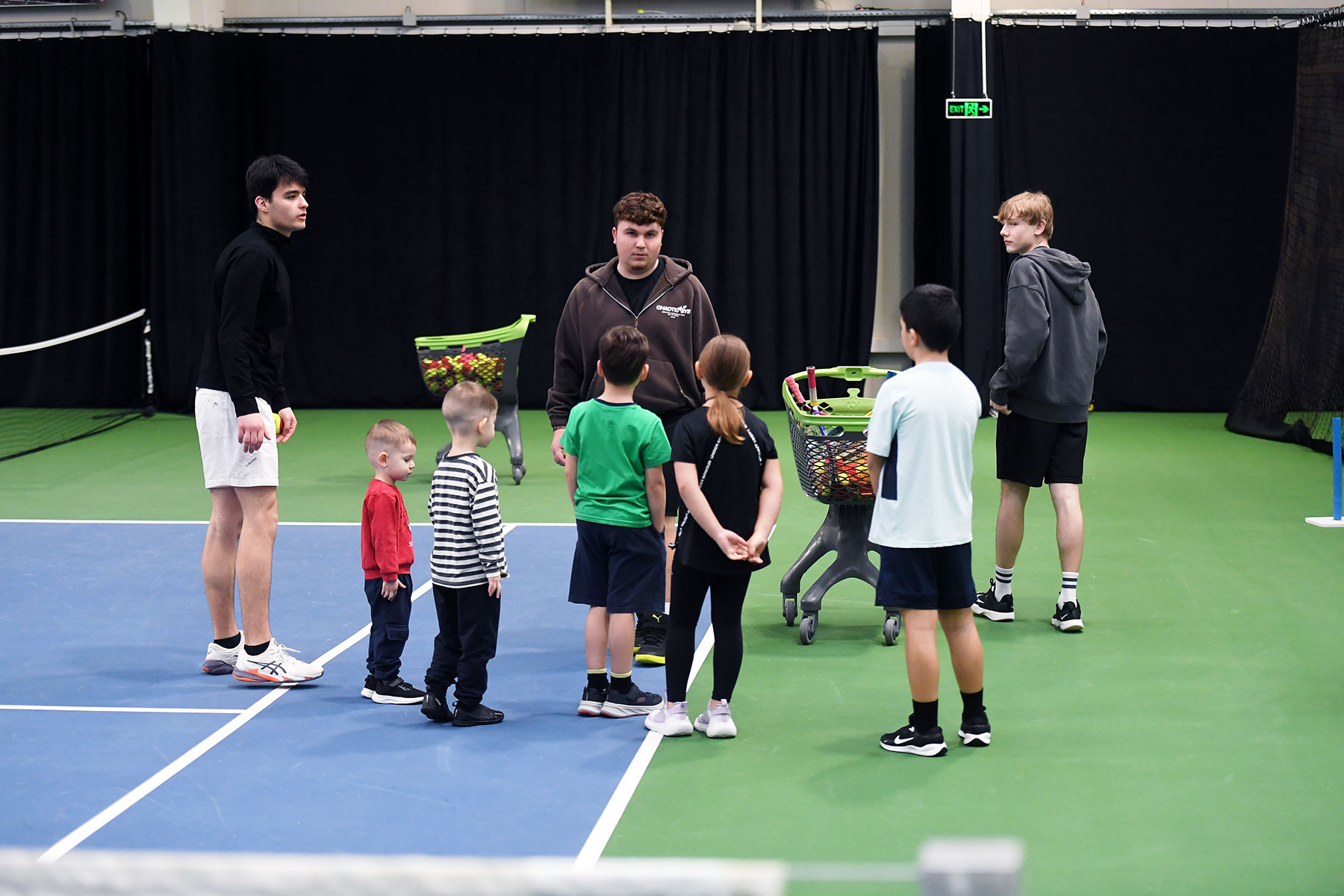
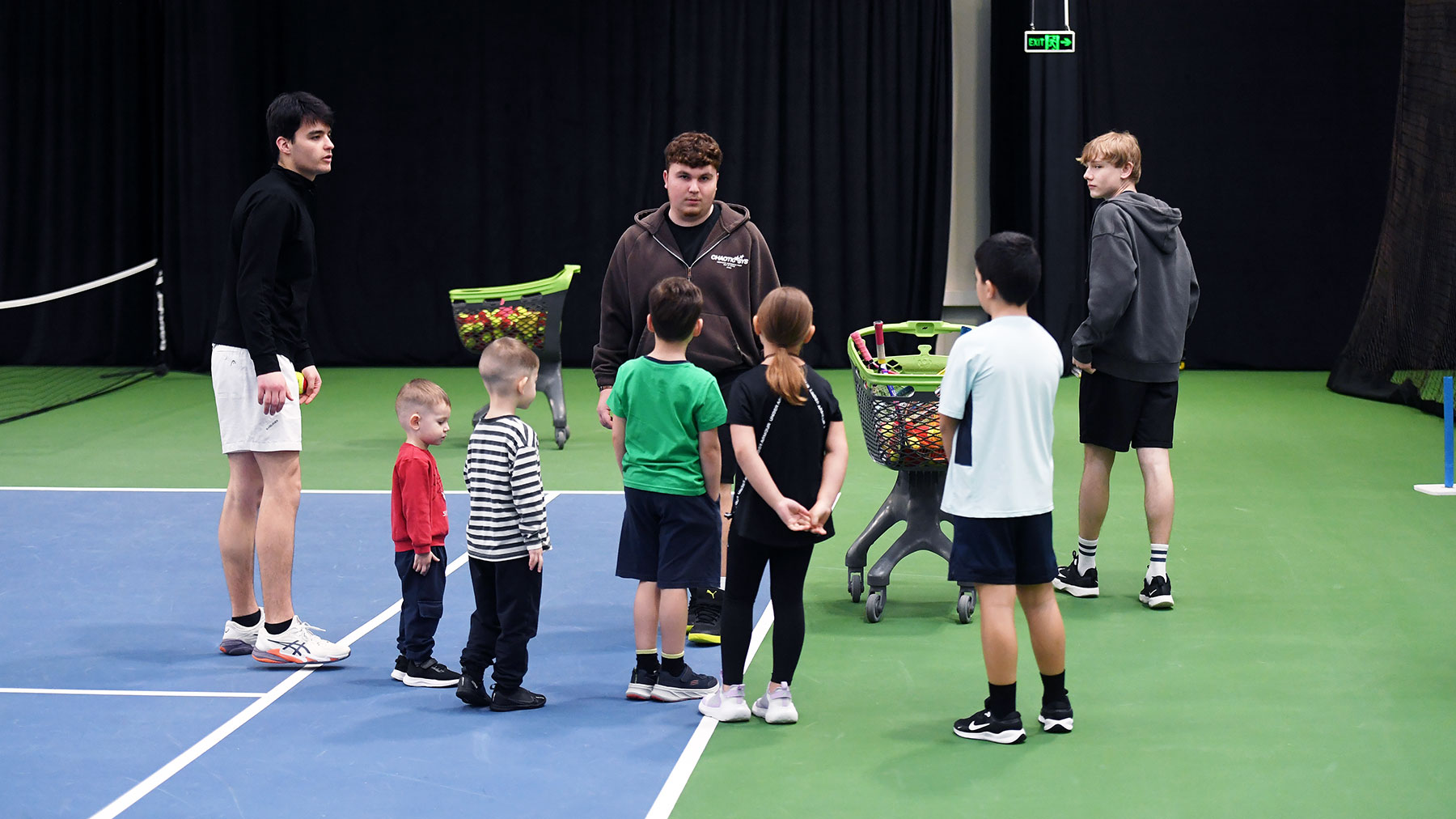
When a child is 4–8 years old, parents face one of the most difficult and at the same time important choices: what sport to enroll them in?
Football is understandable and accessible. Swimming is good for your health. Gymnastics develops flexibility. There are many options, and each one feels right.
Tennis is often seen as just another option on this list. But if you look deeper, it becomes clear: it’s one of the most versatile, multifaceted, and long-lasting sports, offering children much more than meets the eye.
- Tennis develops not only the body, but also the mind.
Tennis isn’t just about hitting a ball. It’s a constant mental exercise. Children learn to quickly assess situations, make decisions, and anticipate their opponent’s moves. And all of this happens in a split second. It’s no coincidence that tennis is often called “chess in motion.”
If you look at Novak’s game It’s clear what I’m talking about when you look at Djokovic , one of the most intelligent players of our time. He wins not only through technique, but also through his ability to read the game, change rhythm, and adapt to his opponent. These qualities don’t appear overnight—they’re shaped from childhood.
- Harmonious physical development is formed
Tennis is one of the few sports that develops the body comprehensively. It has it all: sudden accelerations, stops, changes of direction, footwork, coordination, balance, and endurance.
Roger Federer played a variety of sports as a child, including football, which gave him excellent coordination. But it was tennis that allowed him to combine all of this into a single, fluid, and effective style.
For a child, this means something very important: he does not develop “in one direction,” but receives a solid physical foundation that will be useful in any activity.
- The child learns responsibility and independence
In team sports, there’s always the opportunity to “dissolve” into the group. This isn’t the case in tennis. On the court, the child is alone. They make their own decisions, keep score, and are responsible for the outcome. It’s not always easy, but this is where internal responsibility is developed.
Rafael Nadal is a prime example. From childhood, he was raised in an atmosphere of discipline and attention to detail. Even his famous on-court rituals aren’t an oddity, but a way to maintain peak concentration. Such habits shape character, which later manifests itself beyond just athletics.
- Tennis is safer than many other sports.
This is always an important factor for parents. Tennis is a non-contact sport. There are no violent collisions, body-to-body combat, or falls in a crowd of players. At the same time, the child remains constantly moving and receives a full-fledged physical workout. This is a rare combination: activity, development, and a relatively low risk of injury.
It’s interesting that Yannick Sinner was a very serious alpine skier until the age of 13, a sport known for its potential for injury . But then he switched to professional tennis full-time. Of course, that wasn’t the only factor influencing his decision, but it was nonetheless a factor.
- Psychological stability is developed
Tennis teaches you to deal with difficulties in real time.
Lose a ball and it’s immediately the next one.
Make a mistake and the game doesn’t stop.
This develops the ability to not dwell on failures and move on.
Serena Williams is a shining example of such resilience. Throughout her career, she’s repeatedly come back from seemingly lost matches. And this isn’t a fluke, but the result of extensive mental development.
For a child, this is one of the most valuable skills – the ability to not give up.
- It’s a sport for life
Many sports have an age ceiling. Tennis doesn’t. You can play it as a child, a teenager, an adult, and even into middle age. It’s not just a phase that ends. It’s a skill and a habit that stay with you for life.
And that makes tennis especially valuable in terms of long-term development.
- Today in Moldova there are real conditions for growth
Any sport requires more than just training; it also requires an environment. Tennis is rapidly developing in Moldova today. Modern infrastructure is being developed, the number of tournaments is increasing, and a systematic approach to player training is being developed.
The National Tennis Center has been built—a modern facility where children can train in conditions as close as possible to international standards.
This means that the child receives not just lessons, but a complete sports environment in which to grow and develop.
- In tennis, it’s not just talent that matters, but also the path
The stories of great players show that success is not an accident.
Rafael Nadal , who was right-handed in life, was retrained to play left-handed – and this became one of the key factors in his success.
Roger Federer was an emotional and unstable player in his youth, but through self-improvement he became a model of calm and control.
This confirms a simple idea: in tennis, system, consistency and the right decisions at every stage are important.
- Tennis opens up the world
Tennis is a truly international sport. Even as juniors, children begin participating in tournaments in different countries, experiencing new cultures, and learning to adapt to different conditions.
Carlos Alcaraz , one of the brightest young players of our time, actively played international tournaments even as a junior. This helped him quickly transition to the professional level.
For a child, this is not just a sport, but an opportunity to see the world, broaden their horizons and gain unique life experiences.
So tennis is much more than just a physical activity.
It develops thinking, character, independence, and self-confidence.
It’s a sport that stays with a person for life. And it’s an environment in which a child can grow not only as an athlete, but also as a person.
When choosing tennis, parents aren’t just choosing a “sports club.” They’re choosing a direction for their child’s development and shaping their entire future, their confident future!